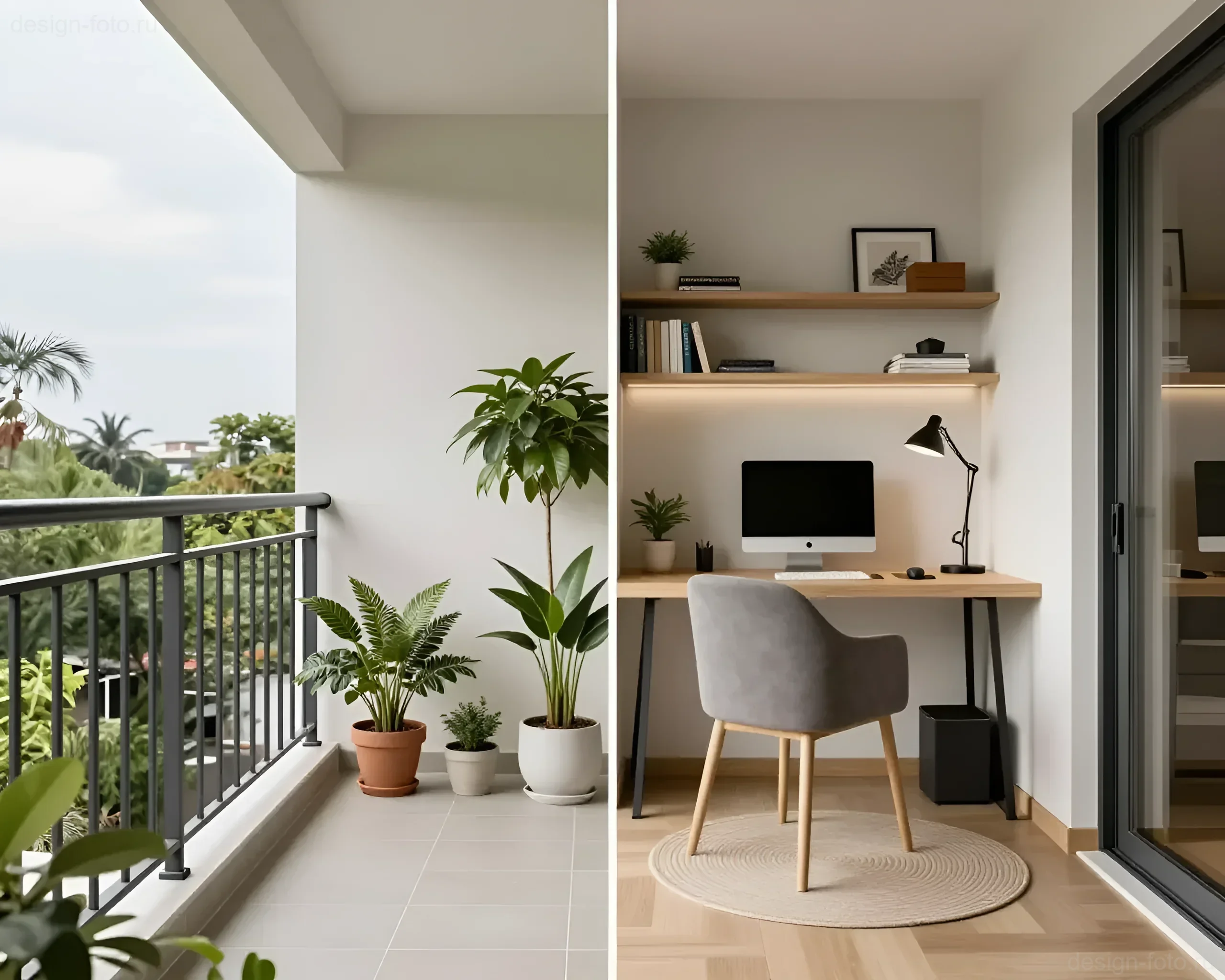
Transforming a cluttered balcony into a fully functional home office is not just a trend, but a pressing necessity for city dwellers in 2026. When every square meter counts, dedicating 3–5 square meters to storing old skis and empty cans is an unaffordable luxury. A modern mini-office on a loggia requires a comprehensive approach: from proper insulation and selection of wear-resistant materials to fine-tuning lighting and ergonomics. In this article, we will explore how to design a space where you can comfortably work even on the hottest July afternoon, and what technical solutions will make your balcony office a benchmark of functionality.
Balcony to Mini-Office: Transforming Space by Summer 2026
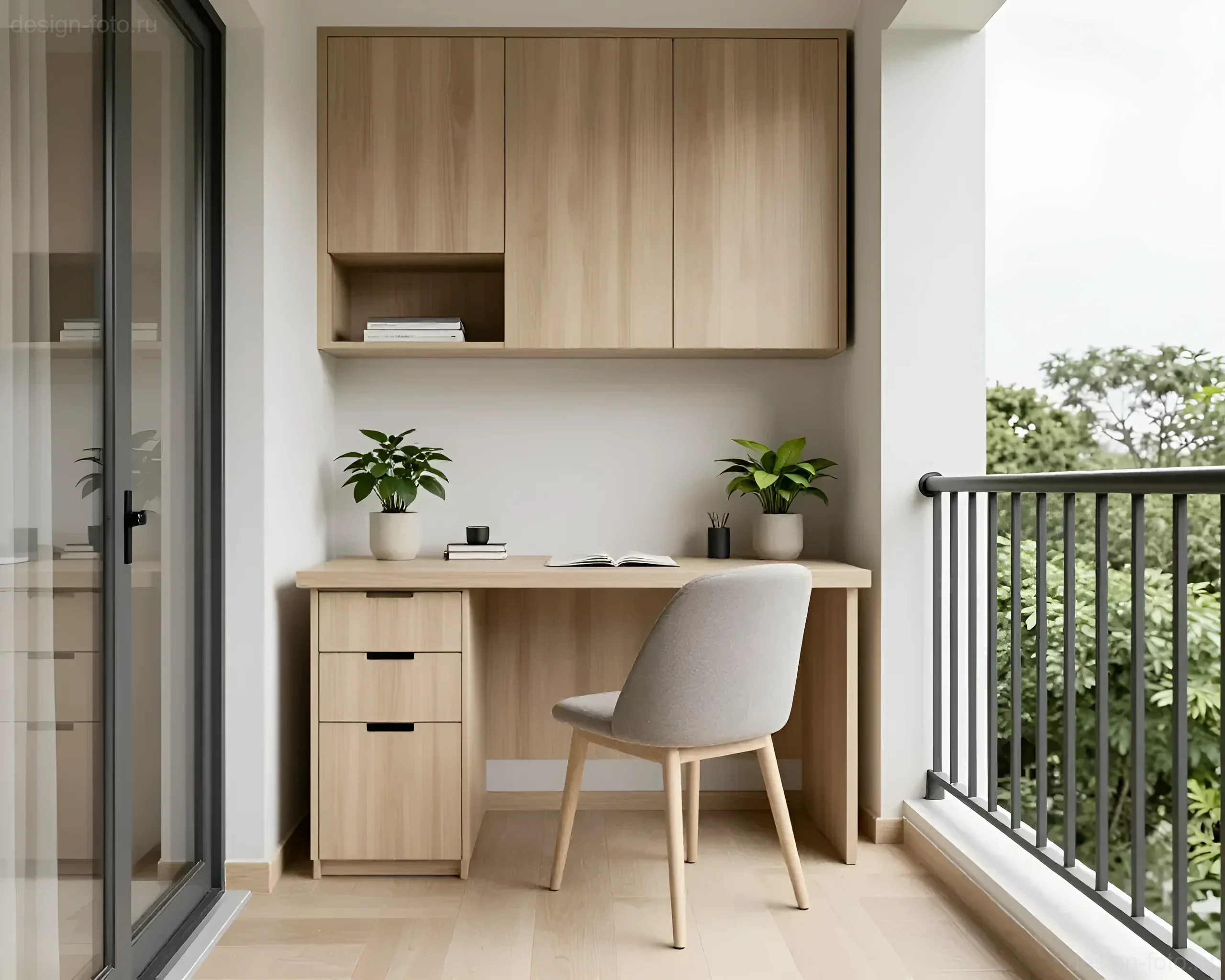
By the summer of 2026, the concept of a home office will have completely transformed. It’s no longer just a “corner with a desk” but a technological space integrated into the smart home ecosystem. The main task when transforming a balcony is to ensure thermal comfort. Without quality glazing (at least double-glazed windows with argon filling and I-coating) and wall insulation with extruded polystyrene (XPS) at least 50 mm thick, it’s impossible to turn a “junk room” into a living area.
Special attention should be paid to waterproofing and vapor barrier. Condensation is a common problem on balconies due to temperature differences. We recommend using foil-backed materials (e.g., Penofol), which act like a thermos, reflecting heat back into the room. Remember that extending central heating radiators to the balcony is prohibited by law, so the only legitimate and effective heating method remains electric underfloor heating (cable or mat) combined with a compact convector for peak cold spells.
When designing an office for the summer, plan the air conditioning system in advance. In the limited space of a loggia, installing a multi-split system is the optimal solution, with the indoor unit placed above the desk, directing airflow along the window to avoid drafts at the workspace.
Functional Styles for Balconies: From Scandi to Minimalism
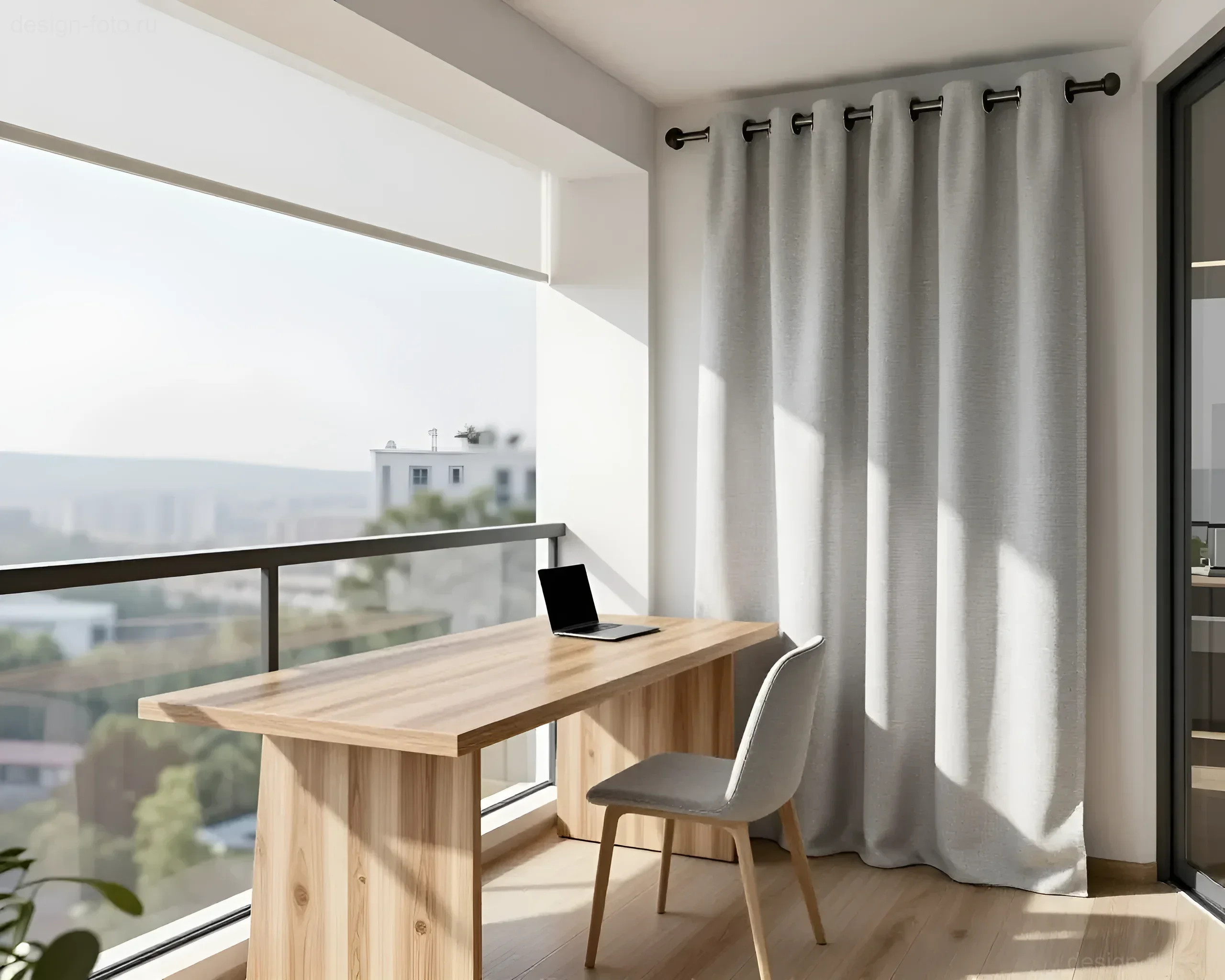
Choosing a style for a small space is not just a matter of aesthetics but also of visually expanding boundaries. In 2026, styles that promote clean lines and lack of visual clutter remain relevant.
- Scandinavian Style (Scandi): Ideal for narrow balconies. The main color is white or light gray, which reflects natural light maximally. Use light wood textures (ash, birch) for the desktop and open shelves. This creates a sense of warmth and coziness even on a cloudy day.
- Minimalism: Here, every item has a purpose. Use built-in storage systems where the facades blend with the walls. The absence of handles (push-to-open system) visually “unloads” the space.
- Japandi: A blend of Japanese restraint and Scandinavian coziness. In 2026, this style leads in office design due to its meditative qualities. Bamboo blinds, matte textures, and low furniture help focus on tasks.
- Loft (in a soft interpretation): If the balcony walls are quality brick, they can be left exposed, covered with matte varnish. Combined with metal shelf brackets and black matte fixtures, this will create a strict, working atmosphere.
It’s important to remember: the smaller the area, the fewer contrasts there should be. We recommend using a monochromatic palette with the addition of one or two accent materials, such as cork on one of the walls to improve sound insulation and allow for pinning notes.
Materials and Colors: Creating Coziness and Protecting from the Sun
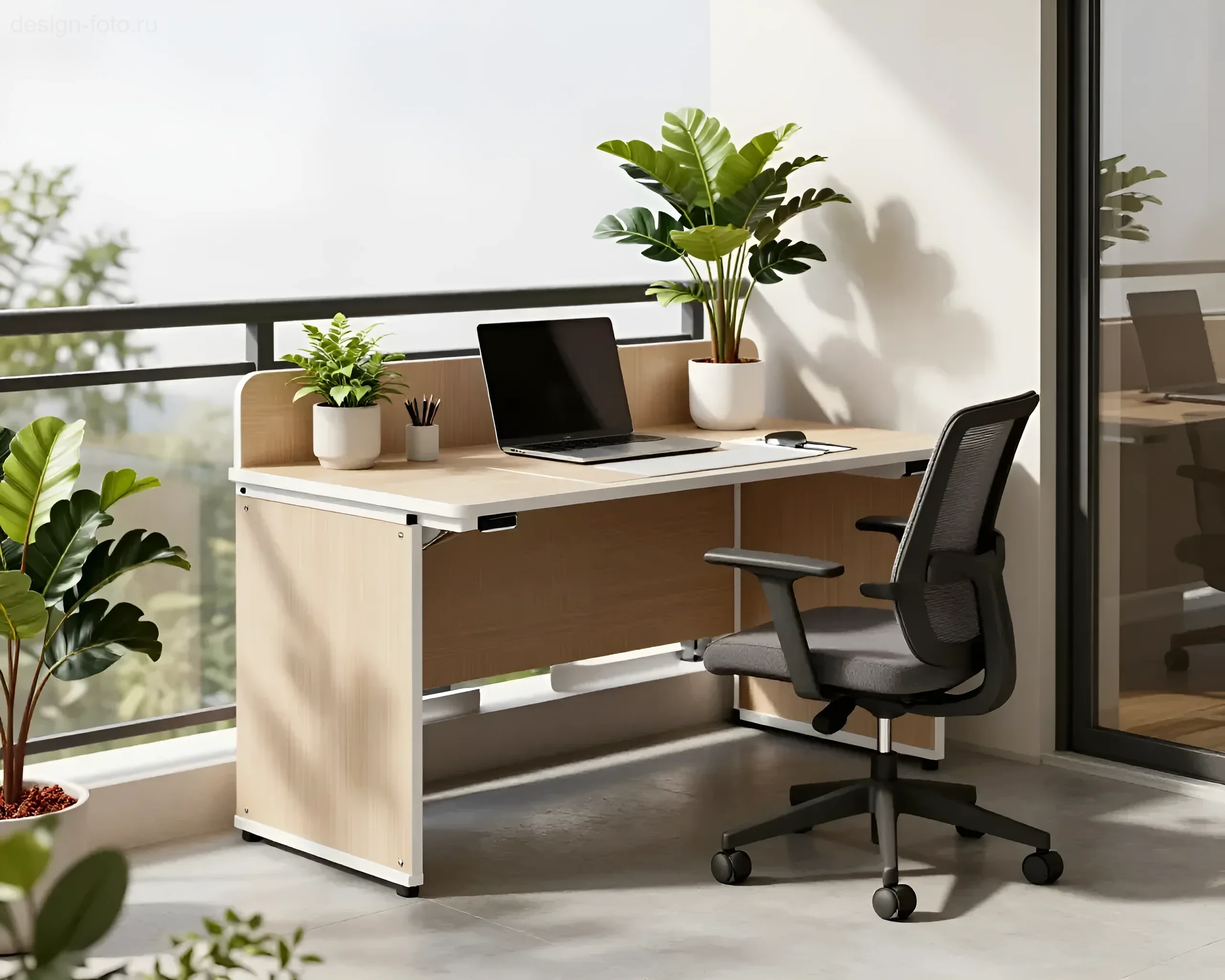
Materials for a balcony office should be resistant to humidity fluctuations and, critically for summer, to intense ultraviolet radiation. Regular laminate can warp or fade in the sun, so for the floor, we recommend quartz vinyl tiles (SPC). They are completely inert to water, not afraid of direct sunlight, and have excellent wear resistance.
For wall finishing, it’s best to use:
- Decorative plaster with protective wax.
- Paint for damp rooms with a high lightfastness rating.
- MDF wall panels with natural veneer (provided stable temperature).
The color scheme should promote concentration. Shades of sage, dusty rose, or deep blue in the line of sight help the eyes rest. However, the main body of the walls should remain neutral – “ivory” or “cool concrete.”
Sun protection is a key aspect for the summer period. Regular curtains on a balcony take up space. Use pleated blinds or “day-night” roller blinds with Blackout or Reflect fabric (with a reflective layer on the outside). This will reduce the temperature on the balcony by 3–5 degrees without using air conditioning.
Layout and Zoning: Maximum Utility in a Mini-Space
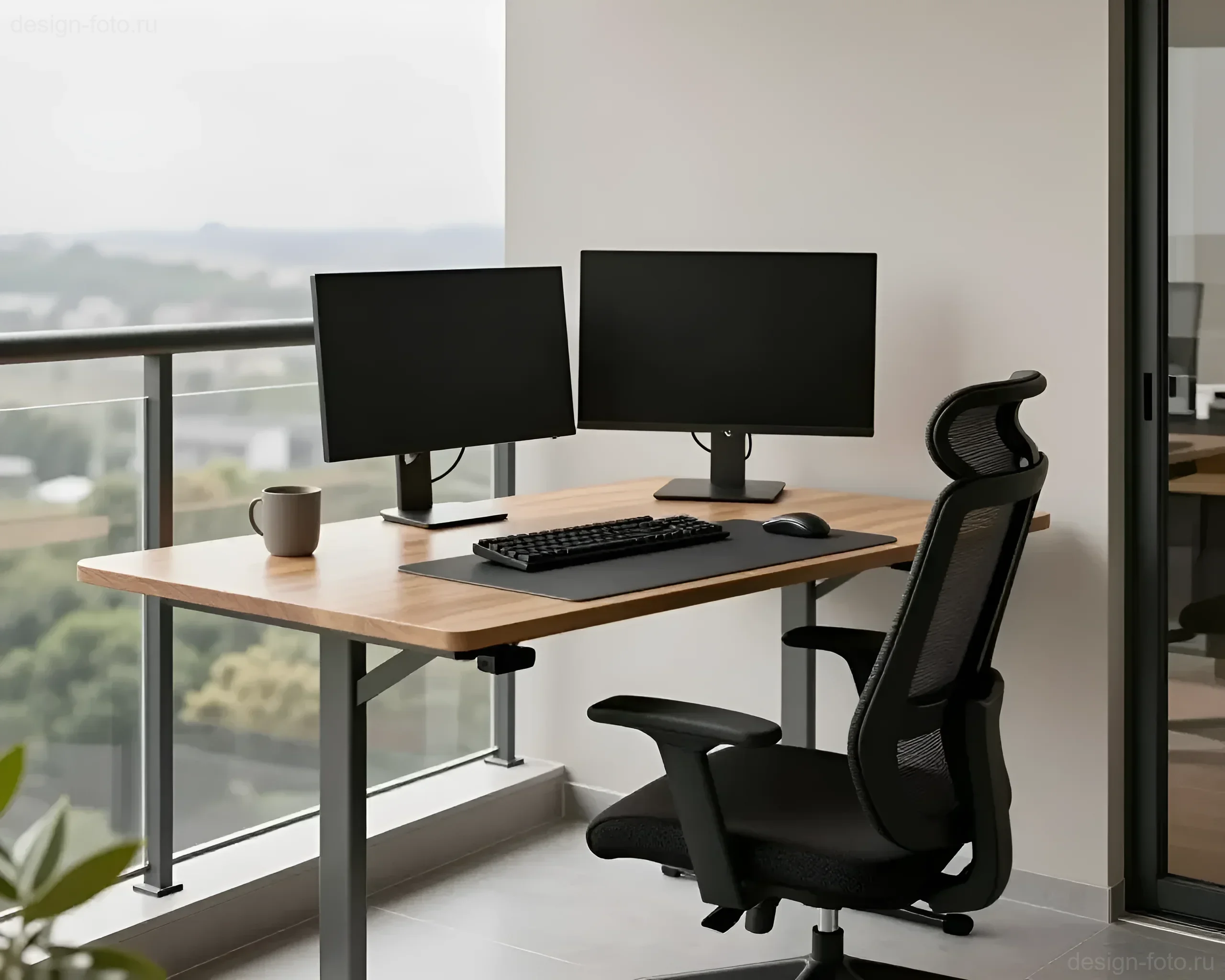
A typical balcony in a Russian apartment is 80 to 120 cm wide. This dictates its own planning rules. There are three main scenarios for placing a workspace:
- End Placement: The desk is placed at one of the ends of the balcony. This is the most ergonomic option, as it allows you to use the full depth (80–120 cm) for the desktop and install full storage systems above it.
- Along the Glazing: A windowsill desk. This option is for those who like to work while looking out the window. Important: the depth of such a desktop should be at least 500 mm for comfortable placement of arms and a laptop.
- Island/Corner: Suitable for wide loggias where an L-shaped workspace can be organized.
Use lighting for effective zoning. Above the desk – directional light (3000-4000K), and in the opposite part of the balcony, you can create a relaxation area.
We suggest looking at suitable models in the catalog:
A small beanbag chair or a folding couch will allow you to change your posture during breaks, which is crucial for productivity.
Ergonomics and Compactness: Practical Tips for Your Mini-Office
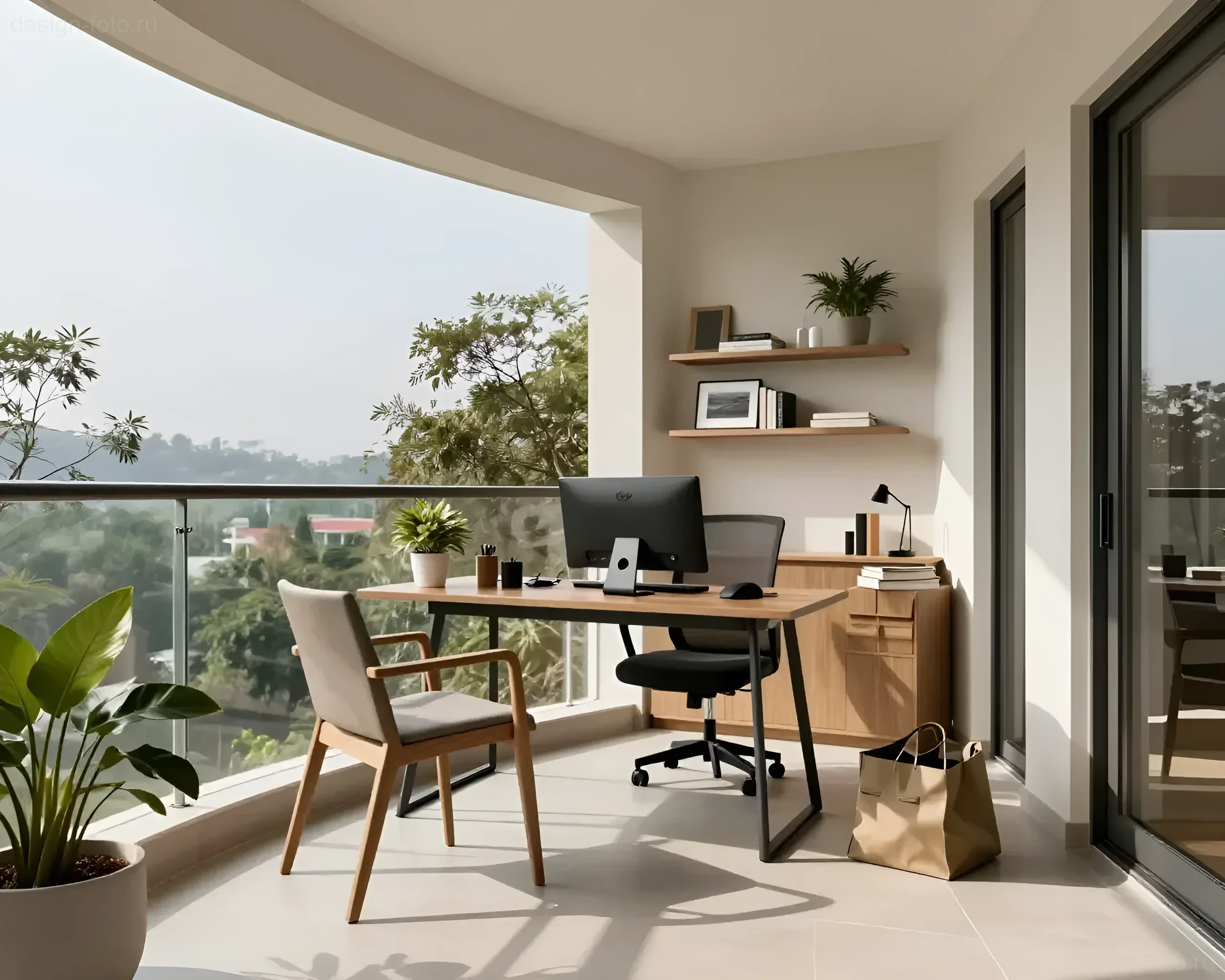
Ergonomics on a balcony is a battle for every centimeter without sacrificing comfort. The standard desk height is 750 mm. If you plan to work on a laptop, the desktop depth can be reduced to 450–500 mm, but for a stationary monitor, at least 600 mm is required to maintain eye distance.
Practical tips for choosing furniture:
- Wall-mounted desktop: Eliminating legs in favor of mounting to the walls with strong brackets visually expands the floor space.
- Folding solutions: When choosing furniture, pay attention to models that are resistant to temperature and humidity fluctuations. To find the ideal option, we recommend looking at suitable models in the catalog:
- Tables and Chairs
A folding chair can be hung on a wall hook when not in use.
- Vertical storage: Use pegboards for stationery and gadgets. This frees up desk space.
Don’t forget about outlets. A fully functional balcony office requires at least 4–5 outlets (laptop, monitor, lamp, phone charger, spare). Place them at a height of 100–150 mm from the desktop level or use pop-up outlet blocks integrated into the desk.
Common Mistakes When Setting Up a Balcony Workspace
As a professional designer, I often encounter the consequences of ill-conceived decisions. Here are the top mistakes that can turn your office into an unbearable place:
- Saving on Glazing: Single-pane windows or aluminum frames (“cold glazing”) do not retain heat. You’ll freeze in winter and bake in summer.
- Lack of Ventilation: A tightly sealed and insulated balcony without an air intake valve or micro-ventilation capability will quickly fill with carbon dioxide. The brain stops working after 30 minutes.
- Incorrect Lighting: A single bulb in the center of the ceiling creates shadows on the work surface. Light should come from the left (for right-handers) or be frontal but diffused.
- Ignoring Load Capacities: Before pouring a massive screed and placing heavy furniture on an old balcony (especially in Khrushchev-era buildings), the load-bearing capacity of the slab must be calculated. Sometimes reinforcement with metal structures is required.
- Screen Glare: Placing the monitor with your back to the window without quality curtains will make work impossible due to sun glare.
Real Examples: Inspiring Balcony Offices
Let’s consider a case from practice in 2025. A loggia of 3.2 sq.m. The client is a programmer. We used the “transformer” principle. The desktop was made of solid oak, integrated into the windowsill block. The walls were finished with microcement – an anti-vandal material that is resistant to impacts from the back of a chair. At the end, we installed a floor-to-ceiling cabinet to hide the printer, router, and server. By using a mirrored insert on one of the end walls, the narrow balcony appeared twice as wide.
Another example is a “green office.” A vertical gardening system (living wall) with automatic watering was installed on the balcony. Plants not only purify the air but also create psychological comfort. In such an environment, stress levels decrease by 20–30%, as confirmed by ergonomics research for workplaces in 2026.
Frequently Asked Questions About Balcony Offices
Do I need to legalize the conversion of a balcony into an office?
If you are not removing the windowsill block and not physically combining the balcony with the room (removing the window and door), then special permission is not required. However, replacing the glazing with heavier options may require approval in certain types of buildings.
How to combat heat in the summer without air conditioning?
Use thermal film on the windows. It blocks up to 90% of infrared radiation while remaining transparent. Large-leaved houseplants also help by evaporating moisture and cooling the air.
What is the minimum balcony size suitable for an office?
The minimum comfortable width is 80 cm. This allows for a compact chair and a 40 cm deep desktop, leaving space for passage.
Creating a mini-office on your balcony by the summer of 2026 is an investment in your health and productivity. The right combination of technological materials, thoughtful ergonomics, and aesthetics will allow you to enjoy your work while having a personal corner of tranquility and inspiration at your fingertips. Remember that the devil is in the details: from the quality of window hardware to the color temperature of your desk lamp. Plan ahead, and your former “junk room” will become your favorite place in the apartment.
Рекомендуем:
 Bedroom and Workspace Zoning: Comfort, Ergonomics, and Productivity
 Internal Wall Insulation: Materials and Technology
 Interior Layout and Zoning: An Expert Guide to Creating Functional Space
 Wall Cladding with Wood Paneling: A Step-by-Step Guide
 Gypsum or Cement Plaster: What and Where to Use?
 How to Hang Wallpaper Without Seams: The Technique for Perfect Joints
 Zoning a Small Apartment: 50+ Expert Ideas for Studios and One-Bedroom Units
 Bark Beetle Decorative Plaster: Application Technology
 Budget Zoning: How to Create Comfort in a Rented Apartment Without Renovation
 How to Hang Vinyl Wallpaper on a Paper Backing?
 How to Properly Plaster Walls for Painting: Perfect Smoothness
 Wall Putty for Wallpaper: How Many Coats Are Needed and How to Apply?
 Functional Zoning of a Kitchen-Living Room: A Practical Guide from an Architect
 What to do if mold or mildew appears on the walls?
 PVC Wall Panels: Cheap and Cheerful. Installation Guide
 Which Tile to Choose for a Small Bathroom: Color, Size, Texture, and Space-Expanding Secrets
 Ideal Studio Layout: How to Divide Zones Without Walls and Save Space
 Priming Walls Before Wallpapering and Painting: The Ideal Foundation for Renovation
 How to Wallpaper Behind a Radiator
 Washable wallpaper for the kitchen: why it’s the best idea for your renovation?