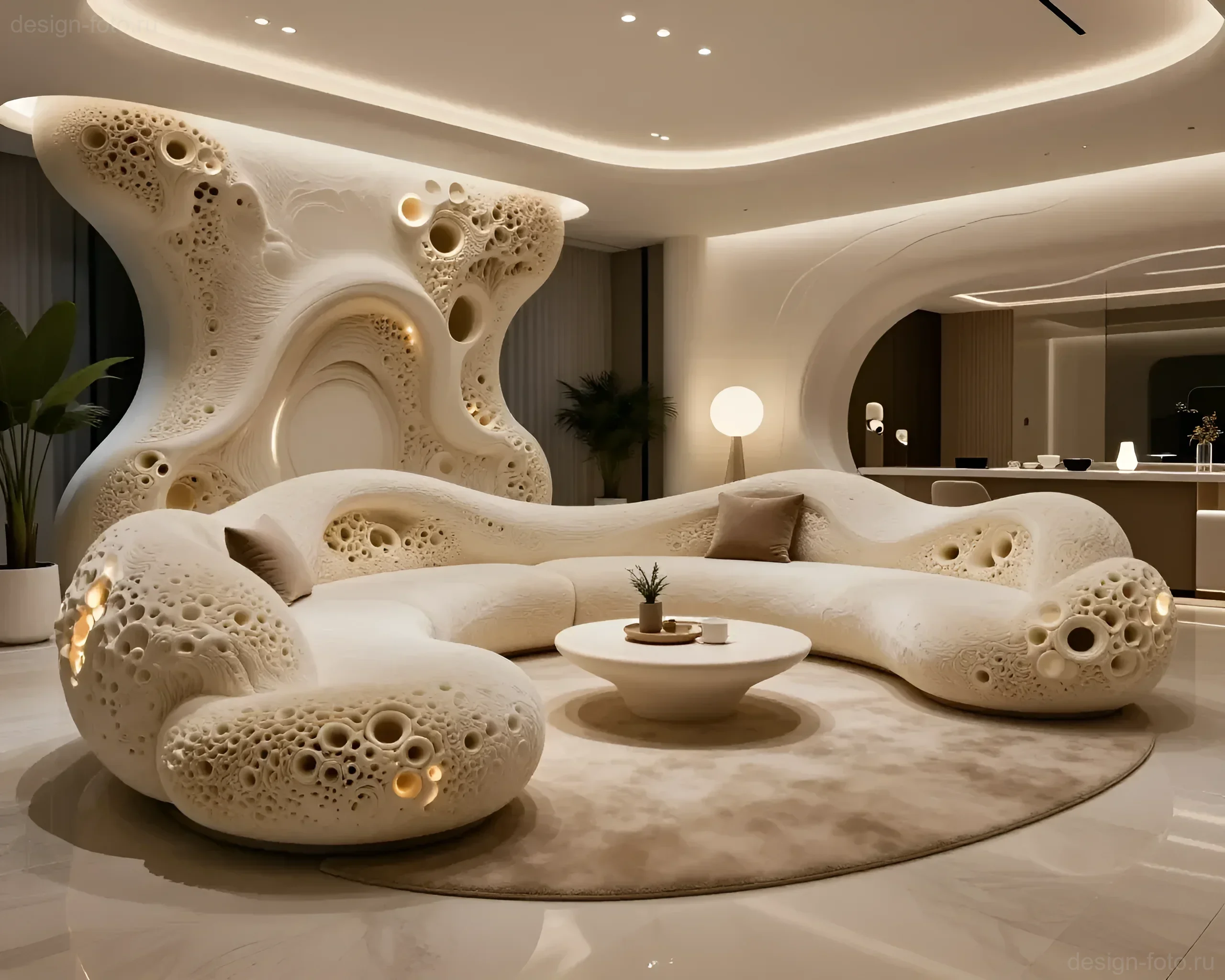
In the summer of 2026, the interior materials market underwent a true revolution. Recycled plastic and “green” marketing were replaced by materials that literally *grew* in a laboratory. We’re talking about “living” furniture and textiles made from mycelium and algae – a technology that is already becoming the new standard of luxury. This isn’t just a trend, but a fundamental shift in how we approach space creation: from artificial to natural, from static to adaptive. As a professional or an advanced client, you need to understand what these materials are, how they work in interiors, and why they are worth implementing right now.
“Living” Furniture and Textiles: What They Are and Why They Are the New Luxury
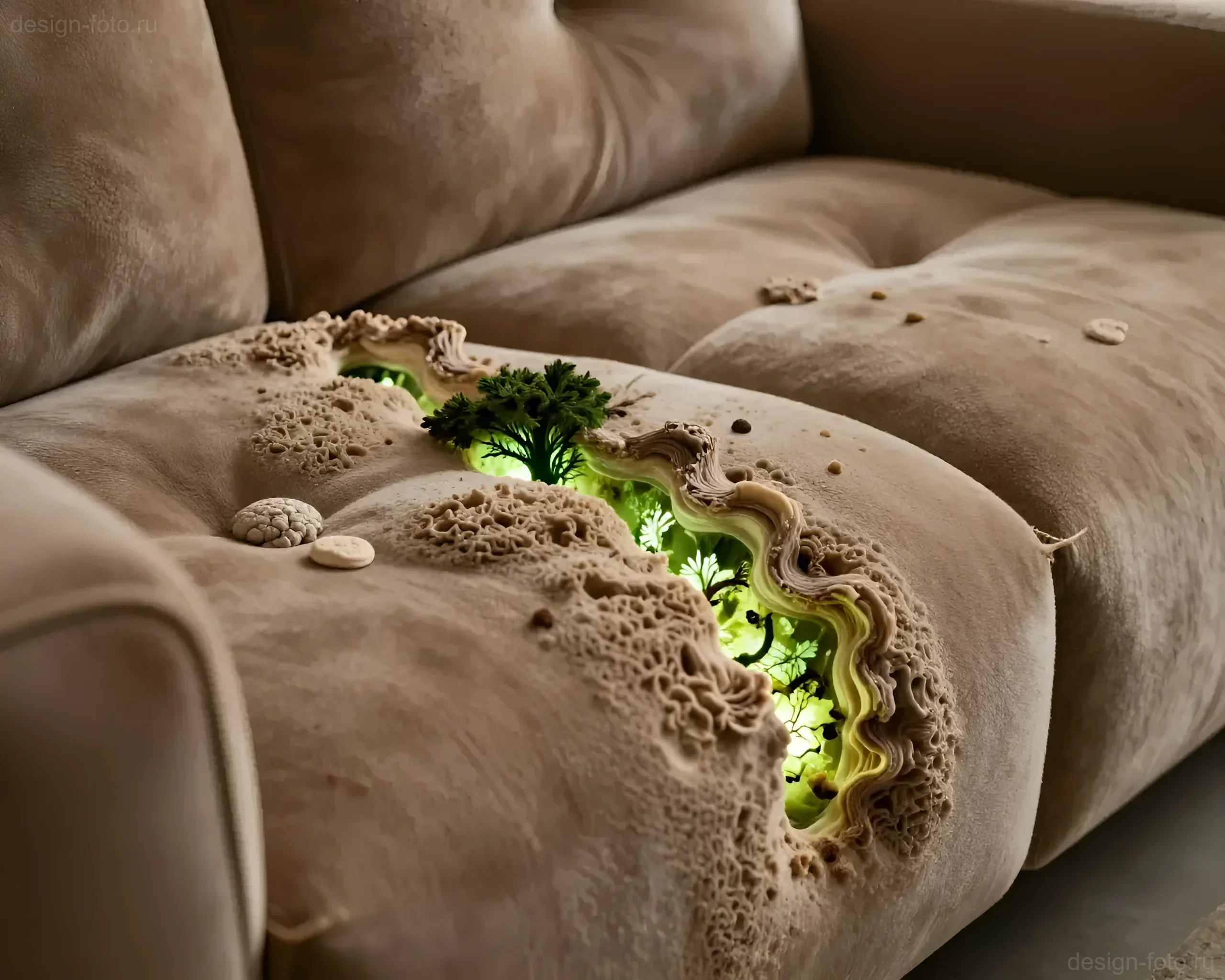
“Living” furniture is not a metaphor. These are products created from biological materials that are grown, not manufactured. Mycelium (fungal network) and algae are the two key components of this new era. Mycelium is used to create panels, upholstery, and even furniture frames, while algae are used for textiles, carpets, curtains, and decorative elements. Why is this luxury? Because such materials are unique by nature: each piece has an inimitable texture, color, and even scent. They cannot be mass-produced – they are the antithesis of conveyor belt production.
Unlike traditional materials, “living” ones have the ability to self-heal. For example, if a scratch appears on a mycelium panel, it can “heal” under the right humidity and temperature conditions. Algae-based textiles do not fade over time; on the contrary, they become softer and deeper in color. This is not just aesthetics; it’s functionality that works for you for years.
Furthermore, these materials are hypoallergenic and possess natural thermoregulation. In summer, they cool the room; in winter, they retain heat. This is particularly relevant for Russia’s climate: you get comfort without additional air conditioning or heating systems.
Interior Styles Where Mycelium and Algae Materials Are Suitable
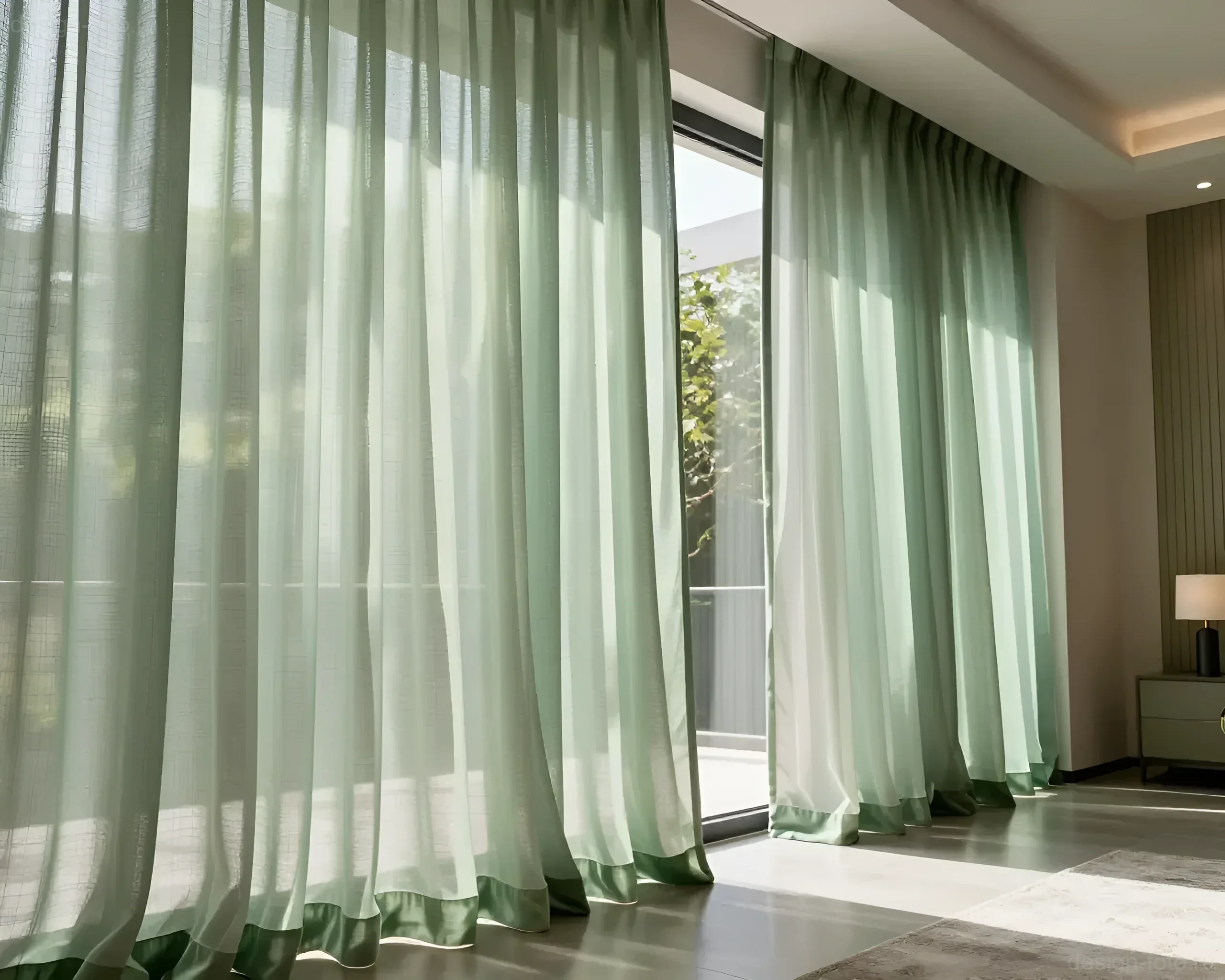
Biomaterials are versatile, but they reveal their full potential best in certain styles. Here are the main directions where their application is most organic:
- Bio-minimalism – a style based on clean lines, natural colors, and the absence of unnecessary details. Mycelium is ideal here: its matte surface and natural shades (beige, gray, olive) create a sense of calm and harmony.
- Eco-loft – a combination of industrial elements (concrete, metal) with natural materials. Algae textiles against a brick wall or metal frame create a contrast that looks modern and expensive.
- Japanese Minimalism (Wabi-Sabi) – a philosophy of accepting imperfection. Mycelium, with its natural cracks and irregularities, fits perfectly into this aesthetic. It doesn’t strive for perfection; on the contrary, its “imperfection” becomes an advantage.
- Modern Scandinavian Style – light tones, wood, natural fabrics. Algae textiles add depth and tactility without disrupting the overall lightness of the space.
Important: biomaterials are not suitable for classical styles with abundant carvings, gilding, or heavy fabrics. They require space and air. If you choose a style, remember: the less decoration, the better the potential of mycelium and algae will be revealed.
Material Science: How Algae Fabrics and Mycelium Panels Are Created
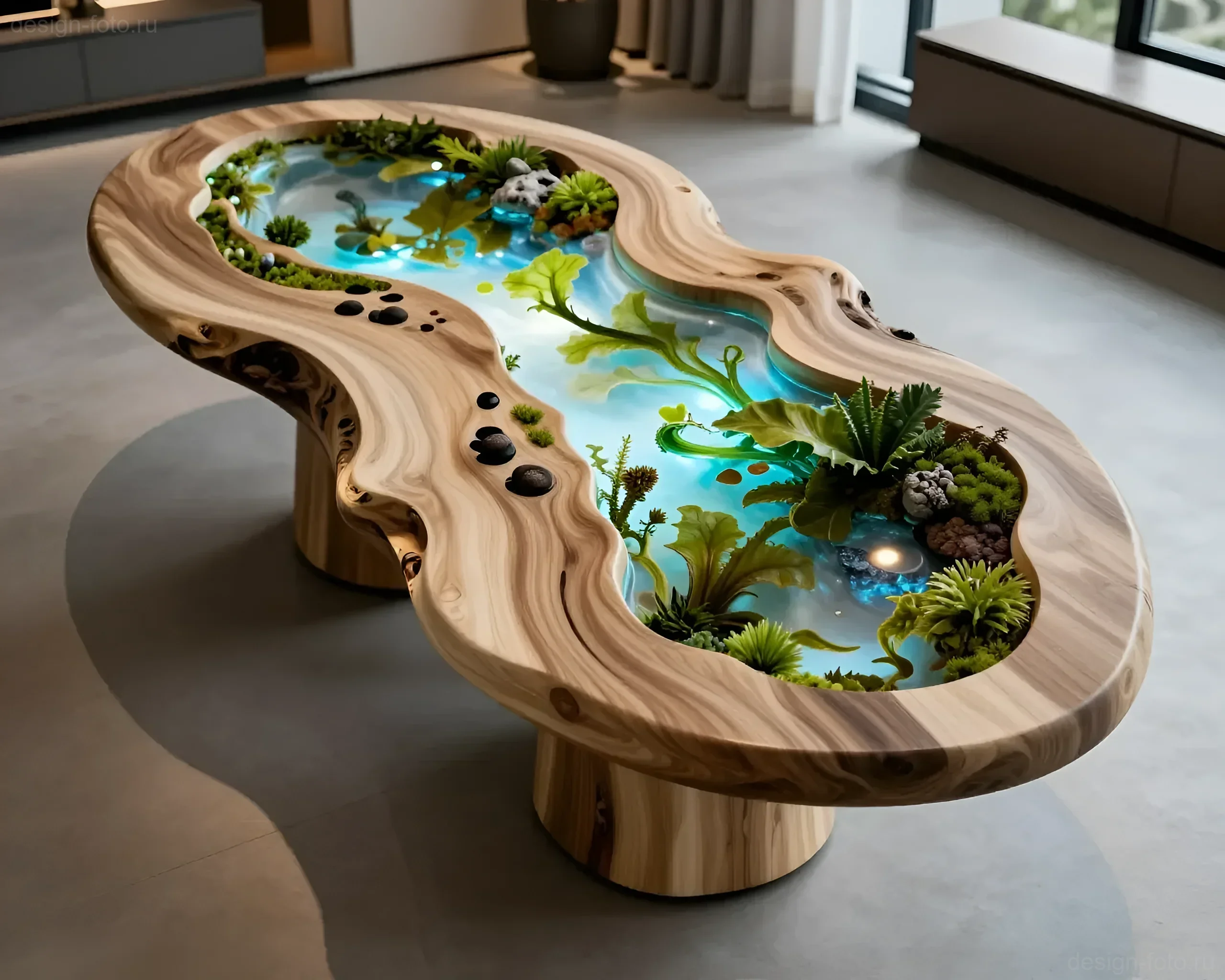
The process of creating biomaterials is a symbiosis of biotechnology and design. Let’s break down each stage in detail.
Algae Fabrics:
- Raw Material: Marine algae (most commonly kelp or spirulina) are used, grown under controlled conditions. They are rich in proteins, fiber, and natural pigments.
- Processing: Algae are ground, then mixed with natural binders (e.g., chitosan or alginate). The resulting mass is passed through special machines to form fibers.
- Weaving: The fibers are woven on looms similar to those used for linen or cotton. The finished fabric undergoes final processing – for example, impregnation with natural oils to increase wear resistance.
- Result: A fabric with a matte surface, pleasant to the touch, with a natural sheen. The color varies from light green to dark brown depending on the type of algae and the degree of processing.
Mycelium Panels:
- Raw Material: Mycelium is the fungal network grown on an organic base (sawdust, straw, coffee grounds). Agricultural waste is often used as a substrate.
- Growth: Mycelium is seeded into a mold, where it grows for 7–14 days. During this time, it fills the entire mold, creating a dense structure.
- Drying and Processing: After growth, the material is dried at 60–80°C to stop fungal growth. It then undergoes processing – for example, coating with natural wax or oil for moisture protection.
- Result: Panels with a porous structure, excellent sound insulation, and natural color. The thickness of the panels is usually 10–30 mm, allowing them to be used as finishing material or even as a structural element.
Interesting fact: some manufacturers add natural dyes (e.g., turmeric or beetroot) to mycelium to achieve brighter shades. This does not affect the material’s properties but expands the palette for designers.
Color Solutions and Textures: The Natural Aesthetics of Biomaterials
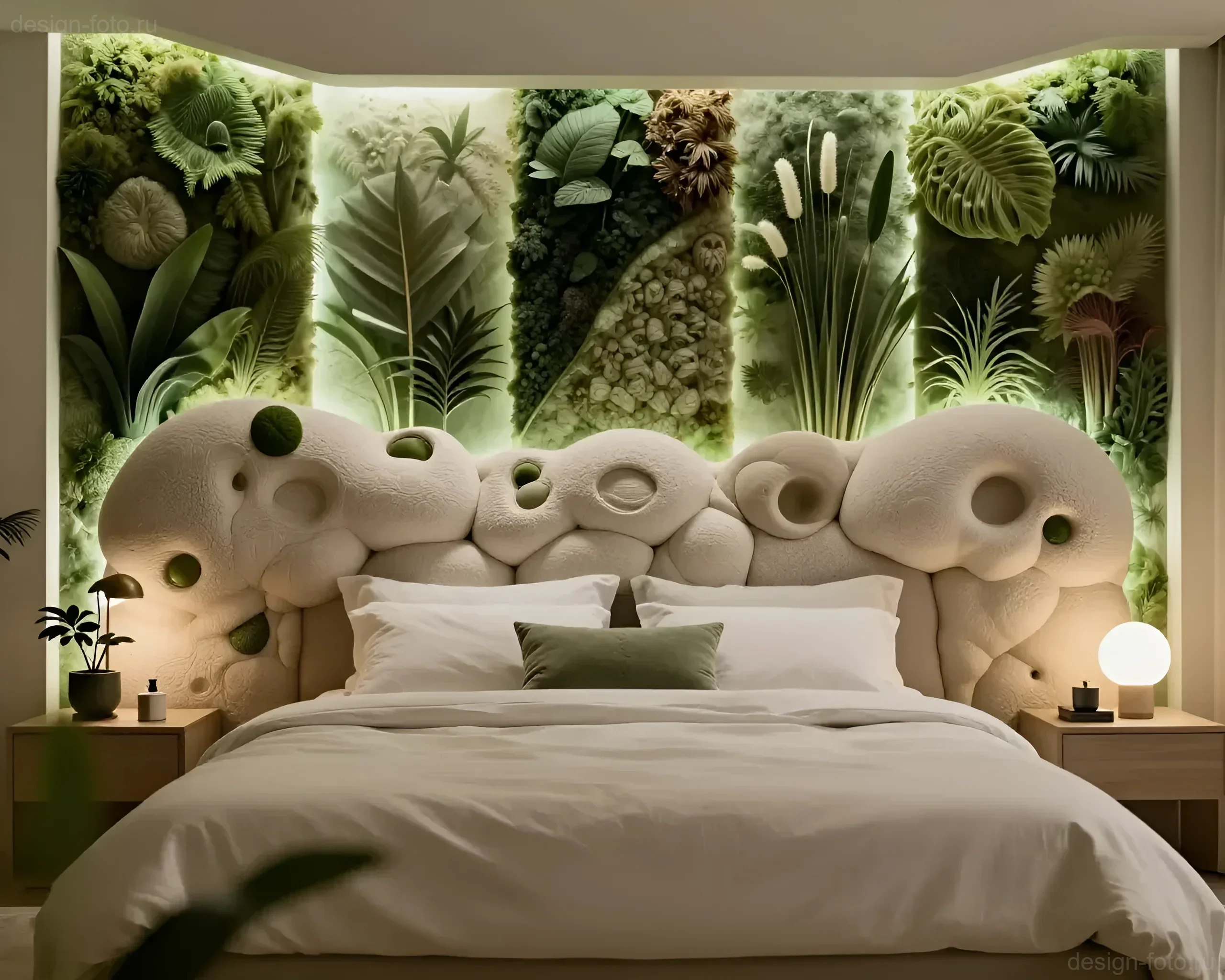
Color and texture are what make biomaterials unique. Unlike artificial materials where color is determined by dye, here it is formed naturally. This means each piece has its nuances – and this is not a flaw, but an advantage.
Color Palette:
- Mycelium: From light beige to dark gray. Sometimes shades of olive or brown appear – this depends on the substrate and growth conditions.
- Algae: From light green to dark burgundy. Some types of algae yield an almost black color, which is ideal for accent areas.
Textures:
- Mycelium: Porous, slightly rough surface. Resembles wood or stone, but softer to the touch. Ideal for walls, ceilings, and furniture.
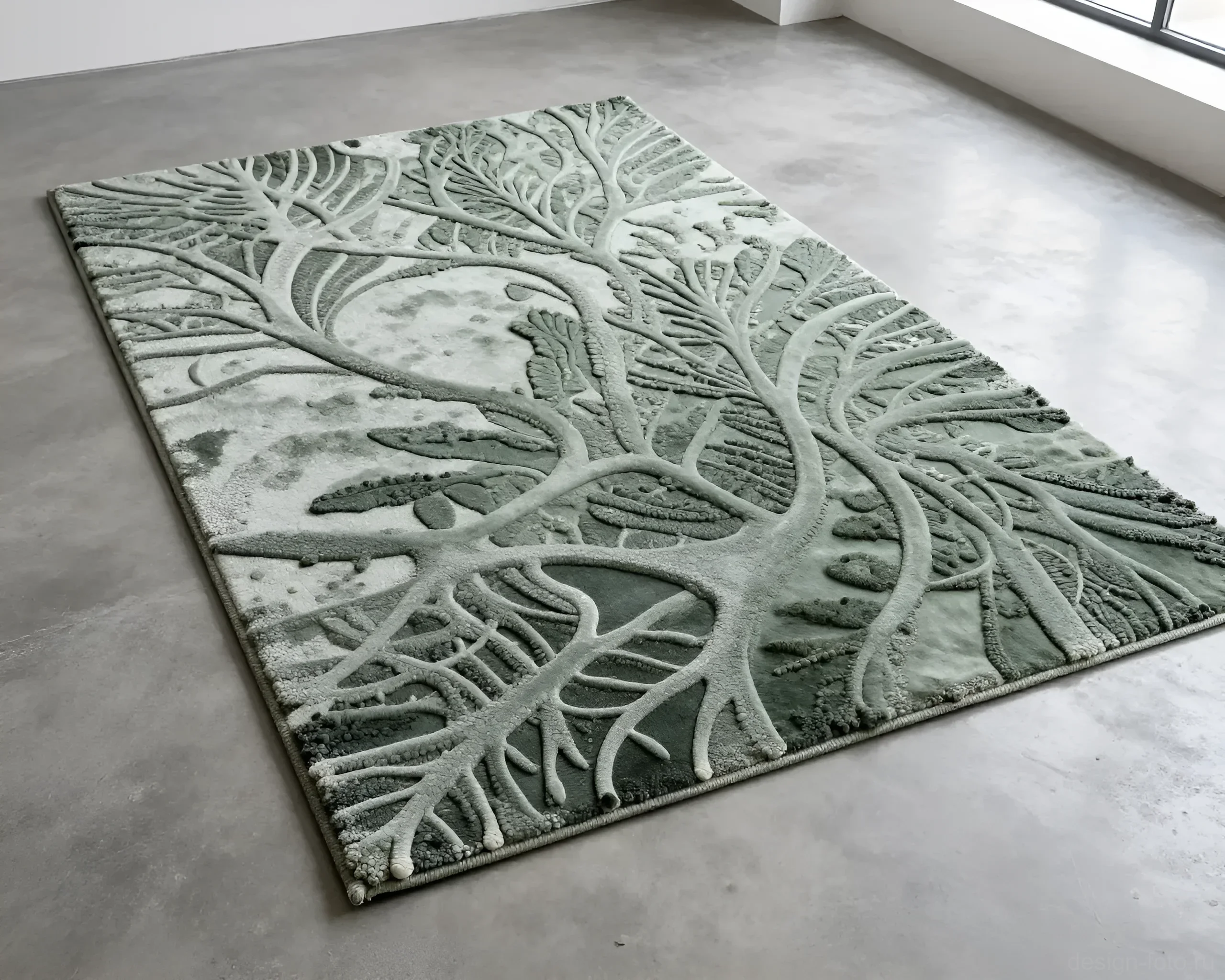
- Algae: Smooth, silky texture. Resembles linen or cotton, but with a natural sheen. Looks great in textiles – curtains, pillows, carpets.
Tip: when choosing colors, consider the lighting. Biomaterials look richer in natural light and softer in artificial light. For evening lighting, it’s better to choose light shades to avoid creating a gloomy atmosphere.
Layout and Zoning Using Mycelium’s Sound Insulation Properties
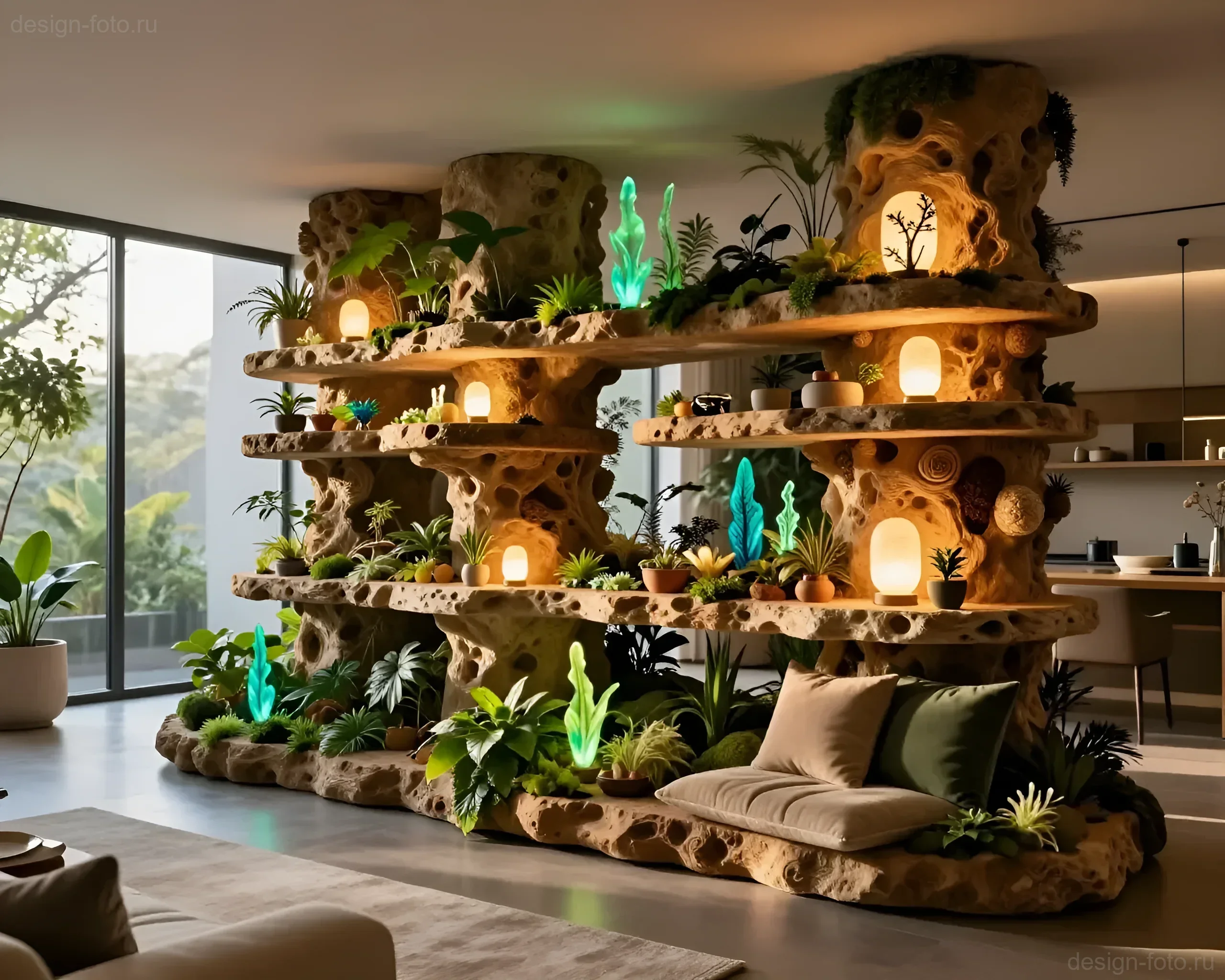
One of the main advantages of mycelium is its sound insulation properties. The porous structure of the material absorbs sound, making it ideal for zoning in apartments or offices. Here’s how you can use it in practice:
- Living Room Zoning: Install a mycelium panel between the relaxation area and the workspace. It will not only visually divide the space but also reduce noise from computers or TVs.
- Bedroom: Cover the walls with mycelium panels – this will create a “silence” effect, which is especially important for people sensitive to sound.
- Office: Use mycelium partitions between workstations. They not only isolate sound but also improve the microclimate due to natural ventilation.
Important: the thickness of the panels affects sound insulation. For residential premises, 15–20 mm is sufficient; for offices, 25–30 mm. Also, consider the placement of the panels: the closer to the noise source, the more effective the insulation will be.
Practical Care Tips for “Living” Furniture and Textiles
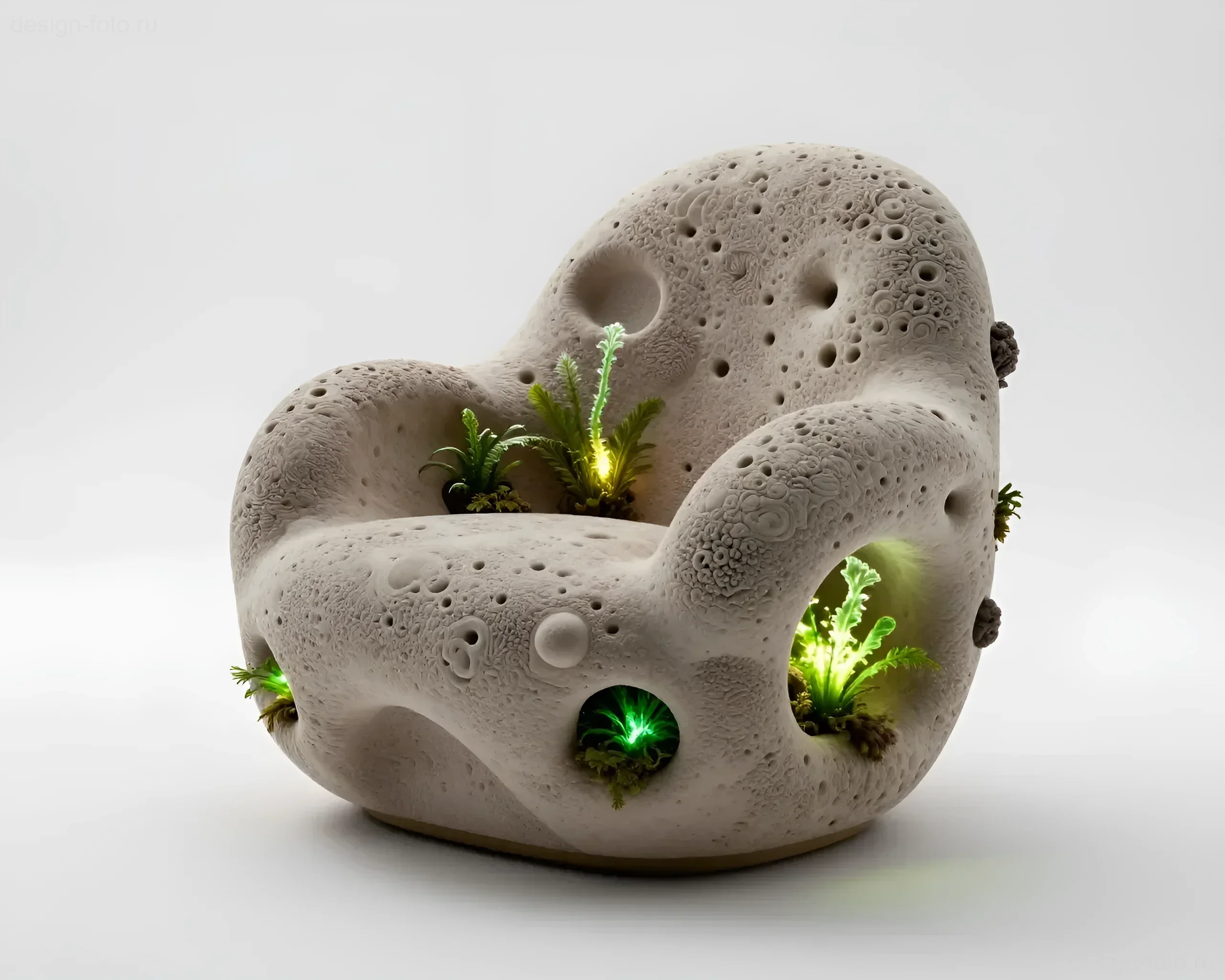
Biomaterials require special care, but it’s no more complicated than for traditional materials. Here are the basic rules:
- Cleaning: Use a soft cloth and water. Avoid chemical agents – they can damage the material’s structure. For algae textiles, hand washing in cool water is suitable.
- Humidity: Mycelium likes humidity, but don’t overdo it. The optimal level is 40–60%. If the air is too dry, the material may crack. Use a humidifier in winter.
- Light: Avoid direct sunlight – it can cause fading. This is especially important for algae textiles: they are sensitive to UV radiation.
- Repair: If a crack appears on a mycelium panel, it can be “healed” with a special mycelium-based gel. It is sold with the material.
Tip: every 6 months, perform preventive maintenance – for example, applying natural wax for mycelium or oil for algae. This will extend the material’s lifespan and preserve its appearance.
Common Mistakes When Choosing Biomaterials for Interiors
Even experienced designers sometimes make mistakes when working with biomaterials. Here are the most common ones:
- Incorrect Style Choice: Biomaterials are not suitable for classical interiors. If you want to use them in Baroque or Empire styles, the result will be disharmonious.
- Ignoring Humidity: Mycelium requires a certain level of humidity. If you live in a dry climate, don’t forget a humidifier.
- Color Overload: Biomaterials themselves have rich shades. Do not add bright accents to them – this will create visual noise.
- Incorrect Care: Using chemical agents or washing in hot water can damage the material. Always follow the manufacturer’s instructions.
Tip: before purchasing, request material samples. Test them in your interior – under different lighting and in different conditions. This will help avoid mistakes.
Solution Examples: How to Integrate Mycelium and Algae into a Modern Home
Here are a few specific examples of how biomaterials can be used in a real interior:
- Living Room: Cover one wall with mycelium panels – this will create an accent and improve sound insulation. Add algae textiles to the sofa and pillows – this will add tactility and coziness.
- Bedroom: Use algae curtains and a bedspread. They will create a sense of calm and help you fall asleep faster. The walls can be covered with mycelium – this will improve sleep quality through silence.
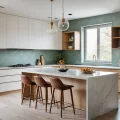
- Kitchen: Use mycelium panels for the backsplash. They are moisture-resistant and easy to clean. Add algae textiles to the chairs – this will create a contrast with wooden furniture.
- Bathroom: Use algae mats and towels. They are non-slip and dry quickly. The walls can be covered with mycelium – this will improve the microclimate.
Tip: start small. For example, buy one mycelium panel or one algae textile item. Try them in your interior – if you like them, scale up.
FAQ: Answers to Common Questions
Q: How long do biomaterials last?
A: With proper care – 10–15 years. Some manufacturers offer a 5-year warranty.
Q: Can they be used in the bathroom?
A: Yes, but only special models that are moisture-resistant. Check with the manufacturer.
Q: Is it expensive?
A: Prices are higher than for traditional materials, but they pay off due to their durability and uniqueness.
Q: Where to buy?
A: In specialized stores or online. For example, on the website mebeltops.com, you will find a wide selection of furniture and textiles made from biomaterials, including mycelium and algae. You can also order samples there to test in your interior.
Interesting Facts
- The first furniture made from mycelium was created in 2018 by Ecovative Design.
- Algae textiles are used in fashion – for example, the brand Stella McCartney released a collection made from algae.
- Mycelium can absorb up to 90% of noise – this makes it ideal for recording studios.
- Some types of algae can photosynthesize indoors – this improves air quality.
Biomaterials are not just a trend; they are the future of design. They combine functionality, aesthetics, and environmental friendliness. If you want to create a home that is not only beautiful but also alive – start with mycelium and algae. And remember: the best way to find out if they are right for you is to try them. Start small, and you will see how your space transforms.
Рекомендуем:
 Internal Wall Insulation: Materials and Technology
 PVC Wall Panels: Cheap and Cheerful. Installation Guide
 MDF Panel Wall Finishing: Installation Guide
 Meubles vivants en mycélium et algues : le nouveau luxe dans l’intérieur
 Drywall Partitions for Zoning: Functionality, Installation, and Ergonomics
 Wall Cladding with Wood Paneling: A Step-by-Step Guide
 Laminate Underlay: Cork, Coniferous, or Polystyrene – Detailed Analysis and Choice
 How to Make a Brick Wall in an Interior (Imitation)
 Bark Beetle Decorative Plaster: Application Technology
 What to do if mold or mildew appears on the walls?
 Liquid Wallpaper: Pros, Cons, and Application Technology
 How to Hang Vinyl Wallpaper on a Paper Backing?
 Gypsum or Cement Plaster: What and Where to Use?
 Mobile Zoning: Screens, Shelving, and Curtains for a Flexible Living Room
 DIY Venetian Plaster: Is It Possible?
 Ideal Studio Layout: How to Divide Zones Without Walls and Save Space
 Zoning a One-Room Apartment for a Family: Practical Solutions and Ergonomics
 Art Deco Colors: Black, Gold, Emerald, Burgundy – Luxury and Practical Tips for Your Interior
 Washable wallpaper for the kitchen: why it’s the best idea for your renovation?
 Neuroarchitecture 2026: How Interior Design Programs Your Brain for Rest and Productivity