
Working with small apartments, whether it’s a 20-square-meter studio or a classic one-bedroom unit up to 35 sq m, always requires high precision and an engineering approach. Zoning in this context is not just decorative space division; it is a key tool for creating a functional and psychologically comfortable environment. As professional architects and designers, we view zoning as a process of optimizing every centimeter of space, where each zone must perform its role without interfering with the adjacent one.
What is Zoning in a Small Apartment and Why is it Key to Comfort

Zoning is the division of a single space into functional segments (home office, bedroom, living room, kitchen) while maintaining visual integrity and a sense of spaciousness. In limited square footage, proper zoning solves several critically important tasks:
- Ergonomics and Logistics: Ensures convenient and short movement paths between key points (kitchen–dining table, bed–wardrobe).
- Functional Autonomy: Allows different tasks to be performed simultaneously (e.g., working on a computer while food is being prepared in the kitchen) without encroaching on another family member’s personal space.
- Psychological Comfort: Creates a sense of privacy. In a studio without walls, zoning helps the brain “rest” from the work or kitchen environment by designating a clear zone for sleep and relaxation.
Important: In small apartments, we always strive for soft zoning, avoiding solid, capital partitions that instantly “eat up” light and volume.
Stylistic Approaches to Zoning Studios and One-Bedroom Apartments: From Scandinavian to Loft

The choice of style dictates which zoning tools will be most effective. In small living spaces, the main goal of style is not to overload, but to emphasize functionality.
Scandinavian Style: Maximum Light and Mobility
- Tools: Lightweight, mobile, and transparent structures. Slatted partitions made of light wood (pine, ash), white textile curtains, or semi-transparent shelving units are ideal.
- Color: Monochrome light palette (white, light gray, beige). Zoning is achieved through contrasting textures (smooth wall vs. rough rug) or small color accents (e.g., in the work area).
Loft: Contrast and Industrial Transparency
- Tools: Loft style allows for the use of rigid but transparent dividers. The most popular technique is steel or aluminum partitions with glazing (often frosted or textured for privacy).
- Zoning by Height: If ceiling height allows (from 3 meters), loft is ideal for creating a mezzanine or a raised platform for the bedroom, which is the most radical and effective zoning method.
Modern Minimalism: Built-in Functionality
- Tools: Zoning in minimalism is achieved through hidden storage systems and transformable furniture. The partition is the built-in wardrobe (floor to ceiling, handleless) or a rotating TV panel.
- Materials: Preference is given to smooth, uniform surfaces (MDF with matte finish, microcement) that do not create visual noise and allow one zone to smoothly transition into another.
Materials and Color Solutions for Visual Space Division: Maximum Light and Air

If physical partitions are impossible or undesirable, visual techniques come into play. They require precision and professional selection to avoid a “patchwork quilt” effect.
Floor Zoning
This is one of the most effective and least invasive methods. Division occurs through changing floor coverings:
- Kitchen/Hallway: Durable porcelain stoneware or tiles.
- Living Area (Living Room/Bedroom): Warm materials – laminate, parquet board, or vinyl flooring.
- Technical Nuance: Ensure that the joint between materials is executed as neatly as possible (e.g., through a cork compensator or a thin metal profile) and does not create height differences, which is critical for safety and cleaning.
Wall Color and Texture Zoning
Do not use bright, contrasting colors. The goal is nuanced separation:
- In the bedroom area, you can use wallpaper with a soft texture (textile, non-woven for painting) or a deeper, but muted shade (e.g., gray-blue).
- In the work area or living room area, you can apply an accent texture: decorative plaster resembling concrete, brick (for loft), or wooden panels.
- Mirror inserts or glossy surfaces in narrow corridors or on wardrobe facades visually expand the space, but use them sparingly to avoid oversaturation.
50+ Practical Zoning Ideas: Transformable Partitions, Furniture, and Lighting

Here is a list of specific, proven solutions that effectively divide space in a small apartment, ensuring privacy and functionality.
I. Physical and Transformable Partitions (15 Ideas)
- Sliding Glass Systems: Ideal for separating a bedroom from a living room. Can be fully transparent or frosted.
- Slatted (Lamellar) Partitions: Provide visual separation without blocking light and air circulation (slat spacing 4–8 cm).
- Curtains and Drapes: The most budget-friendly and flexible option. Use dense blackout curtains for the sleeping area.
- Japanese Panels (Screen Curtains): Vertical fabric panels that slide like a screen.
- Mobile Screens: Folding structures that can be put away when not needed.
- Open Shelving Units: Excellent for separating a work area. Books and decor act as a barrier.
- Glass Blocks (Bricks): Allow light to pass through but provide privacy due to their texture.
- Drywall Partitions with Niches: Partial walls (halfway up the room) where the upper part is open.
- Rotating Panels: A system where vertical slats can change their angle.
- Vertical Gardening: Using a living wall or tall plant pots.
- Hidden Pocket Doors: Doors that slide completely into the wall, saving space.
- Arches or Portals: Visually highlight a zone (e.g., an entryway) but do not enclose it.
- Aquarium Partition: An expensive but striking solution for separating a living room.
- “Face-to-Face” Storage Shelving: Shelves on one side, a solid panel on the other (e.g., a bookshelf that serves as a headboard on the other side).
- Transformable Wall: A rare solution where part of the wall (e.g., above a desk) folds or lifts up.
II. Furniture Zoning and Transformers (20 Ideas)
- Sofa with its back to the kitchen: The most common technique for studios. The sofa clearly defines the boundary of the living room.
- Bar Counter/Island: Separates the kitchen and living room, serving as a dining area simultaneously. Optimal height is 90–110 cm.
- High Chest of Drawers: Used as a low divider that doesn’t obstruct the view.
- Sliding Wardrobe with Mirrored/Frosted Doors: Installed perpendicular to the wall, it becomes a full partition.
- Platform Bed with Drawers: Raising the sleeping area by 30–50 cm, creating storage space.
- Built-in Furniture “Wall-to-Wall”: Creates a unified, unbroken facade, masking zone boundaries.
- Murphy Bed (Wall Bed): Completely hides the bedroom from view during the day.
- Transformer Table: A folding dining table that serves as a console or shelf when folded.
- Desk in a Niche: Designating a workspace by recessing it or using a partial partition.
- Kitchen Peninsula: An extended countertop that protrudes into the living area.
- Armchair or Chaise Lounge: Placed in a corner, they can define a reading or relaxation area.
- TV Panel on a Swivel Mount: Allows viewing TV from both the living room and the sleeping area.
- Dining Set: A clearly positioned table with accent chairs, separating the kitchen from the living room.
- Narrow Consoles: A narrow console (20–30 cm deep) can be placed behind the sofa for books or decor, emphasizing the boundary.
- Modular Storage Systems: Sections that can be rearranged and combined.
- Built-in Benches: Using a windowsill or niche to create seating.
- Loft Bed: Frees up the lower space for a desk or sofa.
- Wardrobe-Partition with Open Sections: Wardrobe depth of 40 cm, which is more convenient than the standard 60 cm for small apartments.
- Pull-out/Folding Countertops: Additional kitchen workspace that hides away when not in use.
III. Lighting and Architectural Zoning (15 Ideas)
- Track Lighting Systems: Allow directing light and highlighting specific zones.
- Multi-level Ceilings: Using drywall structures to define boundaries (e.g., lowering the ceiling over the kitchen).
- Accent Pendant Lights: Low-hanging lamps over a dining table or bar counter.
- Floor Lamps: Defining a reading area or an armchair nook.
- Furniture Backlighting: LED strips under kitchen cabinets or around the perimeter of a platform.
- Spotlights with Different Beam Angles: Softer light in the living room, brighter and directed light in the kitchen.
- LED Lines: Integrated into the ceiling or walls, they can serve as visual “arrows” dividing the space.
- Colored Lighting: Using warm light in the relaxation zone and neutral/cool light in the work zone.
- Rugs: Clearly define the boundaries of the living room or bedroom. Choose rugs that accommodate all the furniture in that zone (sofa and armchairs) or at least the front legs.
- Different Floor Heights (Podium): Raising the bedroom or workspace by 15–30 cm.
- Mirrors with Backlighting: Visually enlarge the space and highlight a zone.
- Wall Niches: For storage or decor, creating depth.
- Hidden Cornice: Perimeter ceiling lighting for soft, diffused light.
- Dimmers (Brightness Controls): Allow changing the atmosphere and function of a zone depending on the time of day.
- Picture/Accent Lighting: Directed light on decorative elements, diverting attention from boundaries.
Expert Practical Advice: How to Effectively Use Every Square Meter

Professional design of a small apartment is based on strict adherence to ergonomic standards and maximum vertical integration.
- Maximize Vertical Space: Forget standard 220 cm high wardrobes. Wardrobes and shelving units should be built-in from floor to ceiling. Use the upper mezzanines (last 40–50 cm) for seasonal storage.
- Depth Matters: The standard wardrobe depth of 60 cm is often too large for narrow passages. In the hallway and bedroom, consider wardrobes with a depth of 40–45 cm – they are capacious but significantly save passage space.
- Windowsill as a Functional Element: Extend the windowsill to form a countertop. It can serve as a desk, bar counter, or additional kitchen surface. The optimal height for work is 75–80 cm.
- Hidden Storage: All appliances, utilities, and personal belongings should be as hidden as possible behind facades. Visual clutter is the main enemy of small spaces.
- Unified Facade Style: If the kitchen and living room are combined, use identical or harmonious facades for kitchen cabinets and living room wardrobes. This creates the illusion of a single piece of furniture, not two different zones.
- Minimum Passage: In areas of active traffic (e.g., between the sofa and the shelving unit), ensure a passage of at least 70 cm. In areas where you only need to squeeze through (e.g., to a window), 60 cm is acceptable.
Top 7 Mistakes in Zoning Small Apartments That Steal Space
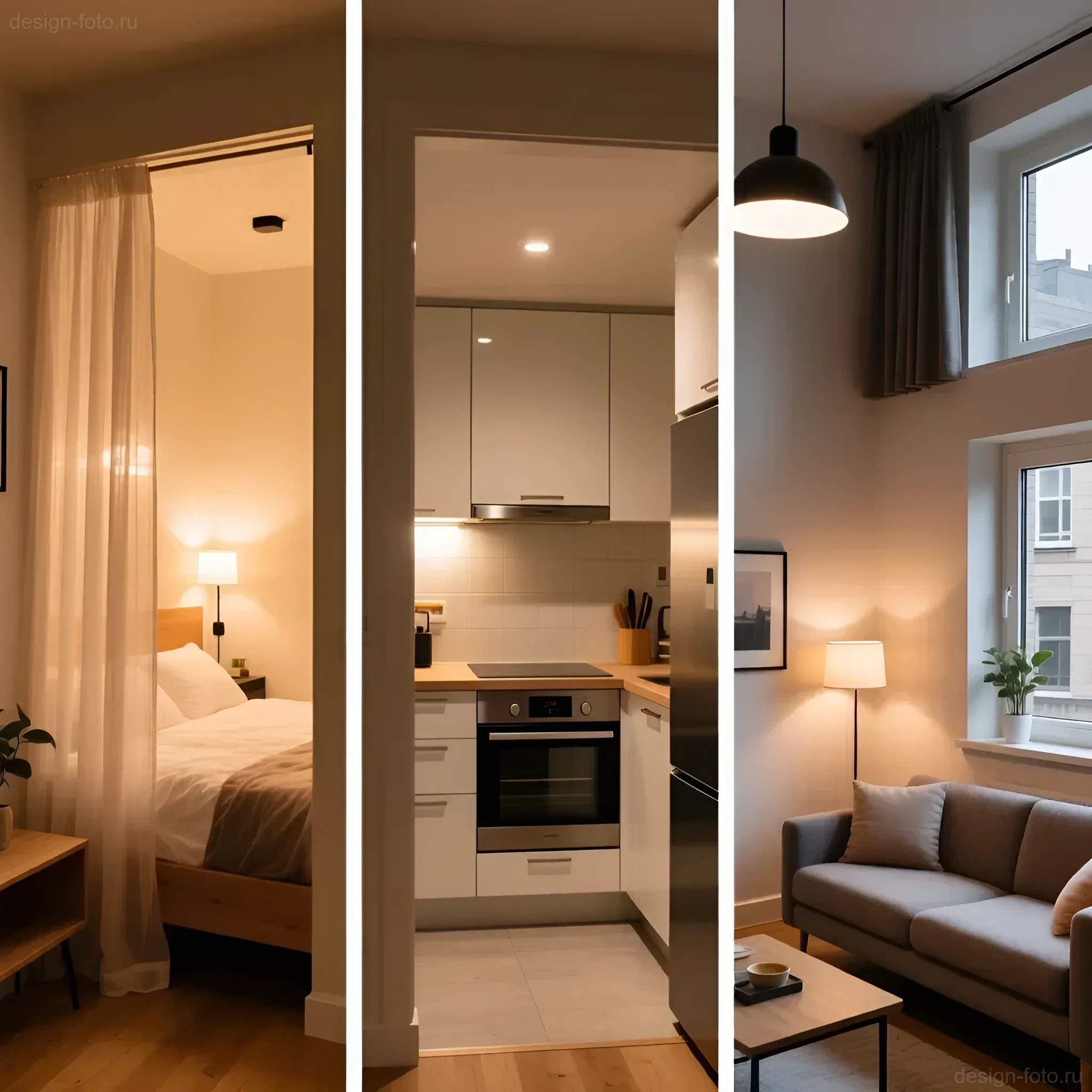
Zoning mistakes in small apartments often lead to the dwelling feeling cramped rather than functional. Avoid the following pitfalls:
- Using Solid and Heavy Partitions: Capital walls or thick drywall partitions without openings deprive the room of natural light and volume. Always choose transparent, slatted, or transformable options.
- Single Light Source (Central Chandelier): A chandelier in the center of the room makes corners dark and does not highlight functional zones. Multi-level lighting is necessary (tracks, backlighting, floor lamps).
- Incorrect Furniture Size: A huge corner sofa or a massive dining table in a 25 sq m studio will block all passages. Furniture must be proportional to the area.
- Visual Chaos: Excessive decor, open shelves with small items, and a variety of bright colors instantly destroy the zoning effect and create a sense of clutter.
- Too Many Different Floor Coverings: Switching between tiles, laminate, parquet, and carpet within 30 sq m makes the space feel “chopped up.” Two, or a maximum of three harmonizing materials, are sufficient.
- Ignoring Podiums and Height: If you don’t use vertical zoning (mezzanines or podiums), you lose valuable meters for storage and separating the sleeping area.
- Blocking Windows or Doors: Furniture that partially obstructs natural light or hinders the free opening of doors is a critical ergonomic error.
Real Examples: Photo Solutions for Living Room, Bedroom, and Kitchen in a Studio
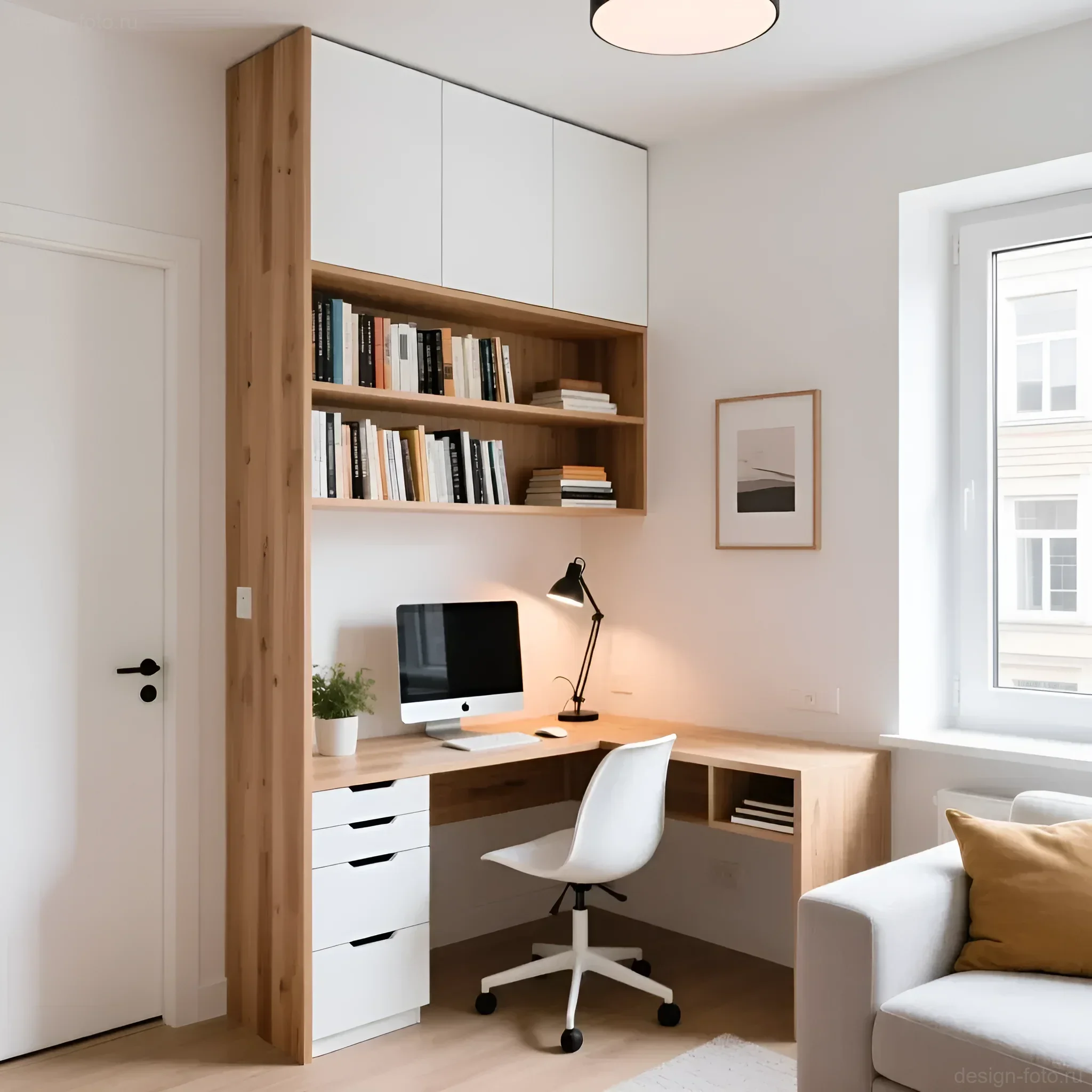
28 sq m Studio: Zoning the Bedroom and Living Room
Task: To separate the sleeping area from the work and guest areas while maintaining light.
Solution: The sleeping area (140×200 cm bed) is located in a niche by the window. Zoning is achieved using a slatted partition made of light ash, which is 30 cm from the ceiling (for better air circulation). A dense blackout curtain is installed on the bedroom side, hiding the bed when guests arrive. The floor in both areas is the same (light laminate), but the living room is highlighted by a large light gray rug.
35 sq m One-Bedroom Apartment: Kitchen-Living Room and Home Office
Task: To integrate a full home office and kitchen into the common space.
Solution: The kitchen is separated from the living room by a bar counter (105 cm high), which serves as a dining table. The home office is organized in a corner with a narrow desk (50 cm deep) and wall shelves. The work area is highlighted by color: the wall is painted in a darker, richer shade, and a track light system with directional spotlights is mounted above the desk, operating independently of the main living room lighting.
Apartment with High Ceilings (4 m): Two-Level Zoning
Task: To maximize the use of vertical space.
Solution: Creation of a full mezzanine level (height below is 210 cm, above is 160 cm). The first level houses the kitchen, living room, and bathroom. The second level, accessible by a compact staircase with built-in drawers, contains the bedroom. This is a radical but most effective zoning solution that effectively doubles the usable area. It is important to use transparent railings (glass) to maintain a sense of lightness.
Frequently Asked Questions (FAQ) about Zoning 20-30 Square Meters
Do I need to get approval for installing slatted partitions or podiums?
The installation of light, non-stationary partitions (slatted, glass on rails, screens) does not require approval, as they are not capital structures. However, if you plan to build a capital podium that affects load-bearing structures or load distribution, as well as installing stationary partitions made of brick or foam blocks, this requires a project and mandatory approval from the BTI (Bureau of Technical Inventory).
What is the minimum size for a sleeping area in a studio?
The ergonomic minimum for a comfortable double bed (140×200 cm) and passages: 140 cm (bed) + 60 cm (passage on one side) + 60 cm (passage on the other side) = 260 cm in width, if the bed is placed with its headboard against the wall. In a studio, you often have to sacrifice one passage by pushing the bed against the wall, reducing the required width to 200–220 cm.
How to zone a children’s area in a one-bedroom apartment?
It is best to place the children’s area near the window. Use a tall shelving unit-partition, accessible from both sides, which serves as both storage and a barrier. For young children, loft beds are ideal, freeing up space for play or study below. Color zoning in a children’s room can be brighter, but it must harmonize with the main color scheme of the room.
Is it true that glossy surfaces are better than matte for small apartments?
Gloss does reflect light and visually expands space. However, if there are too many glossy surfaces, it can create glare and a “cold” office feel. We recommend using gloss sparingly: on kitchen facades, in the bathroom, or on one or two sliding wardrobe doors. Main surfaces (walls, floor) are best left matte or semi-matte to create coziness and reduce visual clutter.
Рекомендуем:
 Interior Layout and Zoning: An Expert Guide to Creating Functional Space
 Bedroom and Workspace Zoning: Comfort, Ergonomics, and Productivity
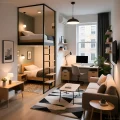 Budget Zoning: How to Create Comfort in a Rented Apartment Without Renovation
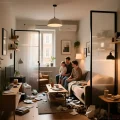 Zoning a One-Room Apartment for a Family: Practical Solutions and Ergonomics
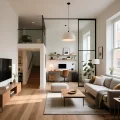 Ideal Studio Layout: How to Divide Zones Without Walls and Save Space
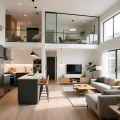 Functional Zoning of a Kitchen-Living Room: A Practical Guide from an Architect
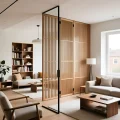 Mobile Zoning: Screens, Shelving, and Curtains for a Flexible Living Room
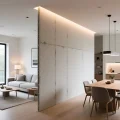 Drywall Partitions for Zoning: Functionality, Installation, and Ergonomics
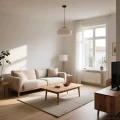 How to Maintain Perfect Order in a Minimalist Interior: A Practical Guide
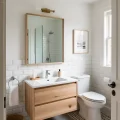 Which Tile to Choose for a Small Bathroom: Color, Size, Texture, and Space-Expanding Secrets
 Minimalism in Interior Design: The Secret to Style, Ergonomics, and the Line Between Emptiness
 Art Deco Colors: Black, Gold, Emerald, Burgundy – Luxury and Practical Tips for Your Interior
 How to Make a Brick Wall in an Interior (Imitation)
 Interior Design and Pets: How to Combine Aesthetics and Pet Comfort
 Nautical Style in Interior Design: How to Create a Coastal Atmosphere in a City Apartment
 Bark Beetle Decorative Plaster: Application Technology
 Art Deco Mirrors: Geometry and Luxury That Transform Interiors
 How to Hang Vinyl Wallpaper on a Paper Backing?
Zonage d’un appartement d’une pièce pour une famille : solutions pratiques et ergonomie
How to Hang Vinyl Wallpaper on a Paper Backing?
Zonage d’un appartement d’une pièce pour une famille : solutions pratiques et ergonomie
 Internal Wall Insulation: Materials and Technology