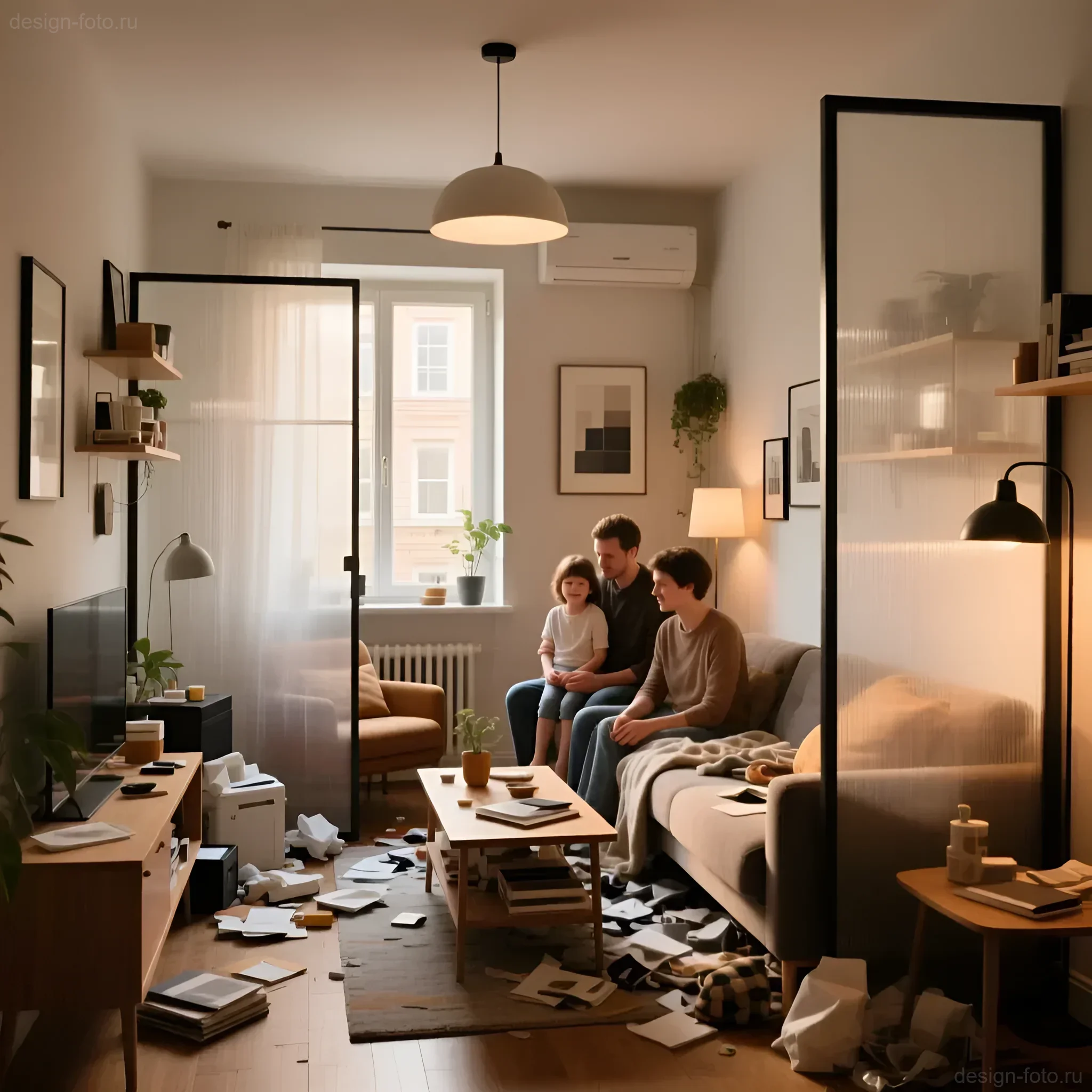
Working with limited space, especially when it comes to a one-room apartment intended for a family, is not just a design task; it’s an engineering challenge that requires maximum efficiency from every square meter. Your goal is to create not just a beautiful, but, above all, a highly functional and ergonomic space where each zone has a clear purpose, yet is harmoniously integrated into the overall volume.
Introduction: Why Zoning a One-Room Apartment for a Family is a Challenge and an Opportunity
A one-room apartment, or studio, for a family (whether it’s a couple with a child or even three adults) requires a radical rethinking of traditional layout solutions. Here, there’s no possibility to simply close the door to the bedroom or children’s room. All functions – sleeping, working, eating, relaxing, playing – must coexist in one volume without interfering with each other. This is a challenge that, however, offers a unique opportunity: with a competent approach, you will get a maximally personalized and adaptive living space.
The key principle we follow when working with “studios” is multifunctionality and transformation. We must ensure psychological comfort for each family member, which is achieved through clear, but not aggressive, separation of personal and common areas.
Main Zoning Styles and Concepts: From Open Spaces to Transformable Solutions
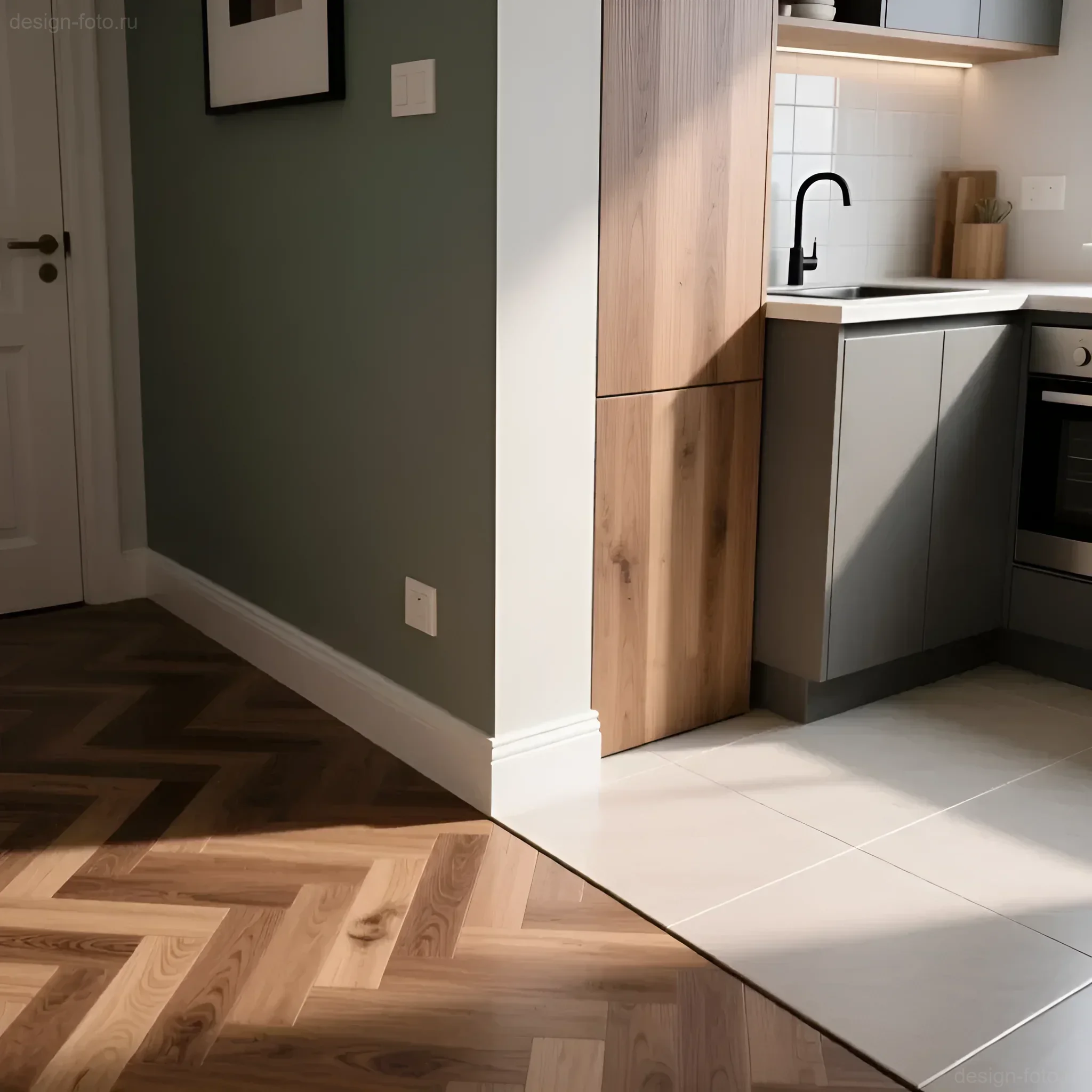
The choice of zoning method critically depends on the family composition and apartment area. We rarely use solid walls, preferring lighter and more flexible structures that do not block natural light.
1. The “Transformer” Concept
This is an ideal solution for very small apartments (up to 35 sq. m). The essence is that the same area performs different functions at different times of the day:
- Living Room/Bedroom: Use of lift-up (Murphy) beds or sofa beds. During the day, the bed is hidden in a wardrobe or wall, freeing up space for a living room or play area.
- Workspace/Dining Area: Sliding or folding tables integrated into a kitchen island or shelving unit.
2. Visual Zoning (Studio Approach)
Used for apartments where it’s important to maintain a sense of spaciousness. Separation is achieved through:
- Light: Different lighting scenarios for each zone (more on this below).
- Color and Texture: Contrasting or complementary materials on the floor and walls.
- Rugs: A large, accent rug clearly defines the relaxation area.
3. Physical (Flexible) Zoning
We use structures that can be easily changed or removed:
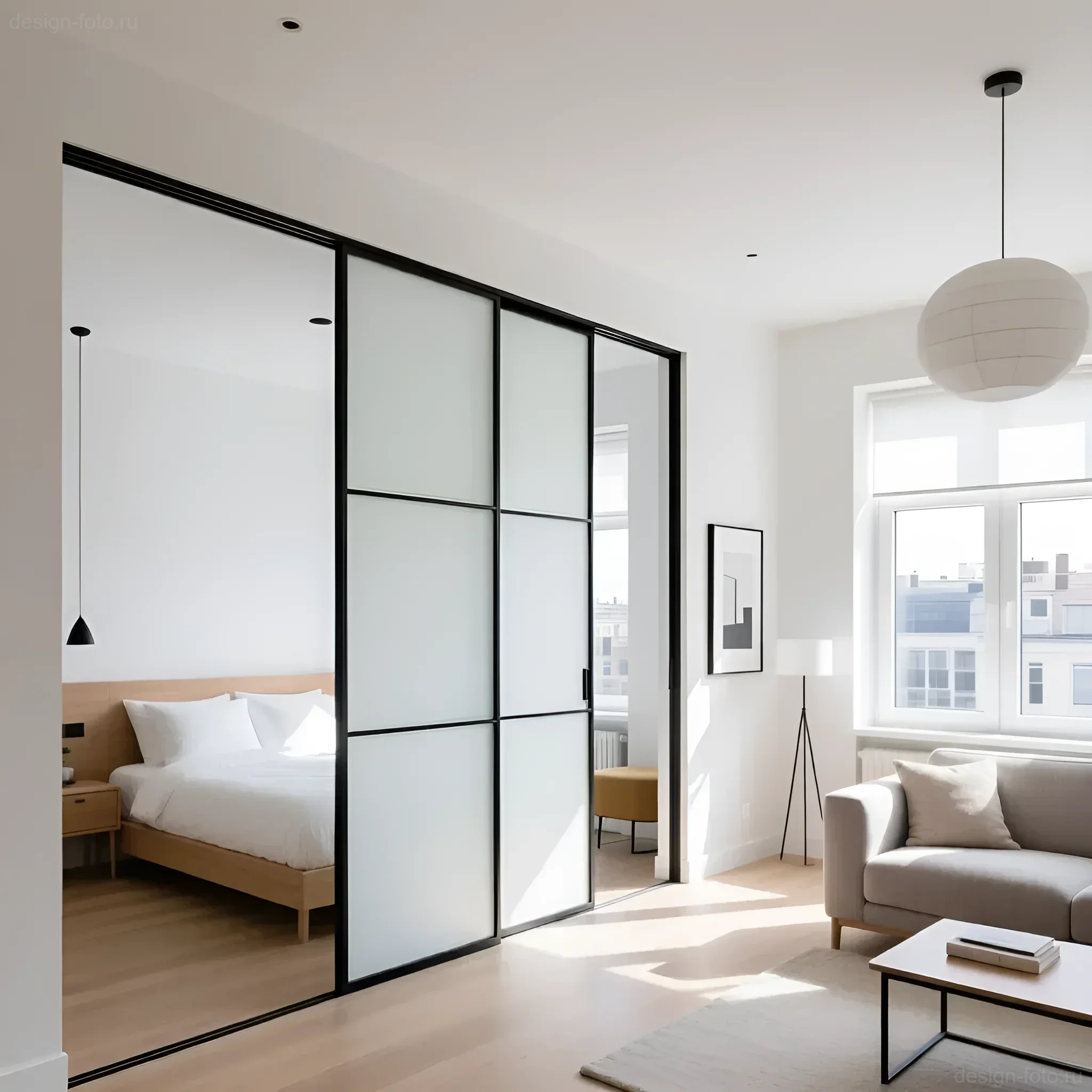
- Glass Partitions: An excellent way to separate a bedroom or children’s room. They let in light but provide acoustic and visual insulation. Frosted or textured glass is recommended for privacy.
- Shelving Units as Dividers: Open shelving units (e.g., 30–40 cm deep) are ideal for separating the living room and bedroom, while providing additional storage and not completely blocking the view.
- Textiles: Thick curtains or Japanese panels installed on a ceiling track can instantly create a private zone.
Choosing Finishing Materials and Color Palettes for Visual Zone Separation
Finishing is your main tool for zoning without building capital walls. Properly selected materials and colors are not only aesthetically pleasing but also functionally define boundaries.
Color and Light: Psychological Separation
In small apartments, light, neutral tones (white, light gray, beige) should dominate, as they visually expand the space. However, accents are necessary for zoning:
- Relaxation Zone (Bedroom): Warmer, muted shades are preferred (dusty rose, deep blue, olive). They promote relaxation.
- Work/Kitchen Zone: Cooler, stimulating shades or bright, clean colors (white, light green, gray) are appropriate here.
- Lighting (Key Factor): Use different color temperatures (Kelvin). In the work zone – 4000K (neutral white) for concentration. In the relaxation zone – 2700–3000K (warm yellow) for relaxation. Each zone must have its own independent light source.
Floor Coverings: Physical Boundary
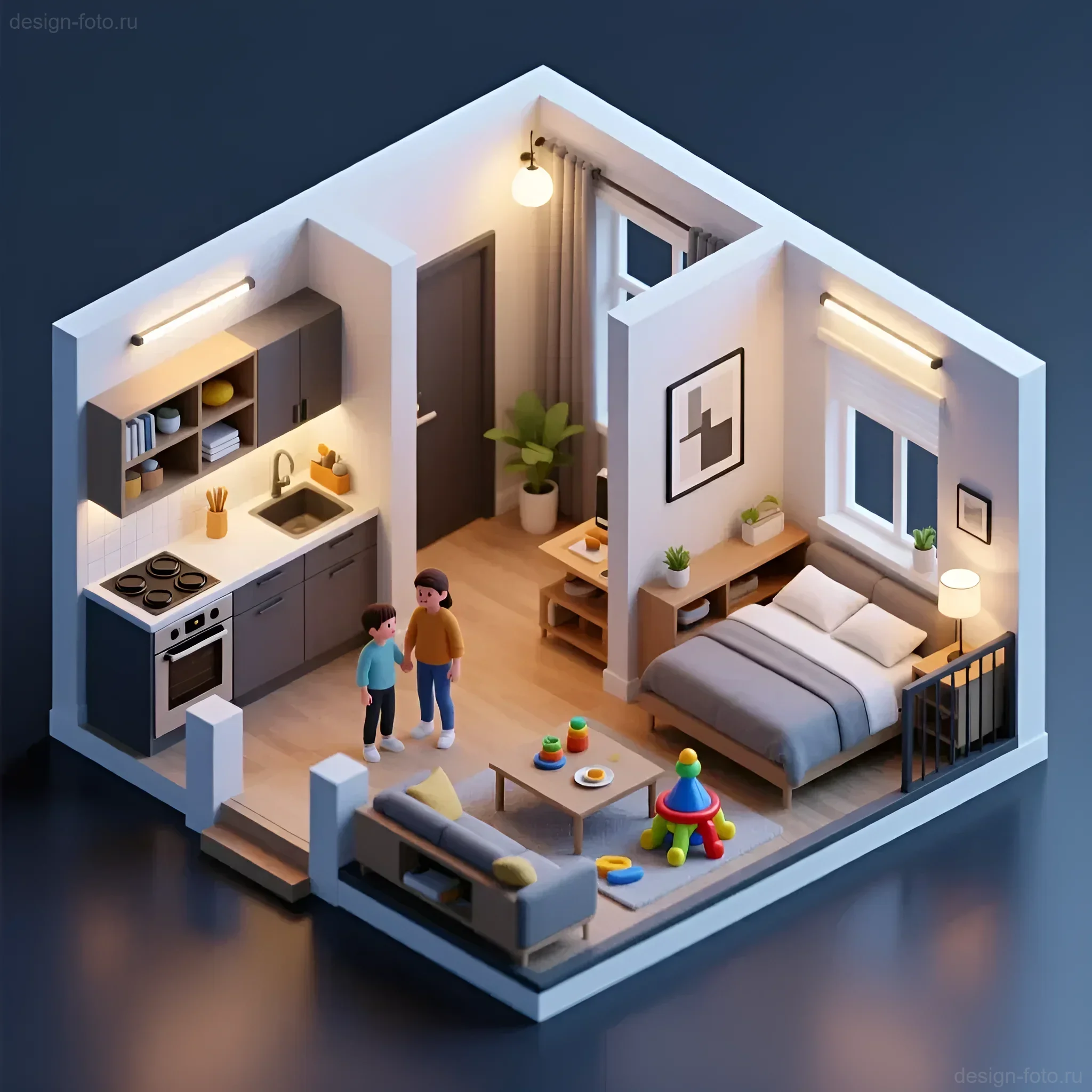
Changing the type of floor covering is the most obvious way to zone, especially between the living area and the kitchen/hallway.
- Kitchen and Hallway: Use durable tiles (porcelain stoneware) or vinyl flooring. This is practical for cleaning.
- Living Area: Warm, tactilely pleasant materials – laminate or engineered wood flooring.
- Important: The transition between materials should be as clean as possible. Avoid thresholds if possible to maintain a unified visual field and safety. If the floor heights differ, use transition profiles.
Optimal Layout and Effective Zoning of Functional Areas in a Studio
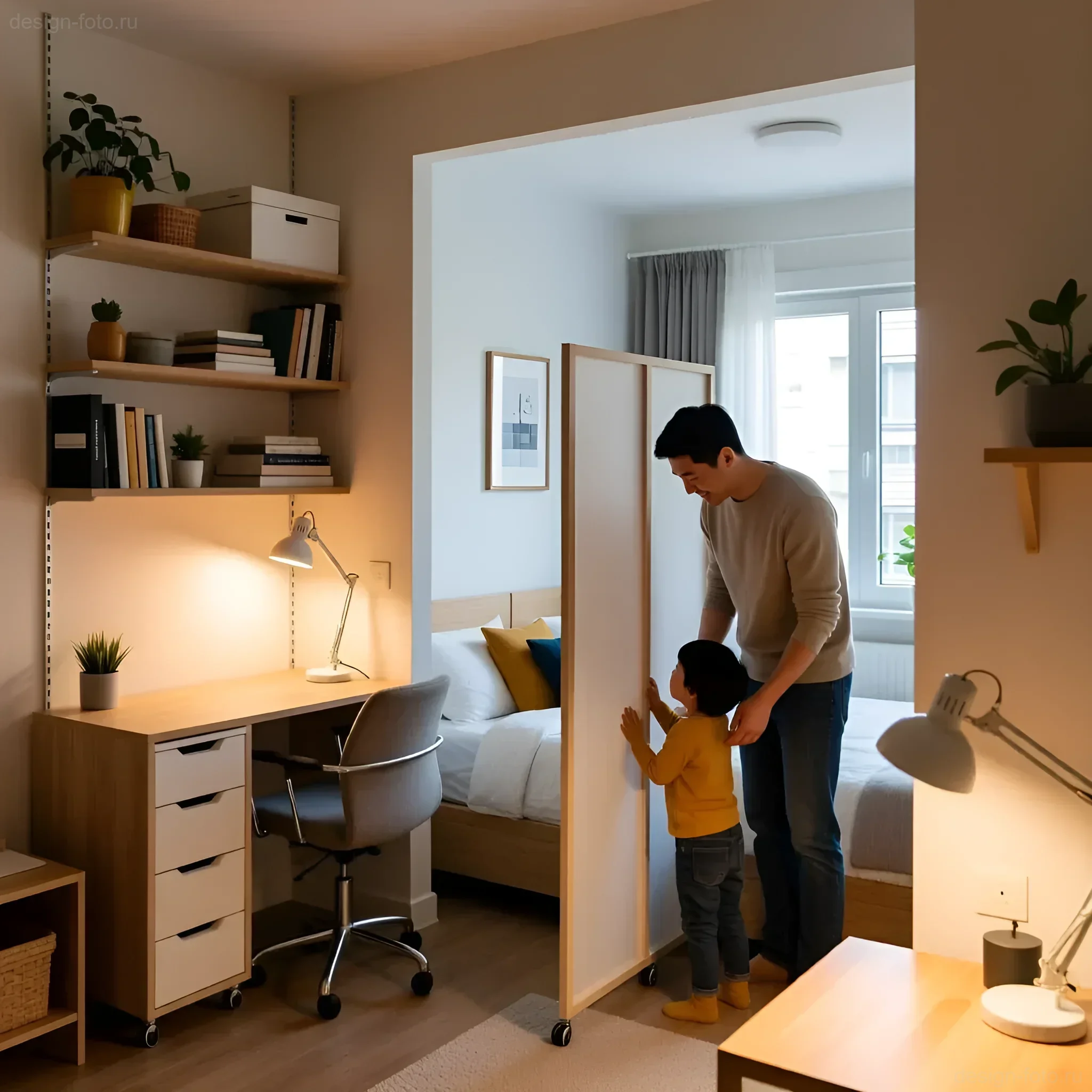
When planning a one-room apartment for a family, it is necessary to allocate at least four critically important zones. Let’s consider their location relative to the window and entrance.
1. Parents’ Sleeping Zone (Private Zone)
This zone requires maximum isolation and should be located further from the entrance and, preferably, have access to natural light. If the apartment has only one window, the parents’ bedroom is separated by a glass partition or shelving unit, but not completely, so as not to deprive the rest of the apartment of light.
- Ergonomics: The minimum passage width around the bed is 60 cm. If a transformable bed is used, ensure it does not block passages when unfolded.
- Storage: Built-in wardrobes (floor to ceiling) along the wall adjacent to the hallway. Wardrobe depth – standard 60 cm.
2. Children’s Zone (Play/Sleeping Area)
If the child is young, their sleeping area (crib) can be integrated into the parents’ bedroom, separated only by a screen or dresser. For a child older than 3–4 years, a separate, clearly defined corner is required.
- Location: The children’s zone should be maximally lit (closer to the window) and, if possible, separated from the kitchen so that odors and noise do not disturb sleep or study.
- Podium Solution: A podium 35–45 cm high is an excellent zoning solution. Inside the podium, a pull-out bed for the child can be hidden, or deep drawers for toys can be organized.
- Safety: All corners in the children’s zone should be rounded, and materials should be eco-friendly and easy to clean.
3. Kitchen and Dining Area
In a studio apartment, the kitchen should be as compact and quiet as possible. Priority is given to built-in appliances.
- Format: Linear or corner kitchen. A powerful range hood with external ventilation is mandatory to minimize odor spread.
- Dining Area: The best solution is a bar counter or island, which simultaneously serves as a work surface, dining table, and a boundary between the kitchen and living room. Countertop depth – 60–90 cm.
4. Living Room and Workspace
This zone usually occupies the central place and is the most flexible. If the family needs a workspace, it should be maximally integrated and concealable.
- Home Office: Use a wardrobe-office (a desk that closes with wardrobe doors), or a niche separated by curtains. The minimum countertop depth for comfortable work is 55 cm.
- Furniture: Choose sofas with internal storage drawers and light, mobile coffee tables.
Practical Tips: Life Hacks for Zoning a One-Room Apartment for Family Comfort
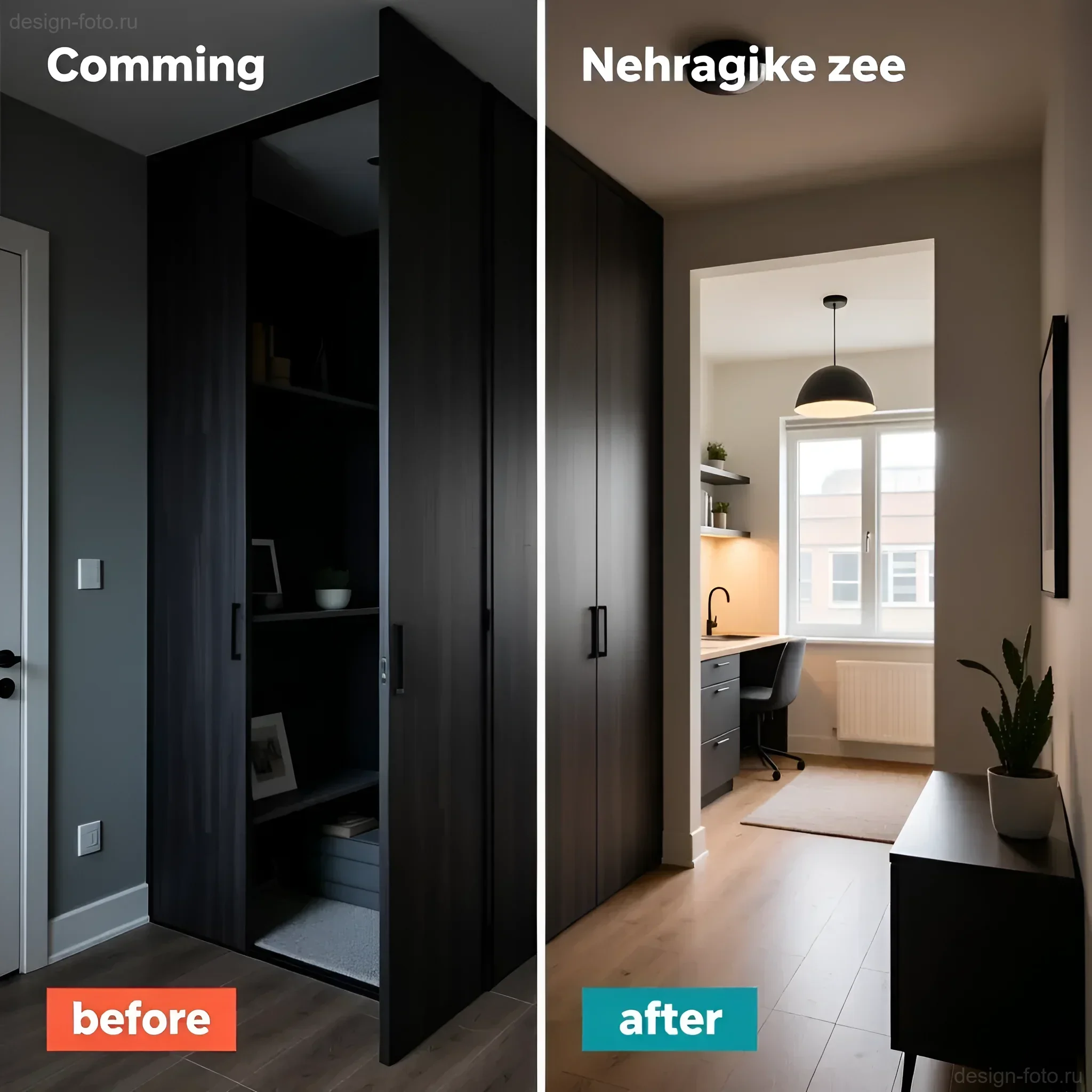
Complex architectural solutions are often not required. It is enough to use proven design techniques that improve ergonomics and visual perception.
1. Utilizing Vertical Space
In a small apartment, storage should go upwards. Use wardrobes and shelving units all the way to the ceiling. This not only increases storage capacity by 20–30% but also creates a “cleaner” visual image, as dust does not accumulate on upper surfaces.
2. Mirrors and Reflective Surfaces
Mirrors are the simplest and most effective way to visually double the space and increase the amount of light. Place mirrors on wardrobe doors (especially in the hallway and sleeping area) or on a long wall to create a sense of depth.
3. Integrated Storage
- Sliding Doors: Built-in wardrobes should have sliding doors so they don’t require extra space for opening the sashes.
- Space Under the Window: The windowsill can be transformed into a workspace or relaxation area (bench with drawers). The height of a windowsill-desk should be 75–80 cm.
- Mezzanines: If ceiling height allows (from 2.8 m), consider creating a mezzanine floor for an additional sleeping area or home office.
4. Acoustic Comfort
In a studio apartment, noise is the main enemy of family peace. Ensure sound insulation for the hallway and sleeping area using dense materials (e.g., MDF) in partitions or wardrobes. In the children’s area, use carpets and textiles to absorb noise.
Common Mistakes in Zoning Small Family Apartments and How to Avoid Them
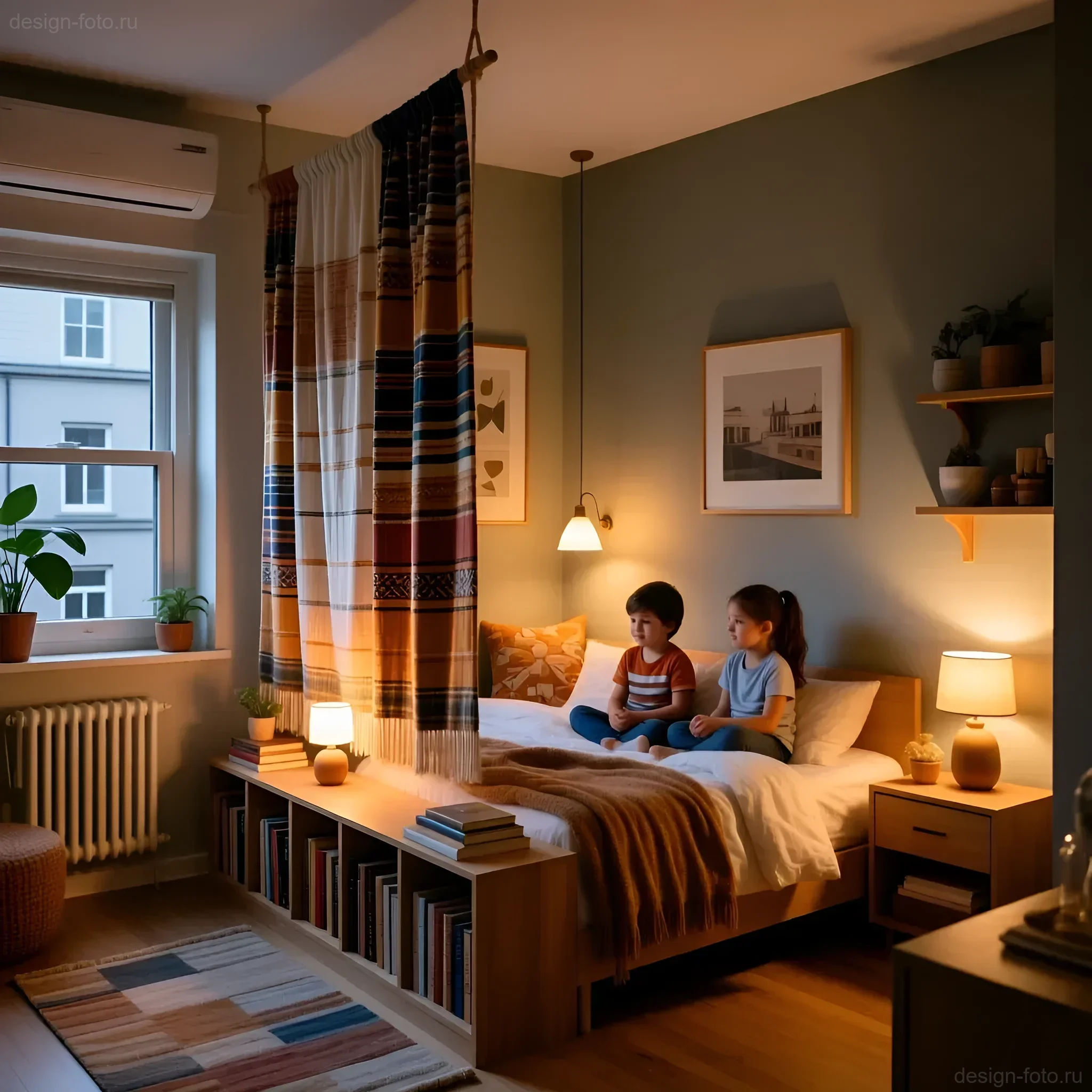
Even professionals sometimes make mistakes, but in a limited space, a mistake is very costly. Here’s a list of the most common shortcomings to avoid:
- Mistake 1: Excessive number of partitions. Trying to create isolated rooms leads to a “pencil case” effect – narrow, dark, and psychologically oppressive spaces. Solution: Use no more than two physical dividers and rely on visual zoning (light, color).
- Mistake 2: Ignoring natural light. If you block off the bedroom with a solid wall, the remaining 70% of the apartment will be without daylight. Solution: Use frosted glass, slatted partitions, or curtains that can be fully opened during the day.
- Mistake 3: Bulky furniture. Buying a standard large sofa or a massive table “eats up” all the space. Solution: Choose furniture on thin legs (visually lighter) and modular, easily movable elements.
- Mistake 4: Incorrect prioritization. A family with a young child should prioritize space for play and sleep, not a huge living room. Solution: Clearly define which zone is used most often and give it the best (brightest, most central) area.
- Mistake 5: Different styles in different zones. Trying to design the kitchen in loft style and the bedroom in Provence will create visual chaos. Solution: Maintain a unified stylistic basis and color palette, using contrasts only in textures (e.g., a smooth kitchen facade and textured wood in the living room).
Inspiring Zoning Examples: Photo Solutions for Different Family Types
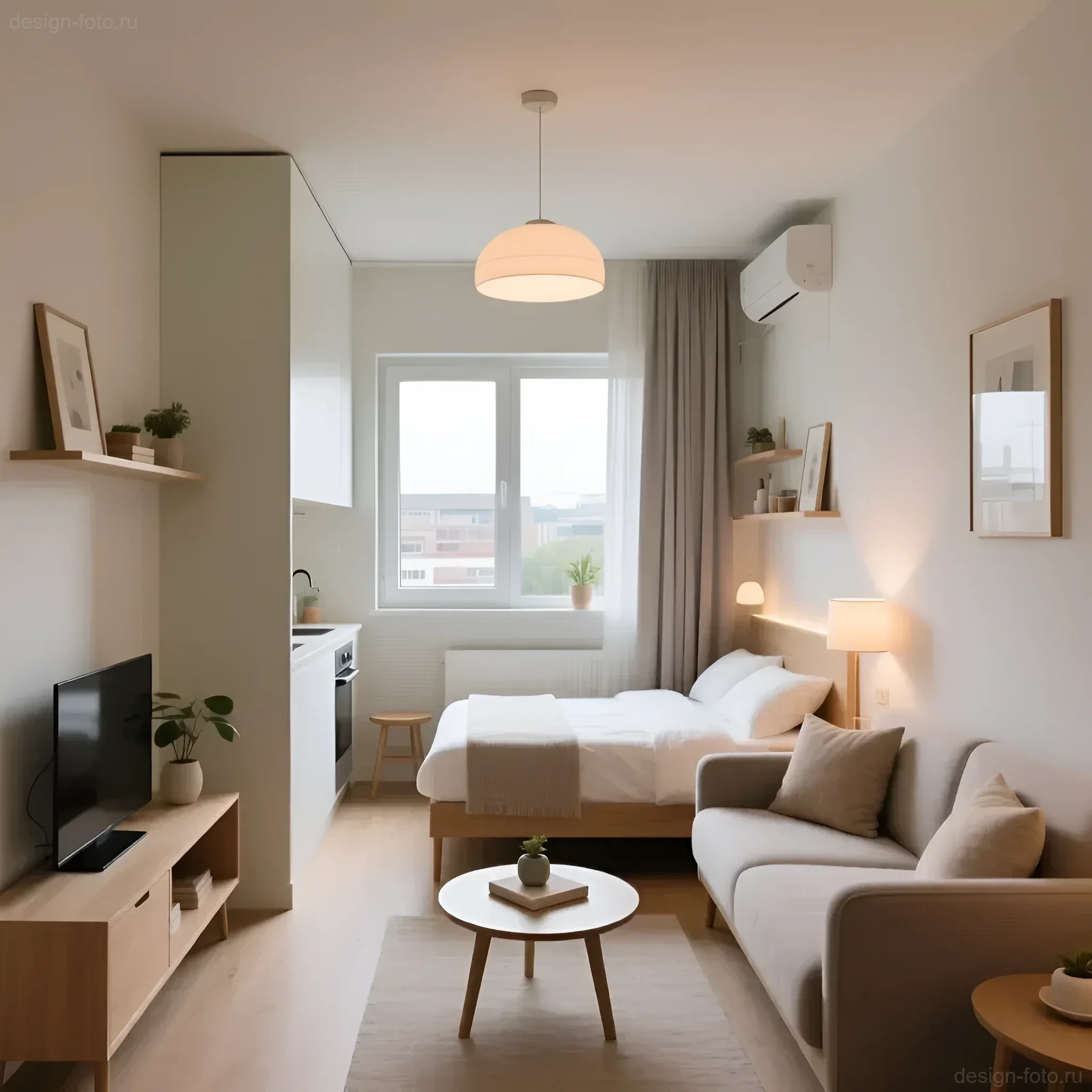
Example 1: Family with an Infant (35 sq. m)
In this case, the priority is quick access to the child and maximum storage. The baby’s crib is located in the parents’ area but is separated by a light, semi-transparent screen. The “niche bedroom” concept is used: the parents’ bed is built into a niche formed by wardrobes on both sides. The living room area is minimized to make space for a playpen and changing table, which can be foldable or integrated into a dresser.
Example 2: Family with a School-Aged Child (40 sq. m)
Requires a clear separation of the parents’ relaxation area and the child’s study/sleeping area. The ideal solution is a podium by the window. The podium houses the workspace and the child’s bed. Inside the podium are drawers for textbooks and clothes. The parents’ area is separated from the podium by a slatted partition made of light wood. Slatted structures allow light to pass through but visually divide the space, providing the child with the necessary concentration.
Example 3: Studio for Two Adults (45 sq. m)
If a children’s room is not needed, a more open layout can be used. The main task is to create two independent workspaces and a private bedroom. The bedroom is separated by a sliding partition made of frosted glass or MDF, which closes completely at night. Workspaces are located in different corners of the apartment: one spot is by the window, the other is integrated into the kitchen island or shelving unit.
Conclusion: Creating a Harmonious Living Space in a Studio Apartment
Professional zoning of a one-room apartment for a family is an art of compromise between the desire to preserve space and the need to ensure privacy and functionality. Remember that the success of the project depends 80% on planning storage and transformable furniture. Don’t be afraid to use vertical solutions and clear color accents.
Ultimately, your one room should work like clockwork: during the day, it should be a bright, open living room and home office, and in the evening, a cozy and isolated place for sleep, providing comfort and psychological relief for every family member. Rely on proven solutions, adhere to ergonomic standards, and you will create an ideal space even in the most modest square meters.
FAQ: Frequently Asked Questions About Zoning
We have compiled the most relevant questions that arise when designing studios for families.
- Question: Is it permissible to demolish the wall between the kitchen and the room?
Answer: If you have a gas stove, demolishing the wall and combining the kitchen with the living area is prohibited by current regulations (SNiP). If the stove is electric, combining is possible, but you must coordinate the renovation and ensure a powerful ventilation system. - Question: What is the minimum area needed for a child’s zone?
Answer: For a preschooler, 3–4 sq. m is sufficient for a bed and a small play area. For a schoolchild who needs a full desk and storage space, at least 5–6 sq. m is required. - Question: How to ensure sound insulation if there is no possibility to build thick walls?
Answer: Use acoustic panels, soft shelving units filled with books, and dense textiles (heavy curtains, rugs). An effective solution is to install drywall partitions with a layer of mineral wool.
Interesting Facts About Small Apartment Design
Years of experience show that the most successful zoning projects are based on the following principles:
- Principle 1. The 80/20 Rule: 80% of items should be hidden in closed storage systems, and only 20% can be in plain sight. This is critically important for visual order.
- Principle 2. Hidden Doors: Using invisible doors (hidden frame painted the same color as the walls) helps maintain the integrity of the space and does not “cut” the visual volume.
- Principle 3. Movement Ergonomics: All furniture that you use daily (beds, tables) should be placed so that there is no need to walk around other items.
Рекомендуем:
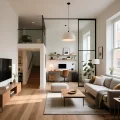 Ideal Studio Layout: How to Divide Zones Without Walls and Save Space
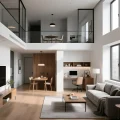 Interior Layout and Zoning: An Expert Guide to Creating Functional Space
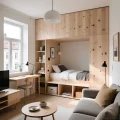 Zoning a Small Apartment: 50+ Expert Ideas for Studios and One-Bedroom Units
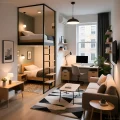 Budget Zoning: How to Create Comfort in a Rented Apartment Without Renovation
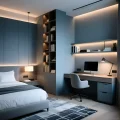 Bedroom and Workspace Zoning: Comfort, Ergonomics, and Productivity
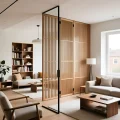 Mobile Zoning: Screens, Shelving, and Curtains for a Flexible Living Room
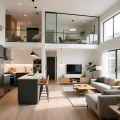 Functional Zoning of a Kitchen-Living Room: A Practical Guide from an Architect
 How to Maintain Perfect Order in a Minimalist Interior: A Practical Guide
La planification idéale d’un studio : comment diviser les zones sans murs et préserver l’espace
How to Maintain Perfect Order in a Minimalist Interior: A Practical Guide
La planification idéale d’un studio : comment diviser les zones sans murs et préserver l’espace
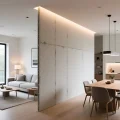 Drywall Partitions for Zoning: Functionality, Installation, and Ergonomics
 Art Deco Colors: Black, Gold, Emerald, Burgundy – Luxury and Practical Tips for Your Interior
 Minimalism in Interior Design: The Secret to Style, Ergonomics, and the Line Between Emptiness
 How to Make a Brick Wall in an Interior (Imitation)
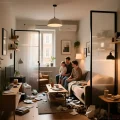 Zonage d’un appartement d’une pièce pour une famille : solutions pratiques et ergonomie
 Interior Design and Pets: How to Combine Aesthetics and Pet Comfort
 Which Tile to Choose for a Small Bathroom: Color, Size, Texture, and Space-Expanding Secrets
Zonage d’un petit appartement : plus de 50 idées d’experts pour les studios et les appartements d’une pièce
Which Tile to Choose for a Small Bathroom: Color, Size, Texture, and Space-Expanding Secrets
Zonage d’un petit appartement : plus de 50 idées d’experts pour les studios et les appartements d’une pièce
 Bark Beetle Decorative Plaster: Application Technology
Zonage budgétaire : comment créer du confort dans un appartement loué sans rénovation
Bark Beetle Decorative Plaster: Application Technology
Zonage budgétaire : comment créer du confort dans un appartement loué sans rénovation
 Washable wallpaper for the kitchen: why it’s the best idea for your renovation?