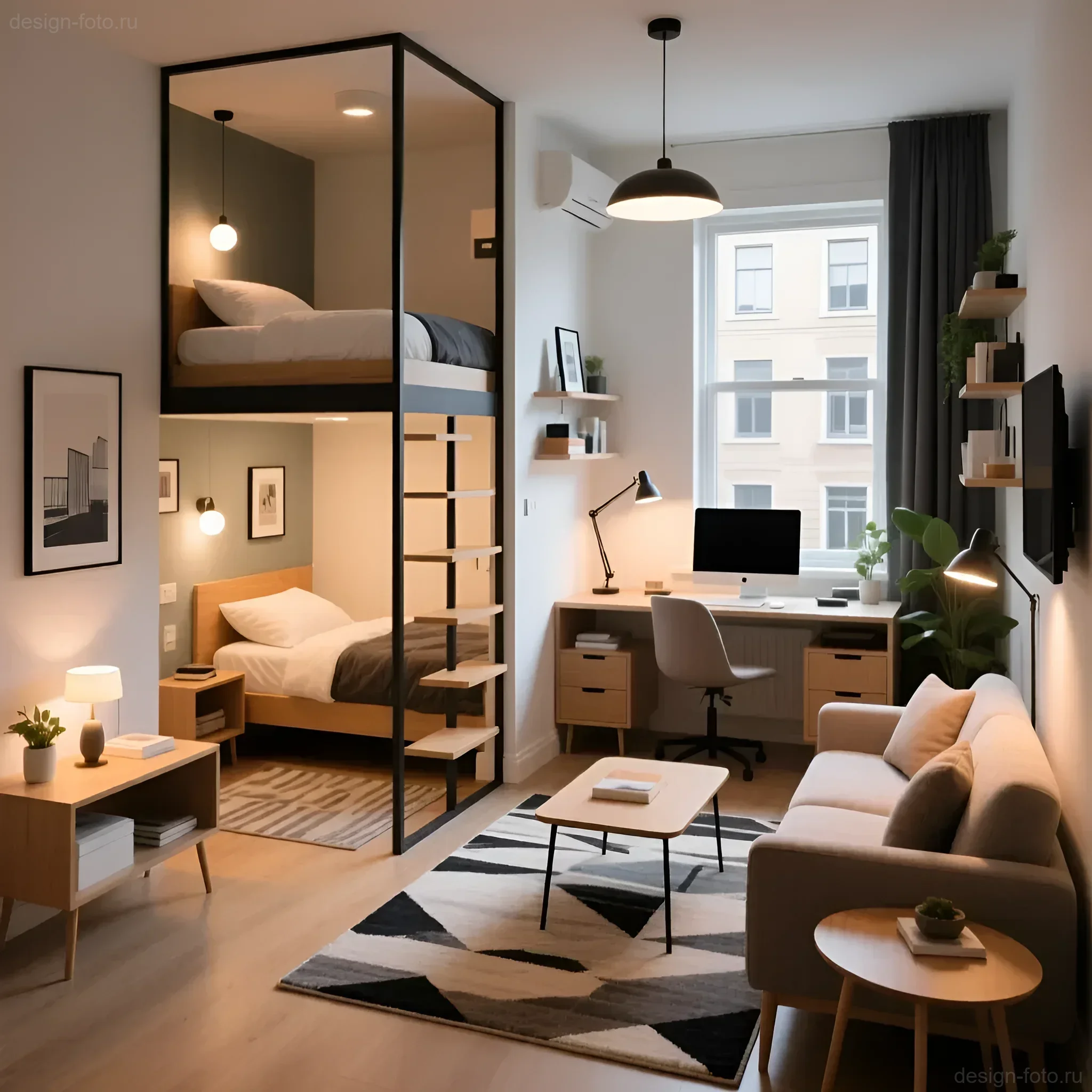
Renting a home often presents us with a dilemma: how to combine temporary living with the need for comfort, functionality, and personal space? The standard layout of rental apartments rarely suits our individual life scenarios, and major renovations are naturally prohibited by the lease agreement. The task of professional design in this case is to find the most effective, inexpensive, and, most importantly, completely reversible solutions for zoning.
As architects and designers, we understand that zoning in a rented apartment is not a luxury, but a key tool for improving quality of life. It’s about creating clear functional zones (work, sleep, leisure) without damaging walls, floors, or ceilings, using only mobile and decorative elements.
What is Zoning in Rentals and Why It’s Important for Comfort
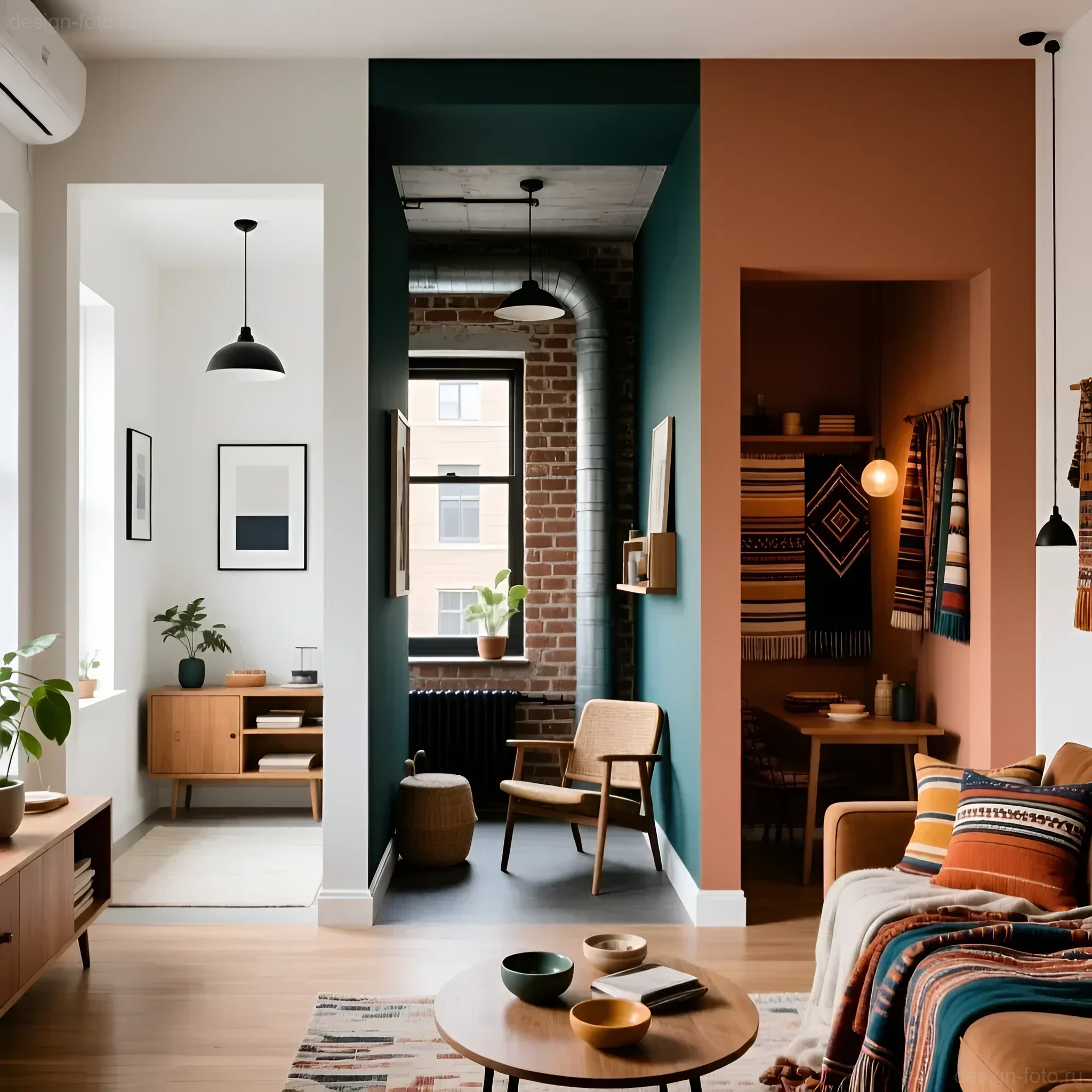
Zoning in the context of rental housing is the process of visually and physically dividing a single space into several functional areas using temporary, easily removable structures and decorative techniques. This is critically important for several reasons that directly affect your psychological state and productivity:
- Psychological Comfort: Clear separation of zones allows the brain to switch between work and rest. If your workspace is two meters away from your bed and not separated, it inevitably leads to reduced sleep quality and concentration.
- Ergonomics of a Multifunctional Space: In a studio or a small one-room apartment, zoning helps minimize visual clutter. For example, separating the kitchen area (which often gets messy) from the relaxation area.
- Privacy: If two people or a family live in the apartment, mobile partitions provide the minimum necessary level of personal space.
The main principle of zoning in rentals: absolute reversibility. You must be able to return the premises to their original state within a few hours, without leaving a single trace. This excludes capital drywall partitions, stationary podiums, and complex electrical work.
Budget Styles and Zoning Concepts for Rental Housing
Not all design styles are suitable for budget and temporary zoning. We need those that rely on textiles, mobile furniture, and light, rather than wall finishes.
Scandinavian Style (Scandi): Emphasis on Light and Functionality
Scandinavian design is an ideal base for rental housing. It uses light, neutral colors (white, gray, beige) that visually expand the space. Zoning here is achieved through:
- Lightweight Shelving Units: Open, see-through structures (e.g., made of light wood or white metal). They allow light to pass through but physically divide the zones.
- Textiles: Thick, but light curtains or Japanese panels that can be fully drawn aside when needed.
Minimalism: Zoning by Function
In minimalism, every item has its strict place. Zoning is achieved not through partitions, but through the furniture itself. For example, a sofa placed with its back to the kitchen clearly defines the boundary of the living room. A bar counter becomes a natural divider between the cooking area and the dining area.
Boho and Ethnic Style: Using Screens and Textures
If you need warm, textured zoning, pay attention to Boho. This style allows for inexpensive but effective elements:
- Woven Screens: Made of rattan, bamboo, or even jute rope. They are lightweight, mobile, and create a sense of privacy without completely blocking light and air.
- Hanging Decorations: Zoning curtains made of beads, macrame, or threads. This is more of a visual divider than a physical one, but it works well for separating the sleeping area.
Materials and Color Solutions for Visual Separation Without Renovation
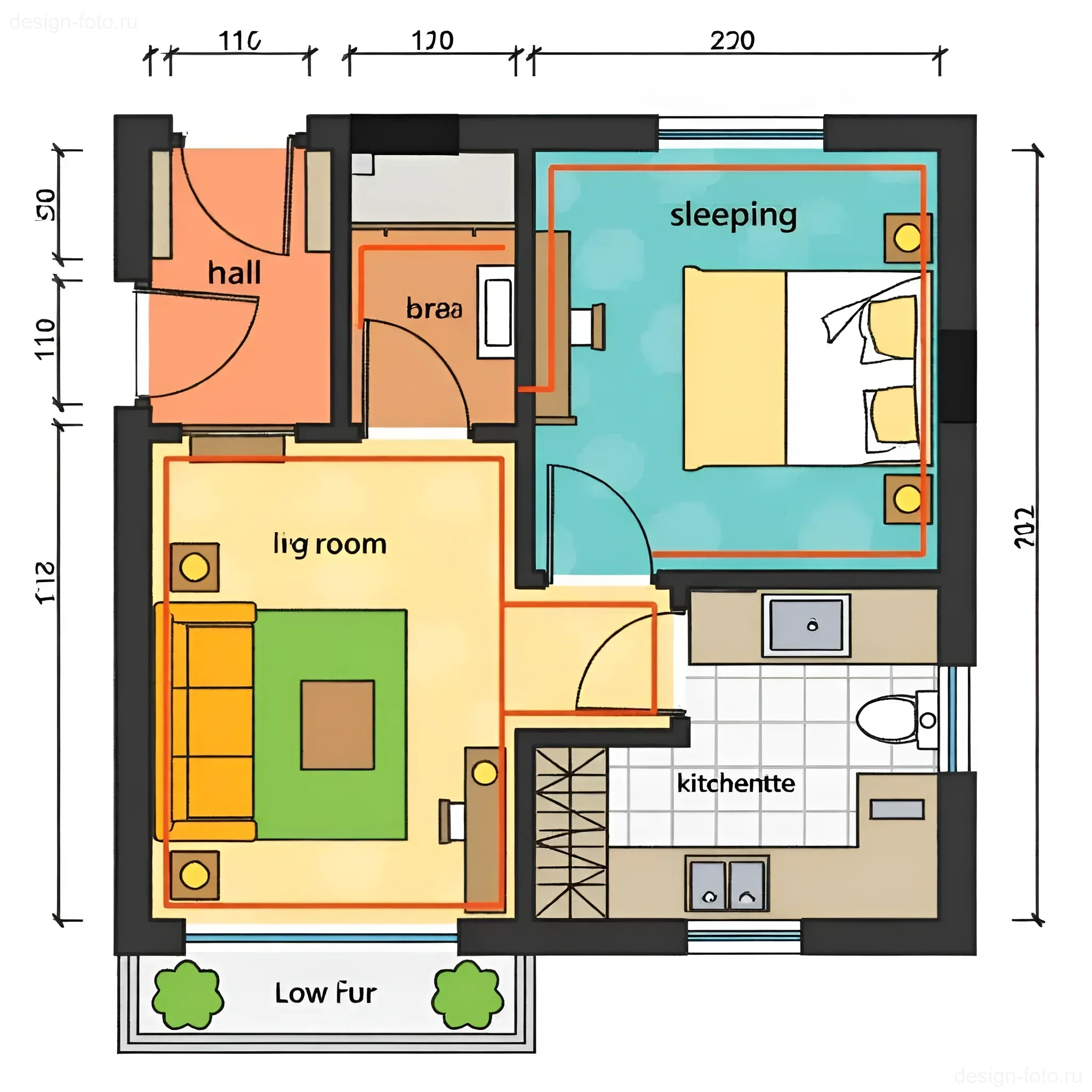
When working in a rented space, we are limited in our choice of materials, but this doesn’t mean we can’t use them creatively. The focus is on textiles, mobile structures, and floor accents.
Textiles: The Most Flexible and Budget-Friendly Tool
Textiles are your primary “building” material. To create a temporary wall, you will need:
- Tension Rod Ceiling Curtains: Systems that are installed by pressure between two walls (similar to shower rods). They do not require drilling.
- Thick Blackout Curtains: Ideal for separating the sleeping area, as they provide both visual and light insulation.
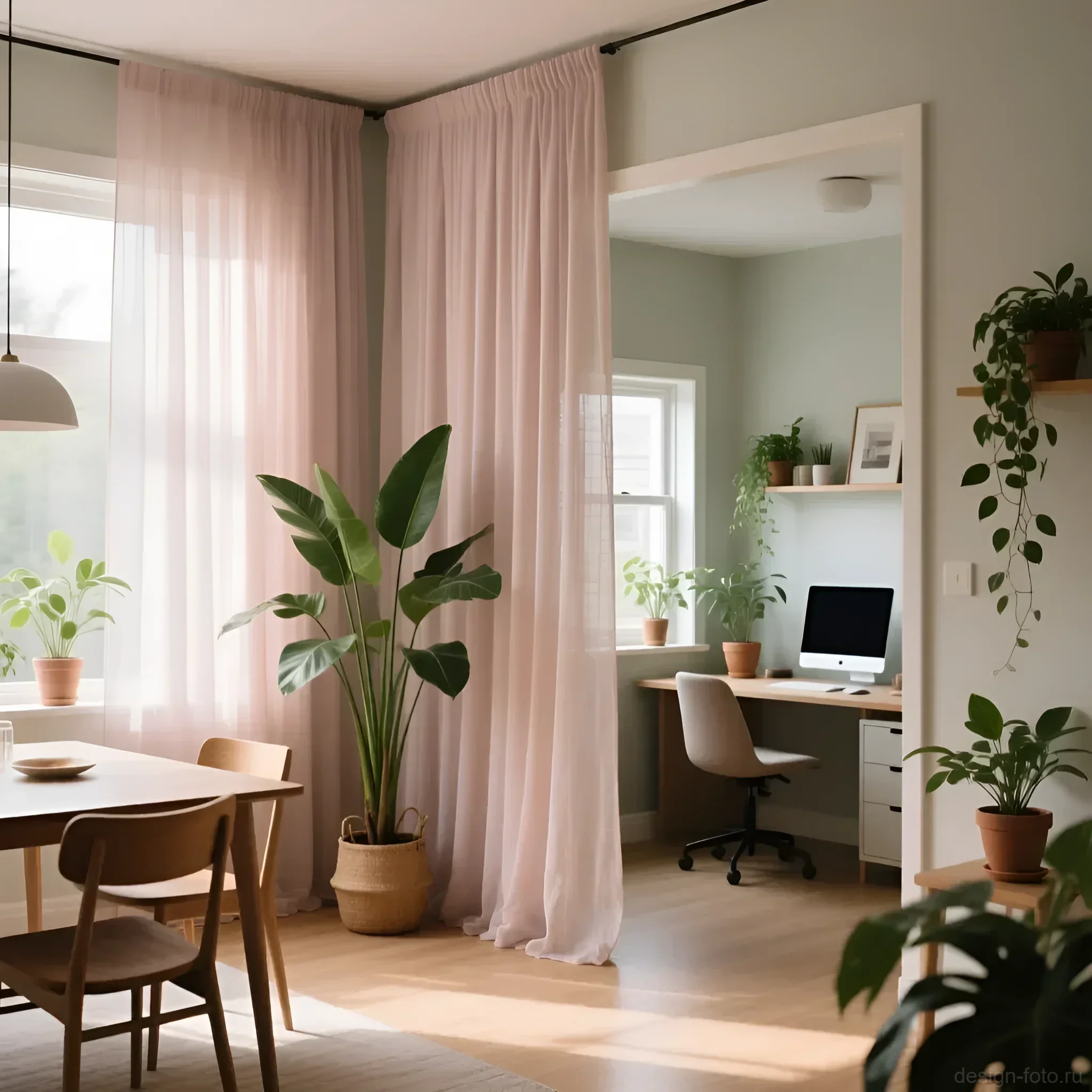
- Sheer Tulle or Organza: Used when you want to preserve maximum light but create a soft boundary (e.g., between the living room and the desk).
Floor Coverings: Zoning with Rugs
A rug is the simplest and most effective way to define the boundaries of a functional zone. The principle is simple: each zone should have its own “island.”
- Living Room Zone: The rug should be large enough for the front legs of the sofa and armchairs to rest on it. A typical size for an average room is 200×300 cm.
- Work Zone: Use a small, contrasting rug (e.g., 120×180 cm) or a mat to clearly separate the workspace from the rest of the space.
Color Zoning: You can’t repaint the walls, but you can use rich colors in accents to draw attention to a specific zone. For example, a bright yellow or dark blue shelving unit against neutral walls instantly defines a boundary and a focal point.
Practical Zoning Schemes: From Studio to One-Bedroom Apartment
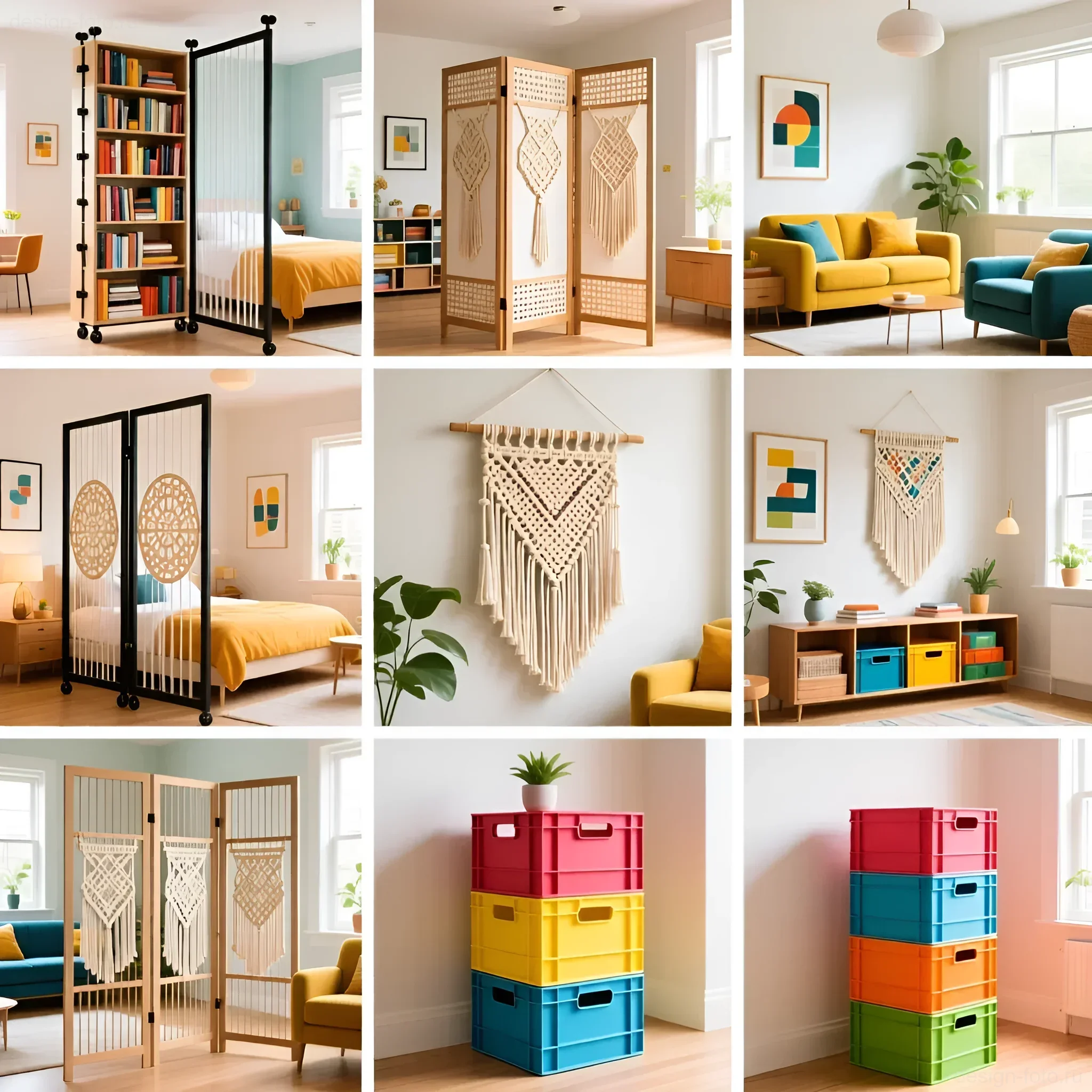
Effective zoning always begins with an analysis of your lifestyle and precise space measurements. Let’s consider typical tasks for rental housing.
Task 1: Zoning a Studio Apartment (up to 30 m²)
In a studio, the main goal is to separate the sleeping area from the daytime and kitchen areas. This is the most challenging task, requiring maximum transparency and lightness of structures.
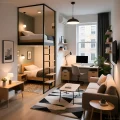
- “Shelving Unit + Rug” Scheme: Use a see-through shelving unit (depth 30–35 cm) that reaches the ceiling. It should be placed perpendicular to the wall, separating the bed. On the living room side, books and decor are placed on the shelving unit; on the bedroom side, personal items. A rug in the living room area completes the separation.
- “Bar Counter + Lighting” Scheme: If the kitchen is integrated into the living room, a bar counter (a console on high legs) serves as a buffer. Pendant lights on long cords (connected to an outlet) are mounted above it, visually outlining the kitchen boundary even when the counter itself is empty.
Task 2: Zoning a One-Bedroom Apartment (35–50 m²)
Here, it’s often necessary to create a full-fledged workspace or a children’s area without sacrificing the living room.
- “Screen + Transformer” Scheme: Use a three-section screen (section width 50–60 cm, total width 150–180 cm) to temporarily separate a desk. When work is finished, the screen folds up. The desk can be a fold-down or a narrow console to minimize visual clutter.
- “Curtains Around the Perimeter” Scheme: If a children’s corner needs to be designated, use a corner tension rod curtain rod with curtains. This creates a “room within a room” that can be easily dismantled.
Top 10 Inexpensive and Mobile Space Zoning Techniques
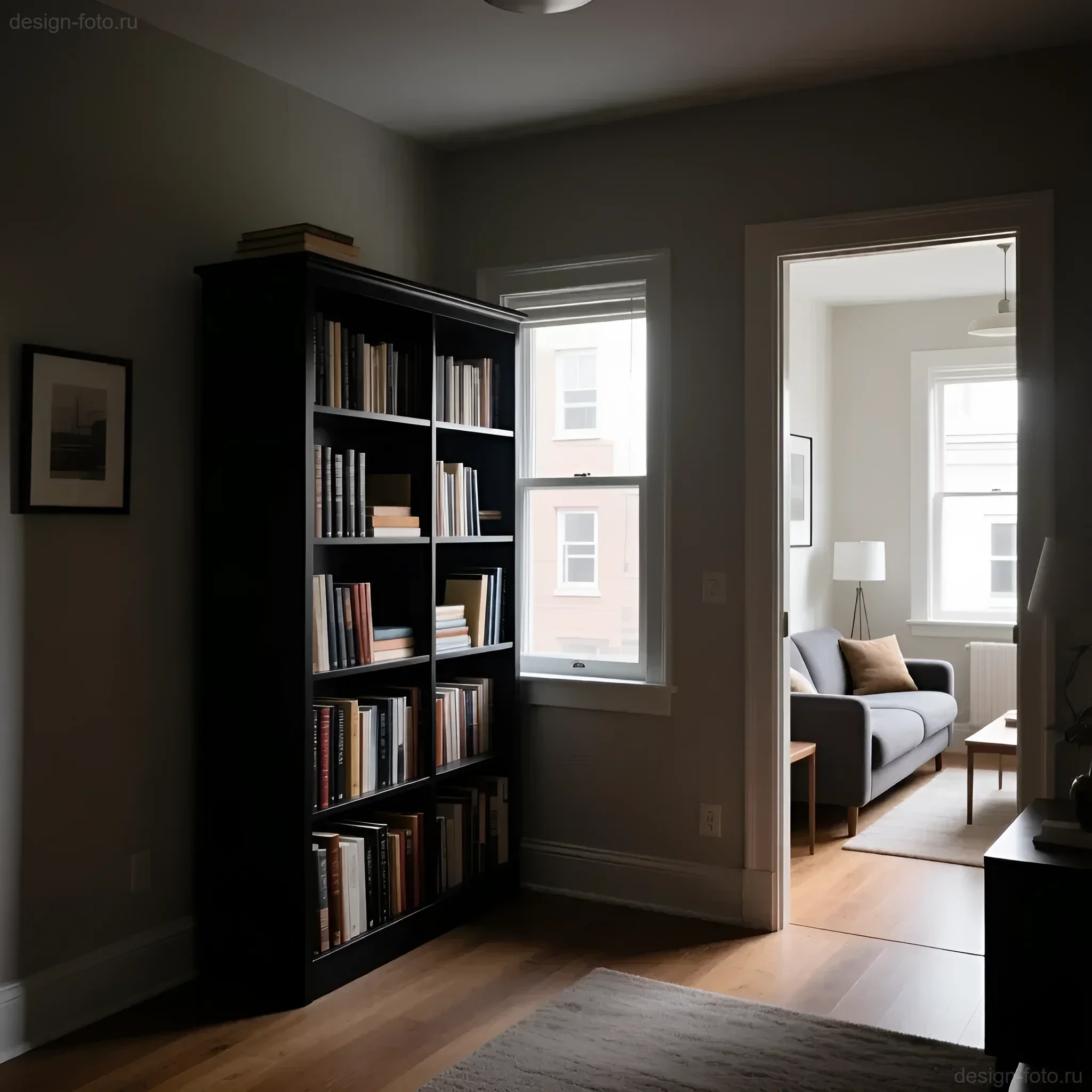
These techniques require minimal financial investment and leave no marks on the walls. We have focused on solutions that can be purchased in mass-market stores or made yourself.
- Open Shelving Units: The most functional technique. They provide storage and separation without blocking light. Choose models without a back panel (e.g., IKEA Kallax or its equivalents). Cost: from 3000 to 8000 rubles.
- Textile Partitions: Using thick or sheer curtains attached to a tension rod ceiling curtain rod. This is an ideal solution for a bedroom.
- Folding Screens: A classic, fully mobile divider. A screen can be bought ready-made (from wood, bamboo, rice paper) or made yourself by stretching fabric over a light PVC pipe frame.
- Vertical Greenery: A shelving unit with plants or hanging planters arranged in a row. This is a living, aesthetic, and very budget-friendly way to define a boundary.
- Using Consoles and Chests of Drawers: Furniture placed perpendicular to the wall acts as a low partition. For example, a chest of drawers 70–90 cm high placed behind a sofa.
- Lighting (Accent Zoning): Different types of light for different zones. In the work area, bright directional light (desk lamp); in the relaxation area, soft, warm light (floor lamp). Light boundaries have a very powerful effect on space perception.
- Mirrored Surfaces: A large floor mirror (framed, leaning against the wall) can be used to designate a dressing room or boudoir area, while visually doubling the space.
- Ladder Shelves: Angled shelves that don’t appear as massive as straight ones. They are great for separating a reading nook.
- Colored Rug Islands: As discussed above, rugs should clearly define boundaries. If there are two rugs in a studio, they should differ in color or texture.
- Transformable Furniture: Folding or drop-leaf tables that are used only when needed. When folded, the zone “disappears,” which is ideal for temporary zoning.
Common Mistakes in Zoning Rental Housing and How to Avoid Them
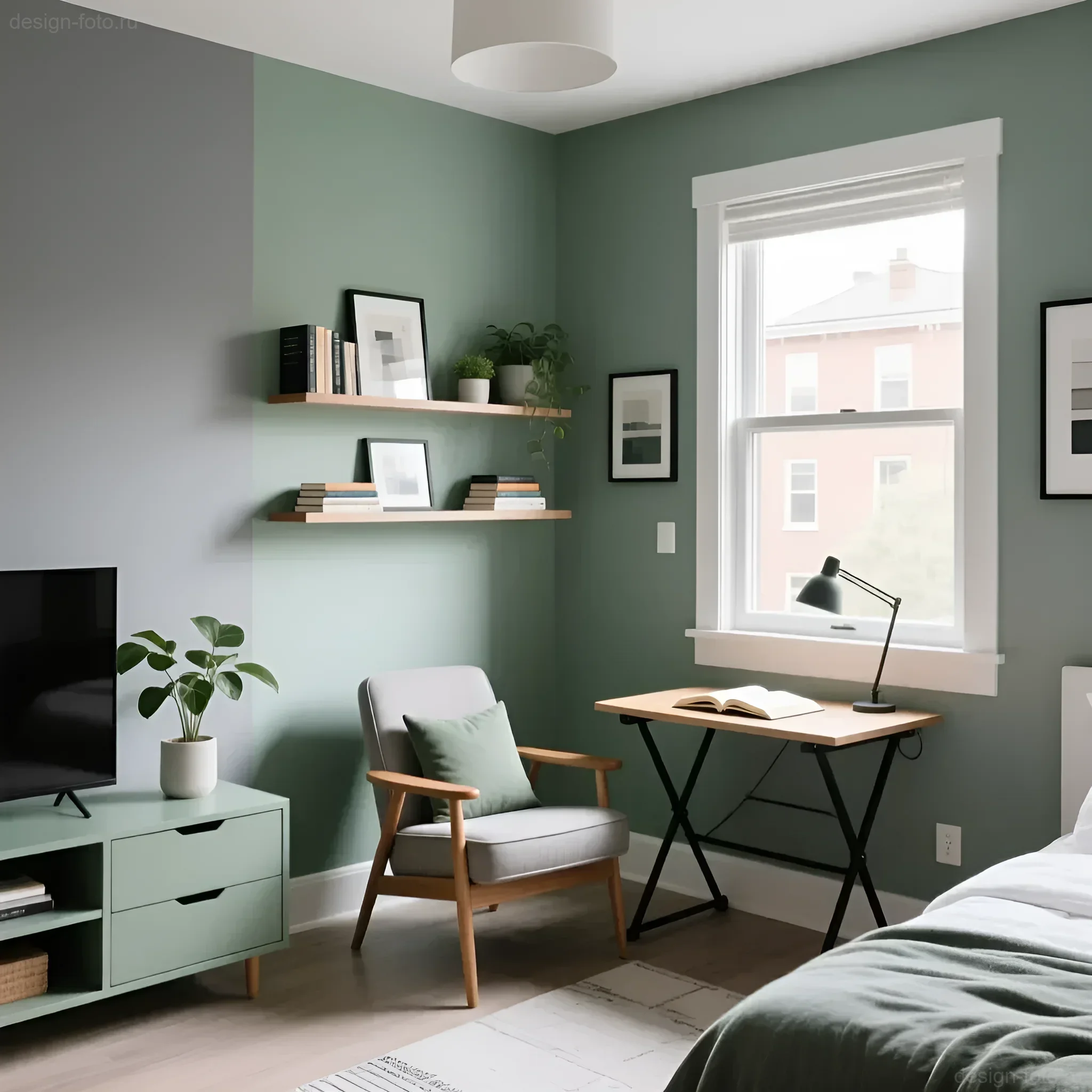
Even when using budget methods, it’s easy to make mistakes that won’t improve, but worsen the ergonomics and appearance of the apartment. Avoid the following missteps:
1. Using Solid and Bulky Partitions
Mistake: Installing heavy, opaque cabinets or partitions that completely block natural light. In a small studio apartment, this will result in one of the zones (usually the sleeping area) becoming a dark and oppressive “pencil case.”
Solution: Use open shelving units (without a back panel), sheer curtains, or screens. If you are separating a zone near a window, the partition should be at least 50% transparent to light.
2. Incorrect Rug Sizes
Mistake: Buying a rug that is too small and “floats” in the middle of the zone. This doesn’t zone; it visually fragments the space, making it look messy.
Solution: The rug should be large enough to encompass all the key elements of the zone. For the living room, this includes the sofa + coffee table. For the bedroom, the bed + bedside rug.
3. Ignoring Landlord’s Rules
Mistake: Attempting to use “temporary” fasteners that actually require drilling (e.g., heavy shelves or track systems that don’t adhere with glue).
Solution: Always use methods that do not require drilling: tension rods, high-quality adhesive hooks (e.g., 3M Command), floor-standing, or leaning structures. If you are unsure that you can dismantle the structure without leaving a trace, do not use it.
4. Chaotic Use of Color
Mistake: Introducing too many contrasting colors in an attempt to zone every little thing. This creates a “gypsy camp” effect and visually shrinks the room.
Solution: Stick to the apartment’s base palette and use an accent color only to define one or two key zones (e.g., blue for the work zone, green for the relaxation zone).
Real Examples: Photos and Ideas for Budget DIY Zoning
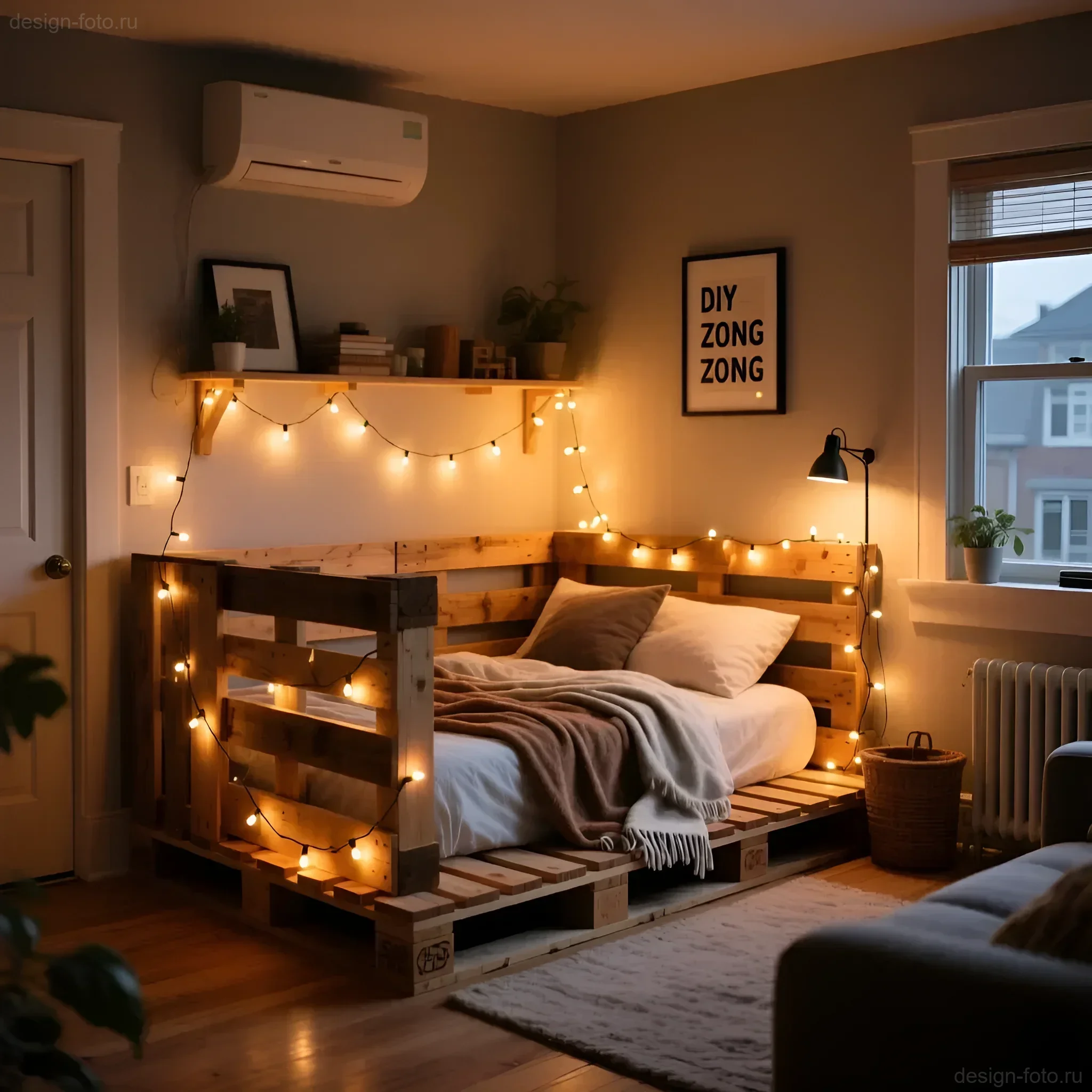
DIY zoning often turns out to be the most budget-friendly and creative. Here are a few ideas that can be implemented over a weekend with minimal cost.
1. Shelving Unit from Wooden Crates
Materials: Standard wooden crates (e.g., for vegetables, which can be sanded and painted), wood glue, or screws.
Principle: The crates are attached to each other in a staggered pattern, creating an asymmetrical, see-through partition. This is an excellent place to store books, vinyl, or small plants. The structure is lightweight and completely mobile.
2. Economical Rope Screen
Materials: Wooden beam or baguette for the frame, jute or sisal rope, furniture stapler.
Principle: A light, rectangular frame is created. The rope is stretched vertically or horizontally with a small spacing (1–2 cm) and secured with a stapler. Such a screen allows light to pass through but creates a clear textural boundary. The total cost of materials rarely exceeds 2000 rubles.
3. Zoning with Plants on Wheels
Materials: Tall floor pots, rolling carts (for easy movement), large houseplants (ficus, palms).
Principle: Plants are arranged in a row, forming a living green wall. The wheels allow for easy reconfiguration or moving the “wall” for cleaning. This not only zones but also improves the microclimate.
Conclusion: How to Create Coziness and Functionality in a Rented Apartment
A professional approach to interior design in rental housing is always a balance between the desired and the possible. Inexpensive and mobile zoning methods prove that creating an ergonomic and cozy space does not require major investments or renovation permits.
Your task as a temporary resident is to use tools that work on the level of visual perception and functional logic: light, textiles, mobile shelving units, and rugs. Remember: the main advantage of rental zoning is its flexibility. You can change the layout depending on the season, mood, or change of tenants. Invest in the quality of mobile elements, and your temporary housing will become a full-fledged, comfortable home.
FAQ: Frequently Asked Questions About Budget Zoning
- Can I use double-sided tape to attach curtain rods?
Answer: Absolutely not. Double-sided tape (even construction tape) leaves marks on paint or wallpaper that are extremely difficult to remove without damaging the surface. Use only tension mechanisms or adhesive hooks specifically designed for clean removal. - What is the minimum depth of a shelving unit sufficient for zoning?
Answer: For visual separation, 25–30 cm is sufficient. If the shelving unit will be used for storing books or large decor, choose a depth of 35–40 cm. The main thing is that it is see-through. - How to separate a children’s area if the room has no window?
Answer: Use the lightest and brightest partitions possible: white tulle or openwork screens. It is important to ensure light enters from the main part of the room. Do not use dark, light-blocking materials to avoid a “closet” effect.
Interesting Facts: The Psychology of Zoning
- The “Island” Effect: Studies show that clearly defining a workspace with a rug and directional lighting (even if it’s a meter from the bed) increases productivity by 15–20% compared to working in an unzoned space.
- Neutral Backgrounds: Temporary housing with neutral walls (white, light gray) allows for the use of brighter and more contrasting mobile elements (furniture, textiles) for zoning, enhancing their effect.
- The “Two-Meter” Principle: For effective psychological zoning between two key functions (e.g., sleep and work), it is desirable to have a physical or visual barrier and a distance of at least two meters.
Рекомендуем:
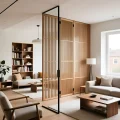 Mobile Zoning: Screens, Shelving, and Curtains for a Flexible Living Room
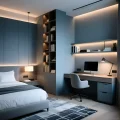 Bedroom and Workspace Zoning: Comfort, Ergonomics, and Productivity
 Art Deco Colors: Black, Gold, Emerald, Burgundy – Luxury and Practical Tips for Your Interior
Zonage mobile : paravents, étagères et rideaux pour un salon flexible
Art Deco Colors: Black, Gold, Emerald, Burgundy – Luxury and Practical Tips for Your Interior
Zonage mobile : paravents, étagères et rideaux pour un salon flexible
 Which Tile to Choose for a Small Bathroom: Color, Size, Texture, and Space-Expanding Secrets
 Grout for tiles: how to choose the color and apply it correctly
 Wall Cladding with Wood Paneling: A Step-by-Step Guide
 PVC Wall Panels: Cheap and Cheerful. Installation Guide
 Internal Wall Insulation: Materials and Technology
Joint filler for tiles: how to choose the color and apply it correctly
Internal Wall Insulation: Materials and Technology
Joint filler for tiles: how to choose the color and apply it correctly
 Bark Beetle Decorative Plaster: Application Technology
 Minimalism in Interior Design: The Secret to Style, Ergonomics, and the Line Between Emptiness
 How to Maintain Perfect Order in a Minimalist Interior: A Practical Guide
 Art Deco Mirrors: Geometry and Luxury That Transform Interiors
 Gypsum or Cement Plaster: What and Where to Use?
 Zonage budgétaire : comment créer du confort dans un appartement loué sans rénovation
 How to Make a Brick Wall in an Interior (Imitation)
 How to Seal Drywall Seams to Prevent Cracks
 How to Update Old Tiles Without Removing Them: 99 Ways to Transform Your Bathroom and Kitchen
 Interior Design and Pets: How to Combine Aesthetics and Pet Comfort