Greetings, dear friends and DIY enthusiasts! My name is [Ваше Имя/Псевдоним], and I’m delighted to welcome you to design-foto.ru. Today, we’ll delve into a seemingly simple yet incredibly important topic, without which it’s impossible to achieve a truly professional painting result on your walls. We’ll discuss how to properly plaster walls for painting to make them perfectly smooth, like silk. This is the foundation upon which all the future beauty of your interior rests. Many underestimate this stage, considering it routine and secondary, but believe my years of experience: it is thorough surface preparation that guarantees the final result will please you for years to come.
We will cover all the intricacies: from choosing the right plaster and necessary tools to the secrets of application and final sanding. I will share professional life hacks that will help you avoid common mistakes and achieve that very flawless finish you see in glossy magazines. So, if you’re planning to paint your walls, get ready to dive into the world of perfect smoothness!
Why Smooth Walls are Key to Perfect Painting: What a Beginner Needs to Know

Choosing paint, color, and texture is, of course, very exciting. But before thinking about the final touch, let’s go back to the basics. The surface on which the paint will be applied plays a colossal role. Imagine painting a picture on a canvas. If the canvas is crumpled, torn, or uneven, no matter how hard you try, the painting won’t look as intended. The same applies to walls.
Why is smoothness so important, especially for painting? There are several key reasons:
- Paint Economy: On an even, smooth surface, paint applies in a uniform layer. Unevenness, however, creates micro-indentations that require more material to fill and level. You are simply “filling” defects, not creating an even coating.
- Uniformity of Color and Sheen: Any bumps, pits, scratches, or remnants of previous coatings will reflect light differently. As a result, you’ll get uneven color, spots, and the sheen will “play” unpredictably. The paint will highlight all defects, not hide them.
- Coating Durability: Unevenness can become areas where the paint adheres poorly to the surface. This can lead to premature peeling, cracking, or chipping, especially if low-quality materials were used or the preparation technology was violated.
- Aesthetic Perfection: Painting is the finishing stage that should bring aesthetic pleasure. A perfectly smooth wall looks expensive, neat, and modern. It creates a sense of completeness and cleanliness in the room.
- Ease of Application: Paint applies more easily and evenly on a smooth wall, making the painting process faster and more pleasant. You won’t have to exert extra effort to achieve an even layer and can focus on the color and texture itself.
So, to summarize: perfect wall smoothness before painting is not a designer’s whim, but an objective necessity for achieving a high-quality, durable, and beautiful result. It’s an investment of time and effort that will pay off handsomely.
Types of Wall Plaster for Painting: Which to Choose for the Perfect Result
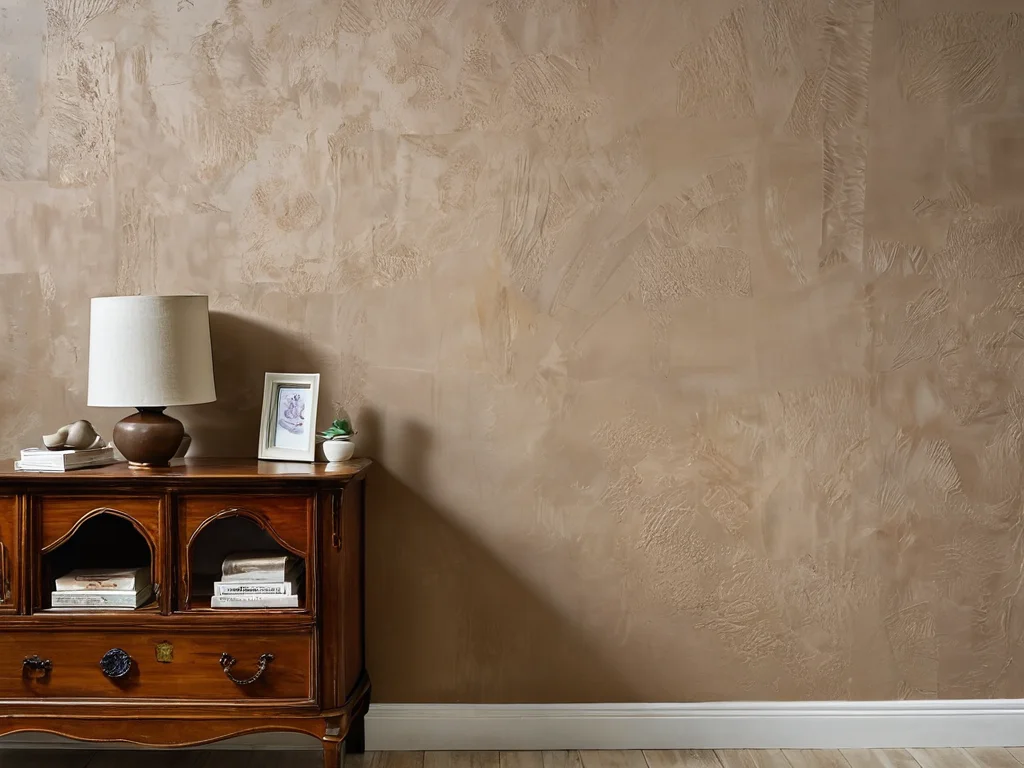
Before starting the process itself, let’s understand the different types of plaster and how they differ, as the lion’s share of success depends on the right choice. There are many types on the market, but for preparing walls for painting, we are mainly interested in two types: gypsum-based and polymer-based (latex, acrylic).
1. Gypsum Plasters
This is perhaps the most common and affordable option. The base is gypsum, with the addition of various modifying and plasticizing components.
- Advantages:
- Affordable Price: They are usually cheaper than polymer alternatives.
- Good Adhesion: They adhere well to most mineral bases (concrete, plaster).
- Plasticity: They are easy to apply and level well.
- Vapor Permeability: They “breathe,” which is important for a healthy indoor microclimate.
- Eco-friendliness: Gypsum is a natural material.
- Disadvantages:
- Moisture Sensitivity: They absorb water heavily, so they are not suitable for damp rooms (bathrooms, kitchens without good ventilation).
- Tendency to Shrink: They can shrink slightly when drying, which requires a thinner layer or application in several stages.
- Less Elastic: They can be prone to cracking if the substrate moves.
When to Choose: Ideal for dry rooms (bedrooms, living rooms, hallways) with normal temperature and humidity conditions, especially on concrete or plastered surfaces.
2. Polymer Plasters (Acrylic, Latex)
These are modern formulations based on polymers. They are most often sold ready-to-use (in buckets), which is very convenient.
- Advantages:
- High Elasticity: They do not crack under minor substrate deformations, making them ideal for surfaces prone to movement (e.g., drywall).
- Moisture Resistance: They withstand humidity excellently, making them suitable for bathrooms and kitchens.
- No Shrinkage: They do not shrink when drying, allowing for a thicker layer in one pass.
- Fine-Grained Structure: They allow for achieving a maximally smooth surface, ideal for glossy paints.
- Ease of Use: Ready to use, no mixing required.
- Disadvantages:
- Higher Price: Significantly more expensive than gypsum-based ones.
- Vapor Permeability: Usually lower than gypsum-based ones, which may be undesirable in some cases.
- More Difficult to Work With: They can be more “sticky” and require some skill.
When to Choose: For final leveling, especially under glossy or semi-gloss paints, for damp rooms, for drywall surfaces, or where maximum elasticity and no shrinkage are important.
3. Finishing Plasters
These are most often fine-grained formulations (both gypsum and polymer-based) designed for the final, thin-layer leveling of the surface. They are used after the initial plaster, which is for rough leveling of large imperfections.
My Advice: For most cases, especially if you are a beginner, I would recommend a combined approach. Start with an initial plaster (often gypsum-based, as it’s cheaper and fills holes better) to level the main defects, and then move on to the finishing plaster (polymer or fine-grained gypsum) to create perfect smoothness. If the walls are in good condition, you can get by with just finishing plaster.
Preparing Walls for Plastering: 5 Steps to a Flawless Surface
No plaster, no matter how good, will give you a perfect result if the walls are not properly prepared. It’s like building a house on sand – the foundation must be strong! Let’s go through the main preparation stages.
Step 1: Surface Cleaning
This is the first and perhaps the most important step. Walls must be absolutely clean, dry, and solid.
- Remove Old Coatings: Wallpaper, old paint, peeling plaster – all of this must be thoroughly removed. Use a putty knife, scraper, and if the old paint is very stubborn, sanding may be required.
- Clean Dust and Dirt: After mechanical cleaning, thoroughly vacuum the walls or wipe them with a damp cloth (let dry). Dust is the main enemy of good adhesion.
- Remove Grease Stains: If there are traces of grease, oil, or other contaminants on the walls, they must be degreased. Usually, wiping the walls with a soapy solution or a special degreaser is sufficient.
- Eliminate Mold and Mildew: If mold is detected, it must be removed with special antiseptic agents. After treatment, let the wall dry completely.
Step 2: Repair Significant Defects
Before you start plastering, fix the biggest problems.
- Fill Cracks and Holes: Deep cracks and nail or dowel holes must first be filled with a repair compound (plaster or mounting foam for large holes) and then allowed to dry.
- Strengthen Weak Areas: If there are areas of crumbling plaster, they need to be cleaned down to a solid base.
Step 3: Priming
Primer is the unsung hero that makes plastering much more effective. It performs several functions at once:
- Strengthens the Surface: By penetrating the pores, primer binds fine dust particles and strengthens the base.
- Improves Adhesion: It creates a slightly rough film to which the plaster will adhere better.
- Evens Out Absorbency: Prevents the plaster’s moisture from being absorbed too quickly by the wall, which is especially important for gypsum-based compounds. This allows the plaster to gain strength evenly.
- Reduces Plaster Consumption: Plaster spreads more easily and evenly on a primed surface.
How to Prime: Use a roller or brush, evenly distributing the primer over the entire surface. Do not allow drips. Let the primer dry completely according to the manufacturer’s instructions (usually a few hours).
Step 4: Reinforcement (if necessary)
If walls are prone to cracking, or you are working with drywall, or if there are old but solid cracks that you want to cover, reinforcement is a good idea.
- Self-Adhesive Mesh Tape (Serpyanka): Applied to the joints of drywall sheets or cracks. Plaster penetrates well through the mesh, creating a strong joint.
- Fiberglass Mesh (Spiderweb): A denser material that is applied to the entire wall surface. It creates a unified, strong base, excellent reinforcement, and hides minor defects.
How to Reinforce: Apply the mesh tape or fiberglass mesh to the primed wall. Then, while the primer is still slightly damp (if using fiberglass mesh), or over the mesh, apply a thin layer of plaster, pressing the material into the base. For mesh tape, plaster over it, completely covering the mesh.
Step 5: Humidity and Temperature Control
Ensure there are no drafts in the room and the temperature is within the range recommended by the plaster manufacturer (usually from +10°C to +25°C). Too high a temperature will accelerate drying and can lead to cracks, while too low a temperature will slow down the process and can spoil the mixture.
This kind of preparation is already half the battle. Don’t neglect these steps, and your walls will be ready for perfect plastering!
Wall Plastering Technique for Painting: Step-by-Step Instructions for Perfect Smoothness
So, the walls are prepared, the primer is dry, the tools are ready. It’s time for the magic – plastering. This process requires patience and accuracy, but by following these step-by-step instructions, you can achieve an excellent result.
Step 1: Mixing the Plaster (if using dry mix)
If you are using dry plaster, follow the instructions on the packaging. This is critically important!
- Proportions: Measure the required amount of dry mix and clean water. For beginners, I always advise mixing small batches so that the plaster doesn’t set before you use it.
- Water Temperature: Use room temperature water.
- Mixing: First, pour the water into the container, then gradually add the dry mix, stirring constantly. Use a construction mixer at low speed or a special drill attachment.
- Consistency: The goal is to obtain a homogeneous mass without lumps, with a consistency resembling thick sour cream or butter. Too liquid plaster will run off, too thick will be difficult to apply and form bumps.
- Resting Time: Some plasters require “maturing” – leave the mixed mixture for 5-10 minutes, then stir again. This allows all components to react.
Important: Never add water to plaster that has already started to set! This will spoil the mixture.
Step 2: Applying Initial Plaster (if required)
If there are significant unevenness or defects on the walls, use initial plaster first. Its purpose is to level the surface, fill holes and depressions.
- Tool: Wide putty knife (60-100 cm) or a leveling tool (rule).
- Technique: Apply the plaster to the wall with a narrow putty knife or trowel, then spread it with a wide putty knife or leveling tool, holding the tool at a slight angle to the wall. Move from bottom to top or top to bottom, removing excess and filling unevenness.
- Layer Thickness: Try to apply the layer evenly, not too thick (usually up to 5-10 mm per pass, depending on the compound). If the unevenness is significant, it’s better to apply several thin layers with intermediate drying.
- Overlap: When working with a wide putty knife or leveling tool, make small overlaps to avoid visible seams.
Step 3: Applying Finishing Plaster
This is the most critical step for achieving perfect smoothness. Finishing plaster is applied in a thin layer (0.5-2 mm) and is designed to eliminate minor defects and create a smooth surface.
- Tool: Stainless steel putty knife (20-40 cm wide) and possibly a wide putty knife or leveling tool for faster spreading.
- Technique: Scoop a small amount of plaster onto the edge of the putty knife and spread it evenly over the wall, holding the tool at a slight angle (about 30-45 degrees) to the surface. Try to move the putty knife smoothly, without jerks.
- Direction: Plaster in different directions – vertically, horizontally, diagonally. This helps to better smooth the surface and avoid streaks.
- Overlaps: Each subsequent stroke of the putty knife should overlap the previous one by about 1/3 or 1/2 to avoid visible seams and ridges.
- Removing Excess: Go over the surface with a clean, sharp putty knife, carefully removing excess plaster that forms bumps.
- Drying: Allow each layer of finishing plaster to dry completely. Drying time depends on the layer thickness, humidity, and temperature in the room, but usually ranges from a few hours to a day.
Pro Tip: If you apply two thin layers of finishing plaster, after the first layer dries, lightly sand the surface with fine-grit sandpaper or sanding mesh (grit P180-P240) to remove minor imperfections and roughness. Then wipe the surface clean of dust and apply the second layer.
Step 4: Intermediate Priming (if necessary)
If you are applying plaster in several thin layers, and there is a significant drying time between them (more than a day), or if you feel the surface has become too smooth and might not adhere well to the next layer, intermediate priming is recommended. This will improve adhesion.
The key is patience and consistency. Don’t rush, and the result will pleasantly surprise you!
Plastering Tools: What a Master Needs and How to Use Them
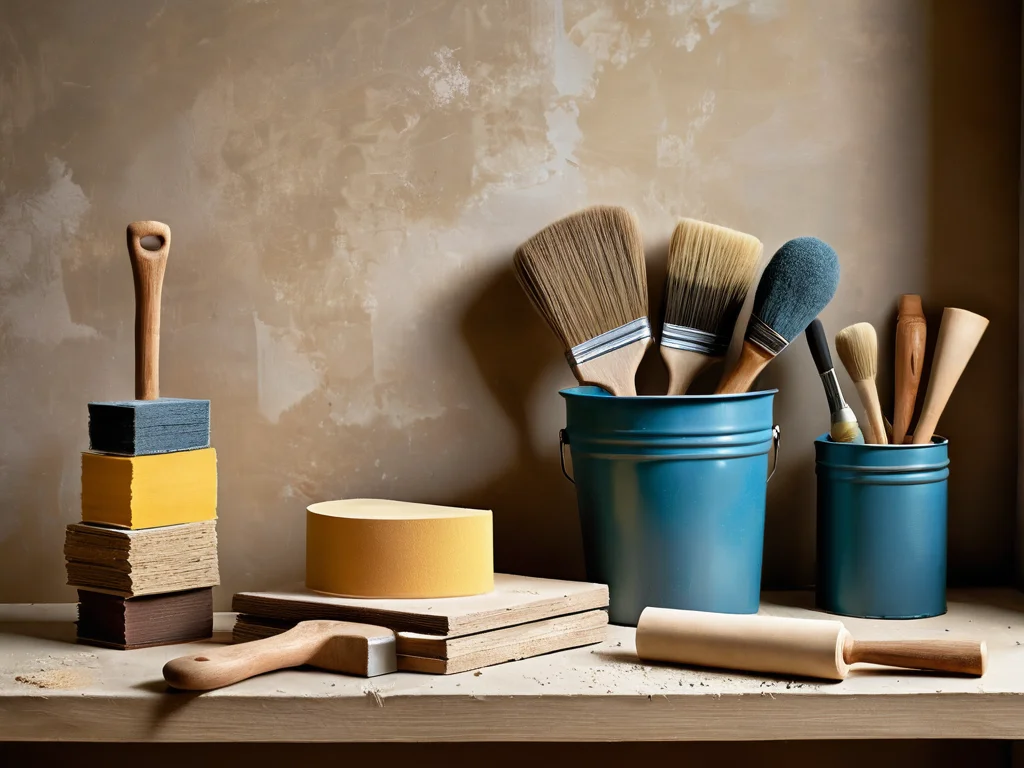
The right tools are half the battle in any endeavor, and plastering walls is no exception. The smoothness, speed of work, and your own comfort depend on their quality and proper use. Let’s look at what you’ll need.
- Putty Knives: This is your primary working tool. You should have several of different sizes and types.
- Narrow Putty Knife (5-10 cm): Used for transferring plaster from a container to a wide putty knife, for filling small cracks, corners, and for working with small volumes.
- Medium Putty Knife (20-30 cm): Universal. Good for applying and leveling plaster in small areas, for the finishing layer.
- Wide Putty Knife (60-100 cm): Indispensable for leveling large areas, especially with the initial layer. Allows for quick and even material distribution.
- Corner Putty Knife (internal/external): A specialized tool for neat corner plastering. They have a curved shape that helps achieve a perfect line.
- Leveling Tool (for large areas): A long aluminum or plastic profile with a straight edge. Used for creating perfectly straight surfaces, especially when working with large putty knives.
- Mixing Container: It’s best to use a plastic bucket or basin. It’s important that they are clean and free of old mixture residue. For large volumes, special construction buckets with handles are convenient.
- Construction Mixer or Drill Mixer Attachment: For quality plaster mixing without lumps, especially for gypsum-based plaster. It’s difficult to achieve the desired consistency without this.
- Sanding Mesh or Sandpaper: For final surface finishing before painting. Use grit P180-P240 for the finishing layer.
- Sanding Float (Block): A tool for comfortably holding sanding mesh or paper. They come in plastic, wood, and with dust extraction systems.
- Sanding Disc or Sander (Giraffe Sander): For large volumes and perfect smoothness. A giraffe sander significantly speeds up the process of sanding walls and ceilings but requires skill.
- Step Ladder or Scaffolding: For working at heights. Ensure they are stable and safe.
- Roller and Brushes: For applying primer.
- Personal Protective Equipment: Gloves (rubber or nitrile), respirator (especially during sanding), safety glasses.
How to Use:
- Putty Knives: Hold at a 30-45 degree angle to the wall for application and leveling. For removing excess, hold almost perpendicular. Always keep the edges of the putty knives clean; they should be straight and free of nicks.
- Leveling Tool: Use it like a long putty knife, moving from bottom to top or top to bottom, with light pressure, removing excess and filling holes.
- Sanding: Sand in circular or cross-hatching motions, smoothly, without excessive pressure. Be sure to use a respirator – plaster dust is very fine and harmful.
Don’t skimp on tools. A good putty knife and a quality mixer will make the process more enjoyable and the result better.
Plastering Corners and Joints: Professional Secrets for a Neat Appearance
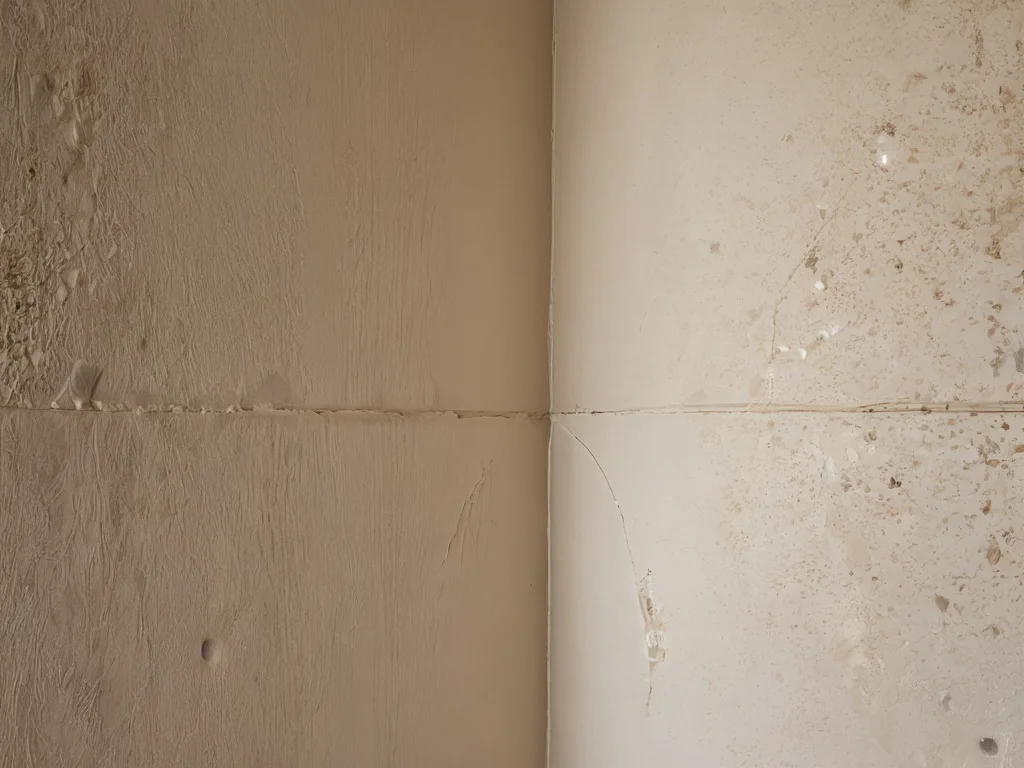
Corners and joints are the most vulnerable areas in any finishing work, and this is where defects most often appear. If they are not given due attention, even perfectly leveled wall planes will look untidy. Let’s look at how to make these areas flawless.
1. Internal Corners
Internal corners (where two walls meet) require special care.
- Preparation: Ensure the corners are clean, free of dust and old paint. Prime them.
- Reinforcement: For added strength and to prevent cracking, especially if the house is new and settling, corners should be reinforced. The best option is to use self-adhesive mesh tape or paper joint tape.
- Technique with Mesh Tape:
- Cut a piece of mesh tape to the required length.
- Apply the tape precisely in the center of the corner, pressing firmly.
- Apply plaster to one side of the corner, filling the mesh openings and extending slightly onto the wall surface. Use a narrow or medium putty knife.
- While the plaster is still wet, apply it to the other side of the corner, completely covering the mesh.
- Carefully smooth the joint, trying to make the corner as straight and sharp as possible.
- Allow the first layer to dry, then you can apply a second, thinner layer to level the surface.
- Technique without Mesh Tape (for experienced users):
- Apply plaster to one side of the corner.
- Using a putty knife, form a straight, sharp corner, as if “sweeping” excess plaster towards the center of the corner.
- Repeat the procedure on the second side, trying to make the joint as straight as possible.
- Allow to dry and apply a second coat if necessary.
Secret: For a perfect corner, you can use a special corner putty knife. It will help form a straight line.
2. External Corners
External corners (e.g., columns, door and window reveals) also require protection and leveling.
- Preparation: Thoroughly clean and prime the corner.
- Reinforcement: For external corners, use special perforated plastic or metal corner beads. They are embedded in the plaster layer and create a strong, straight corner.
- Technique:
- Apply a thin layer of plaster to the corner.
- Apply the metal or plastic corner bead, pressing it into the plaster.
- Using a leveling tool or a wide putty knife, level the surface, pressing the corner bead in and smoothing the plaster around it. Ensure the bead is straight and not protruding.
- Allow to dry.
- Apply a second, leveling coat of plaster, completely covering the corner bead and forming a smooth surface.
Secret: If you are not using corner beads, plaster external corners trying to form the straightest possible edge, regularly checking its straightness with a level or leveling tool.
3. Drywall Joints (if applicable)
If your walls are drywall, the joints between the sheets are a critical point.
- Preparation: Bevel the edges of the sheets (if not done by the manufacturer) – this is a slight chamfering of the edge at a 45-degree angle to create a V-shaped groove.
- Priming: Be sure to prime the joints.
- Reinforcement: Use self-adhesive mesh tape or paper joint tape. Paper tape, according to many professionals, provides a stronger and smoother joint but requires more skill to work with.
- Technique with Mesh Tape: Apply mesh tape to the joint, then plaster as described for internal corners.
- Technique with Paper Tape:
- Apply a thin layer of plaster to the joint.
- Apply the paper tape, pressing it lightly into the plaster.
- Remove excess plaster by smoothing the tape with a putty knife.
- Allow to dry.
- Apply a second, leveling coat of plaster over the tape.
Secret: After plastering joints, any bumps or ridges can be carefully sanded with fine-grit sandpaper.
Neat work on corners and joints is what distinguishes amateur work from professional work. Don’t be lazy, and your interior will look flawless!
Common Mistakes When Plastering Walls for Painting and How to Avoid Them
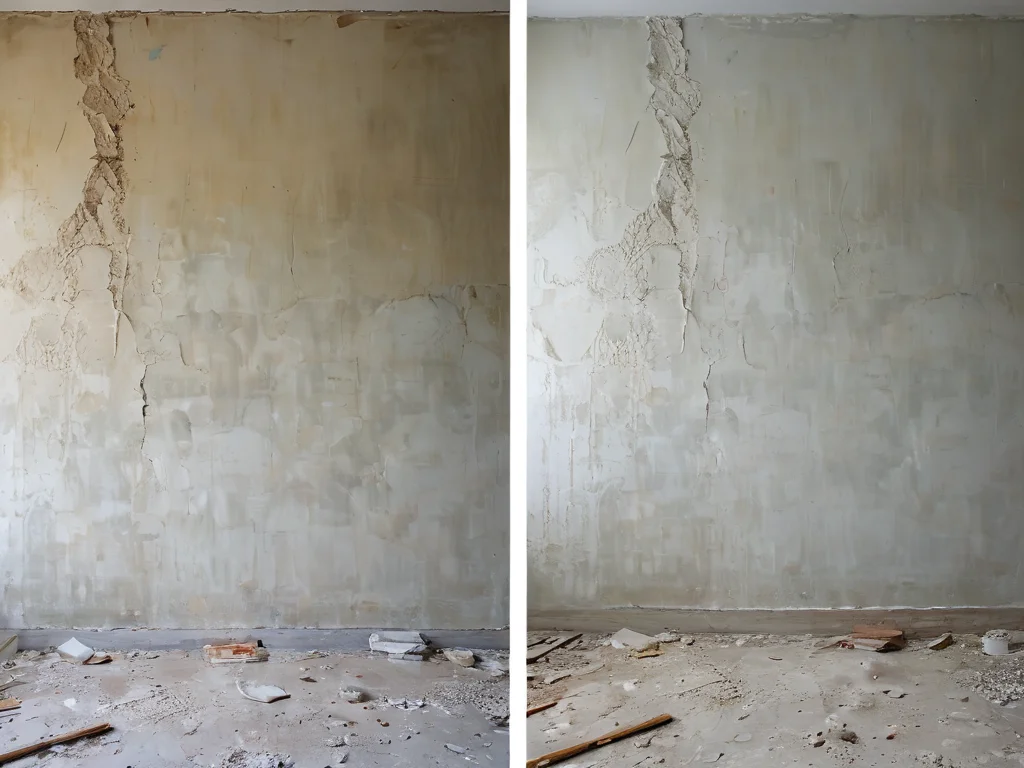
Even when following all instructions, beginners (and not only them) sometimes make mistakes that can ruin the entire job. Let’s look at the most common blunders and learn how to avoid them.
- Mistake 1: Poor surface preparation.
Problem: Applying plaster to a dusty, dirty, greasy, or unprimed wall. Result: poor adhesion, peeling plaster, spots appearing under the paint.
Solution: Always thoroughly clean, dust, and prime walls before plastering. Pay maximum attention to this stage.
- Mistake 2: Incorrect plaster mix.
Problem: Consistency too liquid or too thick, lumps in the mixture.
Solution: Strictly follow the proportions indicated on the packaging. Use a mixer to achieve a homogeneous mass. If the plaster thickens, do not add water – it’s better to mix a fresh batch.
- Mistake 3: Applying too thick a layer at once.
Problem: Especially relevant for gypsum-based plasters. A thick layer can crack when drying, dry slowly, or deform.
Solution: Apply plaster in thin layers (1-3 mm for finishing). If there are significant unevenness, it’s better to apply 2-3 thin layers with intermediate drying than one thick one.
- Mistake 4: Incorrect angle of the putty knife or leveling tool.
Problem: Too large an angle – the plaster is not leveled; too small – grooves and ridges remain.
Solution: The optimal angle is 30-45 degrees. Get a feel for it, try different angles on a small area.
- Mistake 5: Insufficient smoothing and removal of excess.
Problem: “Comb” marks from the putty knife, ridges, bumps remain.
Solution: After applying a layer, go over it with a clean putty knife, holding it almost perpendicular to the wall, carefully removing excess and leveling the surface. Overlap your strokes.
- Mistake 6: Poor sanding.
Problem: Too coarse sandpaper, uneven sanding, dust remaining on the wall.
Solution: Use fine-grit sandpaper (P180-P240). Sand evenly, using circular motions. After sanding, be sure to thoroughly remove all dust with a damp cloth or vacuum cleaner.
- Mistake 7: Neglecting corner and joint reinforcement.
Problem: Cracks appearing in corners and at joints after drying or house settling.
Solution: Always use mesh tape, paper joint tape, or corner beads in critical areas.
- Mistake 8: Ignoring manufacturer’s instructions.
Problem: Each manufacturer tests their mixtures and provides optimal recommendations for application, mixing, and drying times. Deviating from them can lead to problems.
Solution: Always read and follow the instructions on the packaging of plaster, primer, and other materials.
By avoiding these common mistakes, you will significantly increase your chances of achieving a perfect result. Remember that experience comes with practice, so don’t be afraid to try!
Perfectly Smooth Walls: Final Sanding and Preparation for Painting
You’ve completed the most challenging stage – plastering. The walls look even and smooth, but this is not the end. To achieve that very flawless result that will please the eye in any lighting, final sanding and preparation are necessary.
1. Final Sanding
Sanding is the process of removing the smallest imperfections, bumps, and roughness left after applying plaster. It makes the surface absolutely smooth and ready for painting.
- When to Start: Wait for the last layer of plaster to dry completely. This can take from 12 to 24 hours, depending on the room conditions.
- Tools:
- Sanding Float with Mesh or Sandpaper: Ideal for small and medium volumes. Use grit P180-P240.
- Sander (Giraffe Sander): Significantly speeds up the process, especially if you need to sand large areas or ceilings. Requires care to avoid sanding through the plaster to the base.
- Technique:
- Pressure: Don’t press too hard. Let the tool do its job.
- Motions: Sand in circular or cross-hatching motions. Try to process the entire surface evenly.
- Lighting: Use good side lighting (e.g., a spotlight or powerful lamp) to see all the minor defects and unevenness.
- Dust: This is the dustiest stage of the work. Be sure to use a respirator, safety glasses, and, if possible, a vacuum cleaner connected to the sander, or ventilate the room well.
Secret: After sanding, run your hand over the wall. You should feel perfect smoothness, without a single bump or scratch.
2. Final Dust Removal
After sanding, a huge amount of fine dust remains on the walls. It is critically important to remove it before painting!
- Method: Use a dry soft brush or a vacuum cleaner with a soft attachment to collect the main dust. Then, wipe the walls with a clean, slightly damp (not wet!) microfiber cloth.
- Check: After wiping, let the wall dry completely. Run a clean dry hand over it – there should be no traces of dust left on it.
3. Final Priming
This stage is often skipped, but it is very important for quality painting.
- Why: Priming before painting evens out the absorbency of the surface (especially important after sanding), improves paint adhesion, prevents spotting, and ensures more uniform paint distribution.
- Primer Choice: Use a deep-penetrating primer or a special primer for painting (often quartz-based, with fine sand, for better adhesion).
- Application: Apply the primer in an even layer using a roller or brush. Ensure there are no drips.
- Drying: Let the primer dry completely according to the manufacturer’s instructions.
Result: After all these steps, your walls are ready for painting. You have done a tremendous job, and now you can enjoy the process of applying the final coating, knowing that the foundation is perfect.
We have now gone through the entire process from choosing plaster to the final preparation of walls for painting. I hope my tips and step-by-step instructions will help you achieve a flawless result. Remember that patience, accuracy, and attention to detail are your main allies in creating a perfect interior. Good luck with your endeavors, and may your walls shine with smoothness!
Рекомендуем:
 Wall Putty for Wallpaper: How Many Coats Are Needed and How to Apply?
 How to Seal Drywall Seams to Prevent Cracks
 How to Repair Cracks and Holes in Walls Before Finishing: A Complete Guide
 Starting and Finishing Putty: What’s the Difference and How to Use It
 Sanding Walls After Puttying: A Perfect Surface with Your Own Hands
 DIY Venetian Plaster: Is It Possible?
 Gypsum or Cement Plaster: What and Where to Use?
 Bark Beetle Decorative Plaster: Application Technology
 How to Update Old Tiles Without Removing Them: 99 Ways to Transform Your Bathroom and Kitchen
 DIY Decorative Stone Wall Installation: Your Guide to Home Transformation
 Priming Walls Before Wallpapering and Painting: The Ideal Foundation for Renovation
 Betonokontakt: A Comprehensive Guide to Application for Perfect Renovation
 Wallpapering Corners: Master Secrets
 How to Hang Wallpaper Without Seams: The Technique for Perfect Joints
 Liquid Wallpaper: Pros, Cons, and Application Technology
 Aligning Walls with Drywall Adhesive: When This Method is Your Salvation?
 Wall Cladding with Wood Paneling: A Step-by-Step Guide
 How to Hang Vinyl Wallpaper on a Paper Backing?
 New wallpaper over old: is it possible and when should you try it?
 Washable wallpaper for the kitchen: why it’s the best idea for your renovation?