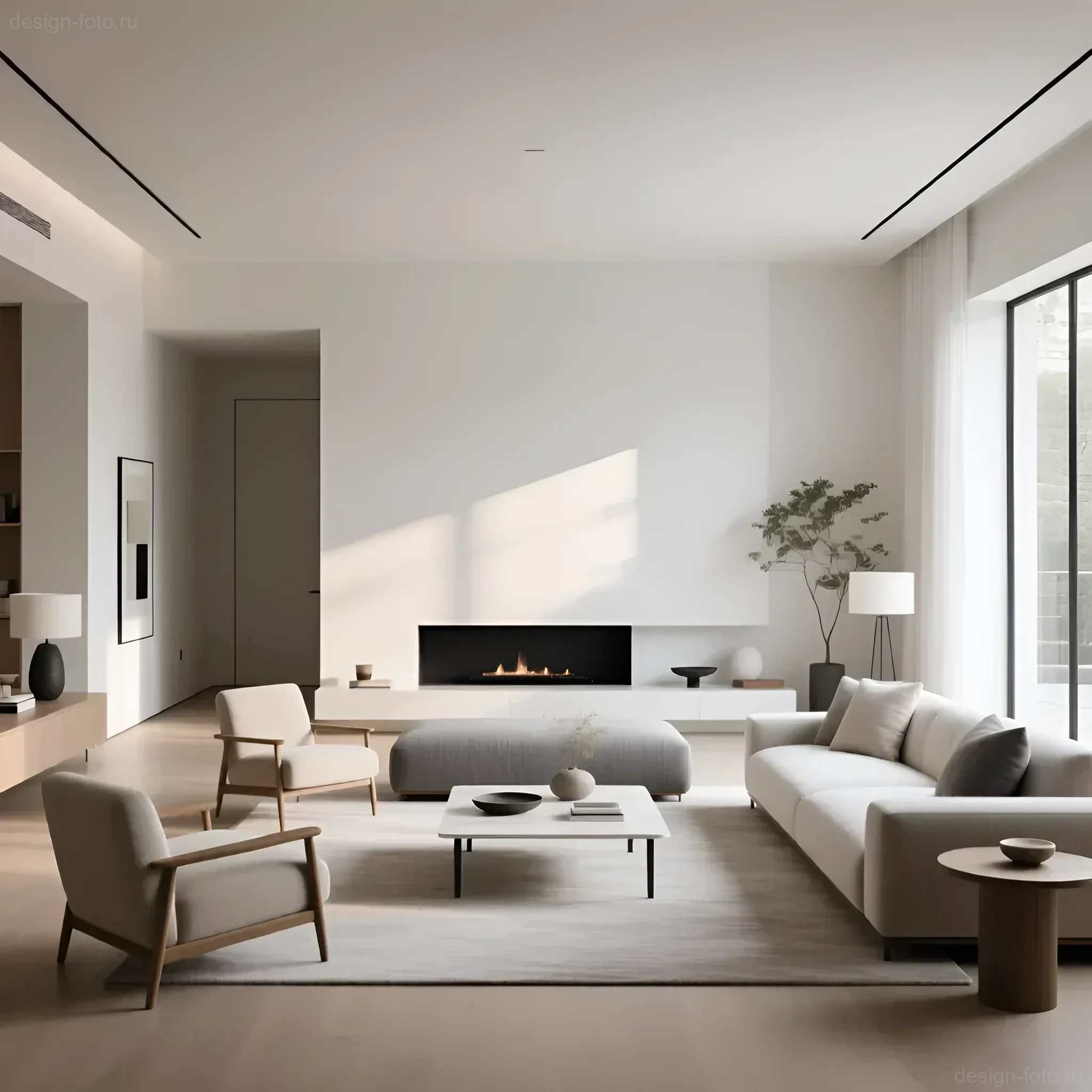
Minimalism is not just an aesthetic choice; it’s a philosophy of space organization that requires a deep understanding of functionality, ergonomics, and architectural purity. In professional practice, we often face a dilemma: how to create a clean, concise interior that is simultaneously warm and livable, rather than resembling a sterile museum hall. Our task as designers is to find that fine line where the absence of the superfluous becomes an advantage, not a sign of incompleteness or emptiness.
Minimalism in Interior Design: What It Is and Why It’s Needed
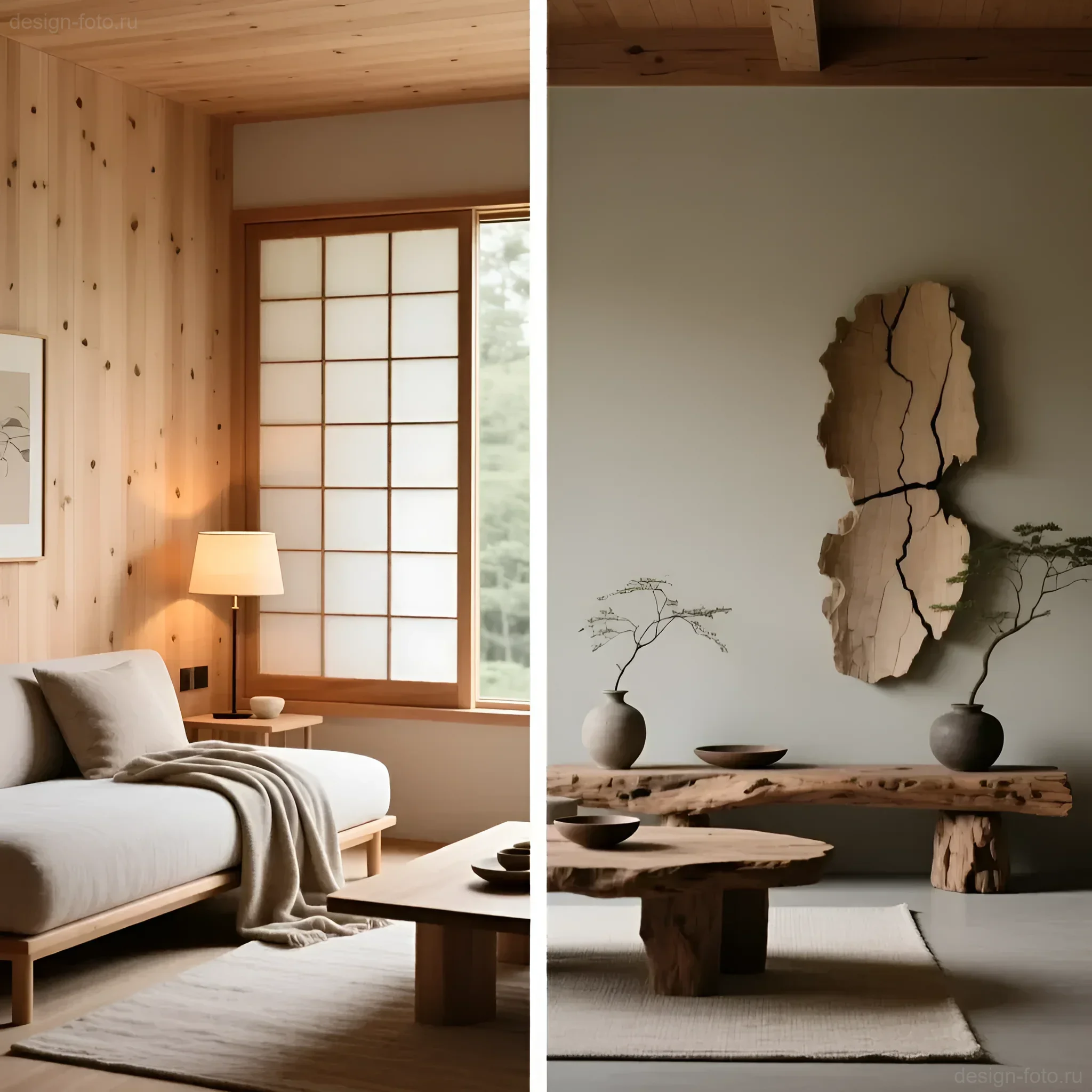
Contrary to popular misconception, minimalism is not about rejecting possessions, but about careful selection. It’s a style that demands maximum attention to detail during the design phase, as all functionality must be hidden or integrated. While in a classic interior, planning flaws can be masked by decor, in minimalism, any mistake becomes obvious.
Fundamental Principles of Minimalism:
- Functionality Above All: Every piece of furniture or decor must serve a clearly defined purpose.
- Space and Light: Maximizing natural light and creating a sense of volume.
- Clean Lines and Geometry: Absence of complex shapes, carvings, and ornaments. Emphasis on horizontal and vertical planes.
- Hidden Storage: Eliminating visual clutter by integrating storage systems into the room’s architecture (flush-to-wall cabinets, hidden doors).
Why is minimalism needed for modern people? It allows us to focus on the essence, reduces stress from visual chaos, and, critically, simplifies maintaining order. It’s an investment in quality of life, where fewer things mean more free space and time.
Styles of Minimalism: From Scandinavian to Japanese Wabi-Sabi
Minimalism is not monolithic. Various directions exist that allow it to be adapted to personal preferences while retaining the key principles of conciseness. Understanding these differences will help you avoid sterility and add individuality to your interior.
1. Classic (Western) Minimalism:
- Characteristics: Cool, clean tones (white, gray, black). Use of glass, chrome metal, concrete. Clear geometry, often with industrial touches.
- Risk: High risk of an “office” or “laboratory” feel if tactile materials are not incorporated.
2. Scandinavian Minimalism (Nordic):
- Characteristics: Light palette (white, beige, light gray), but with the mandatory use of light-colored natural wood (ash, birch). Emphasis on hygge – coziness achieved through textiles (wool, cotton, linen) and soft, multi-layered lighting.
- Advantage: This is the easiest way to create a warm yet concise interior.
3. Japanese Minimalism and Wabi-Sabi (Japandi):
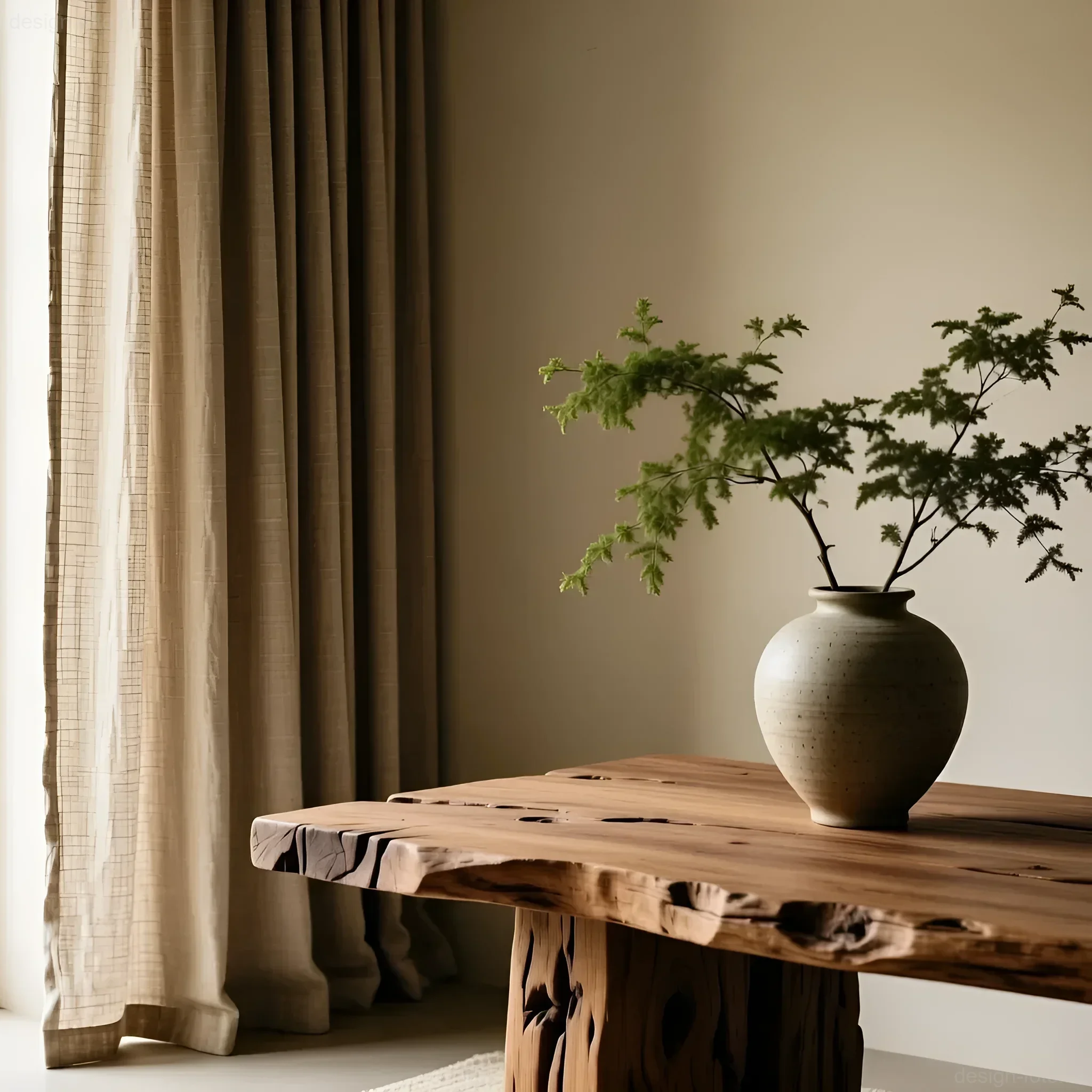
- Characteristics: Deep philosophy. Involves the use of imperfect but natural materials (raw wood, clay, stone). Earthy color palette (ochre, terracotta, deep gray). Low-profile furniture, organic yet simple lines.
- Key Feature: Here, minimalism is achieved not through perfect smoothness, but through conscious imperfection and respect for the material’s age.
Materials and Color Palette of a Minimalist Interior: Emphasis on Naturalness
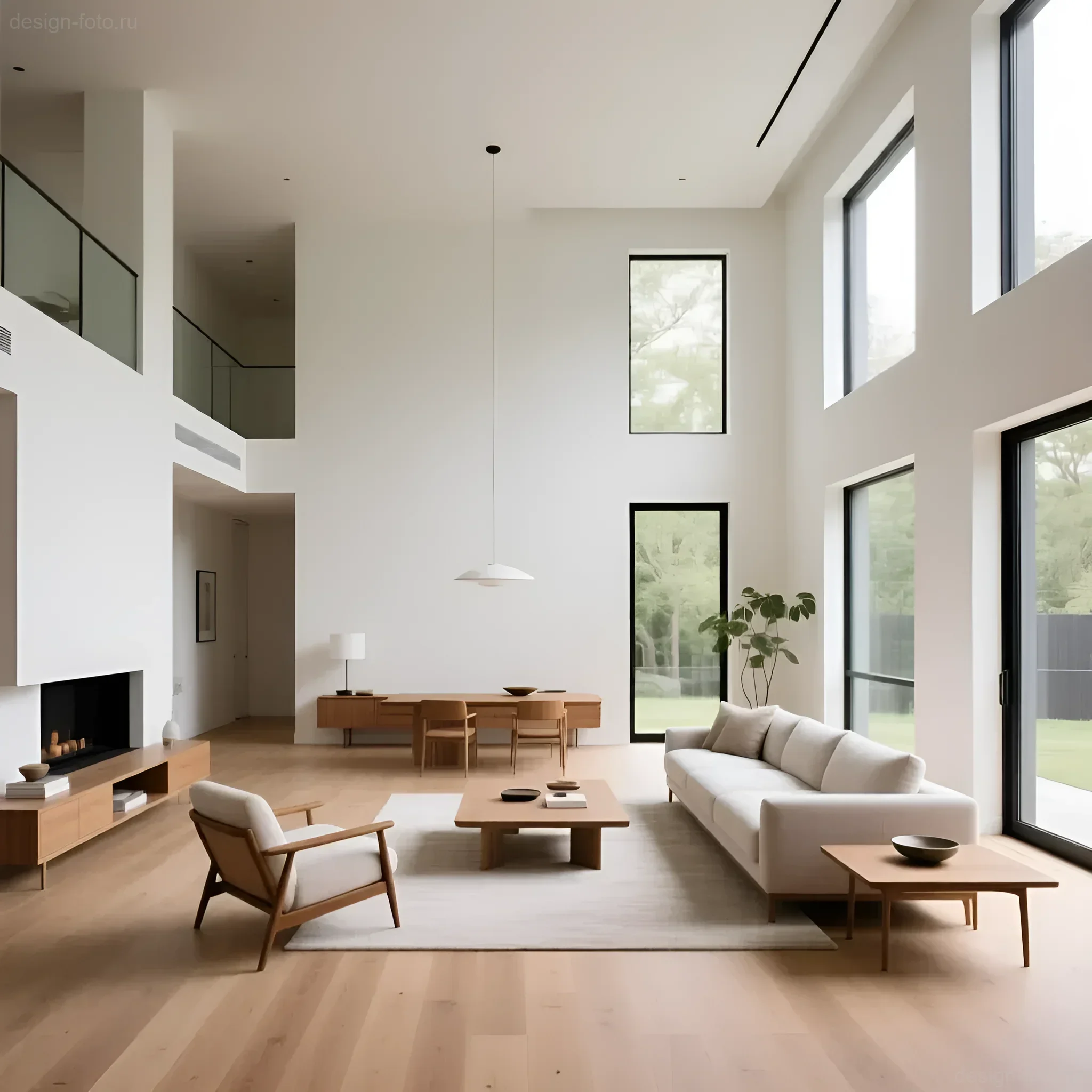
In minimalism, where decor is minimized, textures and materials become the main actors. They are what give the interior depth and prevent it from feeling flat and empty.
Color Palette: The 60-30-10 Rule
Minimalism is built on a monochrome or achromatic base. To avoid monotony, layering shades is essential:
- 60% – Base Color: Light neutral (warm white, light gray, beige). This includes walls, ceiling, and large furniture.
- 30% – Secondary Color: A richer neutral (graphite, dark wood, concrete gray). This applies to kitchen cabinets, flooring, and large rugs.
- 10% – Accent Color/Texture: A deep, natural color (terracotta, olive, deep blue) or a striking texture (polished marble, bronze, an art object). This percentage is responsible for warmth and individuality.
Materials That Add Depth
Choose materials with pronounced yet natural textures:
- Flooring: Large-format porcelain stoneware or microcement (to create a seamless, unified floor effect). Engineered wood with minimal knots and a matte finish.
- Walls: High-matte paint. Decorative plaster resembling concrete or travertine. Veneered or MDF wall panels painted the same color as the walls (hidden doors).
- Furniture: Handleless fronts (Push-to-Open system or integrated profile handles). Use matte lacquered surfaces that don’t create glare and don’t demand attention.
- Textiles: Linen, cotton, raw wool. These are key elements for softening the strict geometry of minimalism.
Layout and Zoning in Minimalism: Space and Functionality
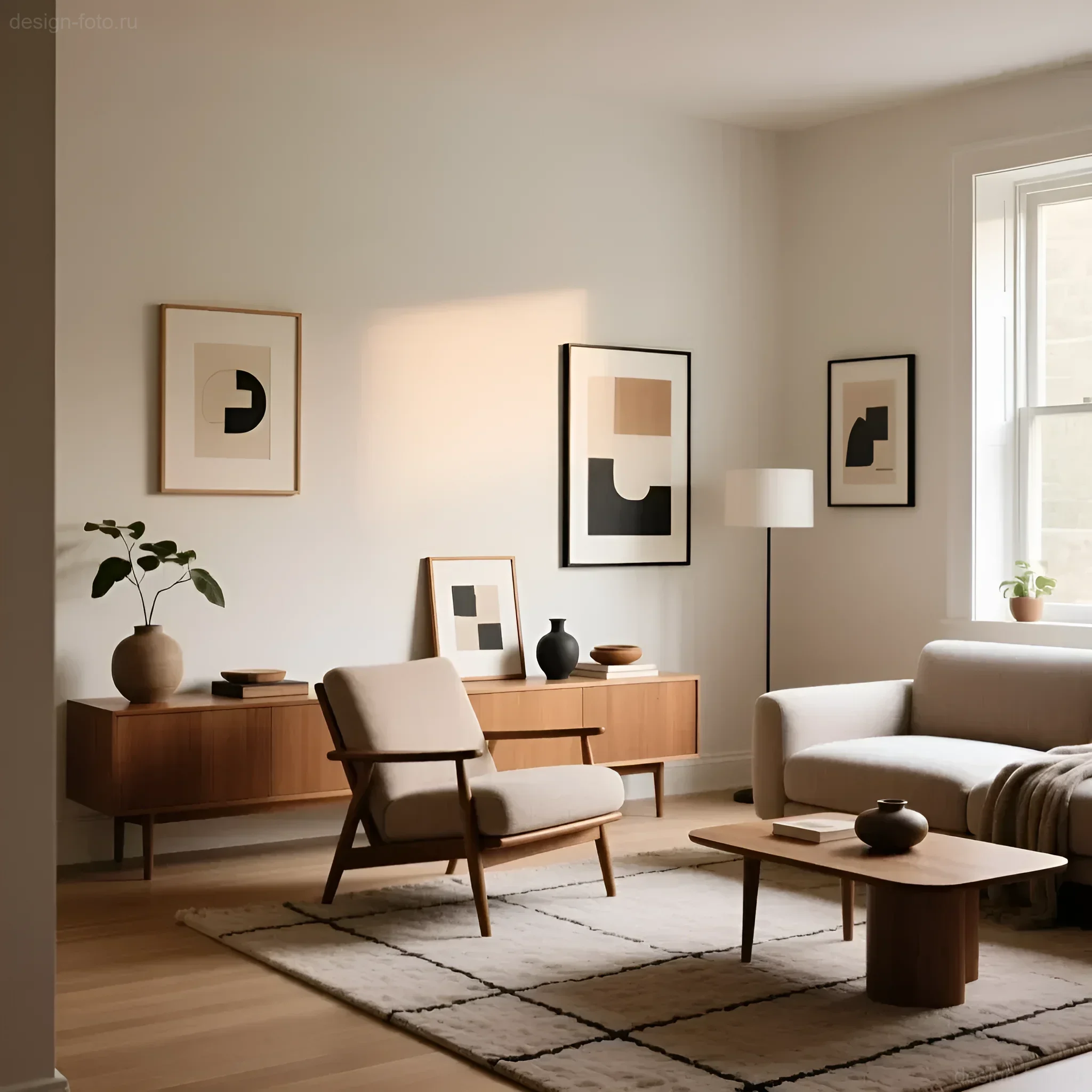
Minimalism is an architectural style. It requires a perfectly thought-out layout where every square meter works for you. The key to success is hidden functionality.
Ergonomic Calculations and Hidden Storage
In minimalism, there is no place for open shelves. Everything must be put away. This requires integrating storage systems into the building’s structure:
- Hidden Cabinets: Built-in wardrobes, with fronts painted the same color as the walls. Wardrobe depth should be at least 60 cm for comfortable clothing storage.
- Technical Niches: Creating niches for the hidden installation of engineering systems (air conditioners, radiators, built-in vacuum cleaners).
- Kitchen: Abandoning upper cabinets if possible, or using seamless, floor-to-ceiling fronts. All appliances should be built-in. The work surface should be as clear as possible; an ideal solution is an island with an integrated hood and a hidden area for small appliances (toaster, coffee maker).
Space Organization
Open-plan layouts are welcome in minimalism, but they must be clearly zoned by light, furniture, or flooring, not walls.
| Zone | Zoning Principle | Ergonomic Standard |
|---|---|---|
| Living Room/Kitchen | Visual barrier (island, low shelving) + different lighting scenarios. | Minimum passage between island and work area: 100–120 cm. |
| Bedroom | Hidden doors (invisible frame) to create the effect of a single wall. | Passage around the bed: minimum 70 cm. |
| Hallway | Built-in wardrobe, concealed skirting board, linear lighting. | Shoe cabinet depth: 35 cm (minimum). |
Practical Tips for Creating a Minimalist Interior: How to Avoid a Feeling of Emptiness
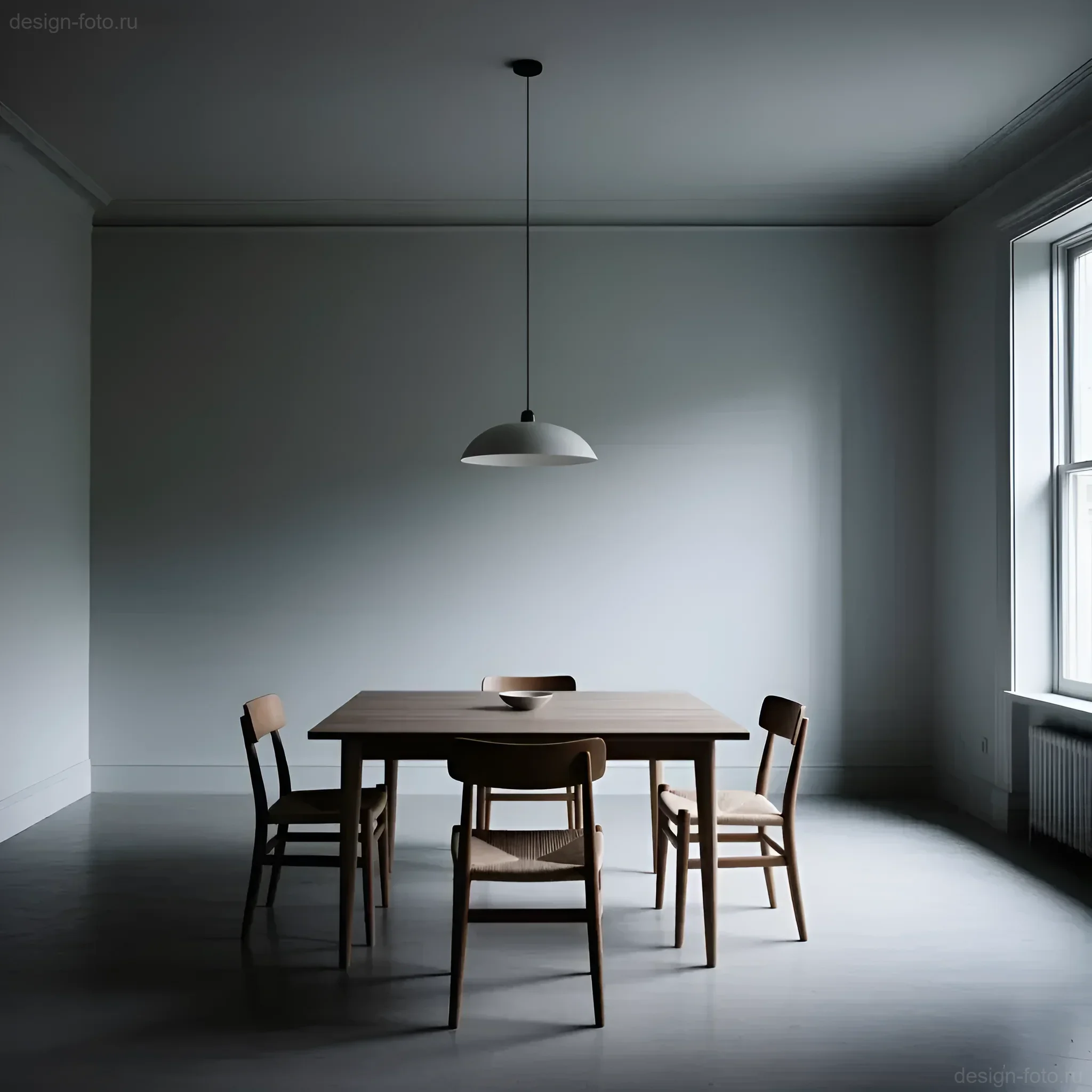
The biggest fear when working with minimalism is creating a cold, unlivable interior. Emptiness arises not from a lack of things, but from a lack of life and scale. Here’s how we solve this problem in practice:
1. Playing with Scale and Volume
Instead of many small items, use one or two large-scale elements that become focal points and set the scale:
- Large Art: A single, emotionally rich canvas on an empty wall. Its size should be proportional to the sofa (e.g., at least 2/3 of its length).
- Accent Lighting: A massive yet geometrically simple chandelier or floor lamp that is itself a sculptural object.
2. Layers of Texture
If you are limited in color (e.g., working with 90% white and gray), compensate with tactile sensations. This is the key secret to warm minimalism:
- Matte porcelain stoneware + a high-pile wool rug.
- Smooth kitchen fronts + a dining table made of natural, slightly rough oak.
- Concrete wall + soft, heavy linen textiles on the windows.
3. Lighting Scenarios
Minimalism requires multi-layered lighting that creates volume and mood. Avoid a single central light source. Use:
- General Lighting: Concealed track systems or recessed fixtures (e.g., 3000K – warm white).
- Accent Lighting: Directed spotlights to highlight wall textures or artworks.
- Decorative Lighting: Floor lamps, LED strips hidden in niches or under furniture (the “floating” furniture effect).
Common Mistakes in Minimalist Interior Design: How to Avoid Them
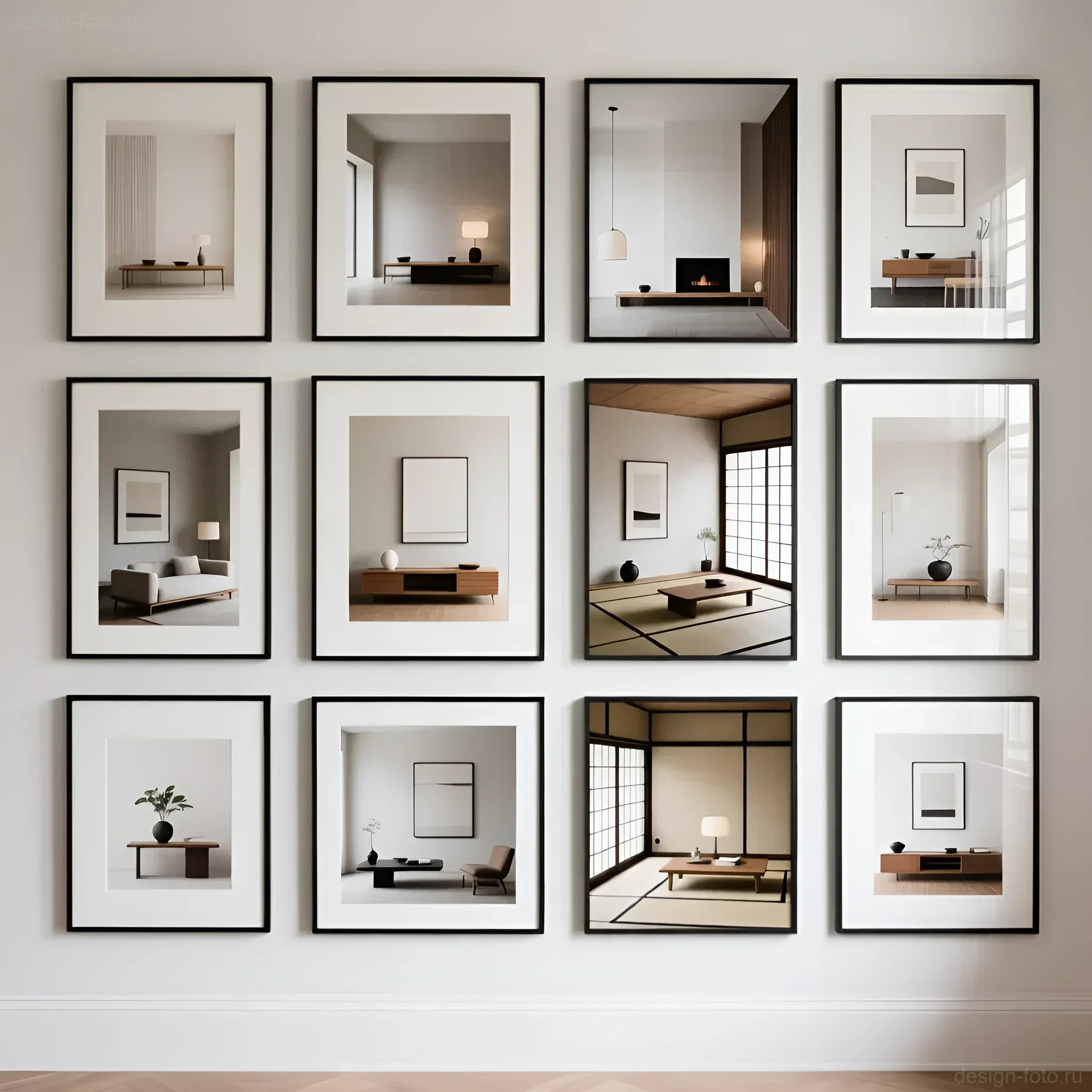
Many, in trying to create minimalism, fall into either sterile high-tech or unfinished renovations. Avoid the following critical mistakes:
Mistake 1: Too Much “Pure” White
Using a single shade of white on all surfaces makes the interior flat and cold. Solution: Differentiate shades of white. Use warm white for walls (with added ochre or yellow pigment) and cool white for the ceiling or glossy surfaces. Add contrasting shadow (e.g., a black concealed skirting board).
Mistake 2: Lack of Architectural Details
Minimalism does not mean the absence of architecture. It means hidden architecture. Simply placing a sofa in an empty room is emptiness. Solution: Invest in concealed elements: flush-to-wall doors (concealed frame), concealed skirting boards, multi-level ceilings without moldings but with clear geometry for light integration.
Mistake 3: Poor Quality Materials
In minimalism, due to the small number of elements, the quality of each item comes to the forefront. Cheap, thin veneer or low-quality hardware will instantly ruin the impression. Solution: Reduce the number of elements, but increase the budget for essential materials (flooring, cabinet fronts, countertops). It’s better to have one expensive, high-quality sofa than three mediocre ones.
Mistake 4: Visual Clutter
If a toaster, blender, vase, and potted plant are on the kitchen counter, it’s no longer minimalism. Solution: Plan storage for everything. Use deep drawers with dividers so that small items are not just hidden but organized. Appliances should be put away in cabinets or niches when not in use.
Examples of Minimalist Interiors: Inspiration for Your Home
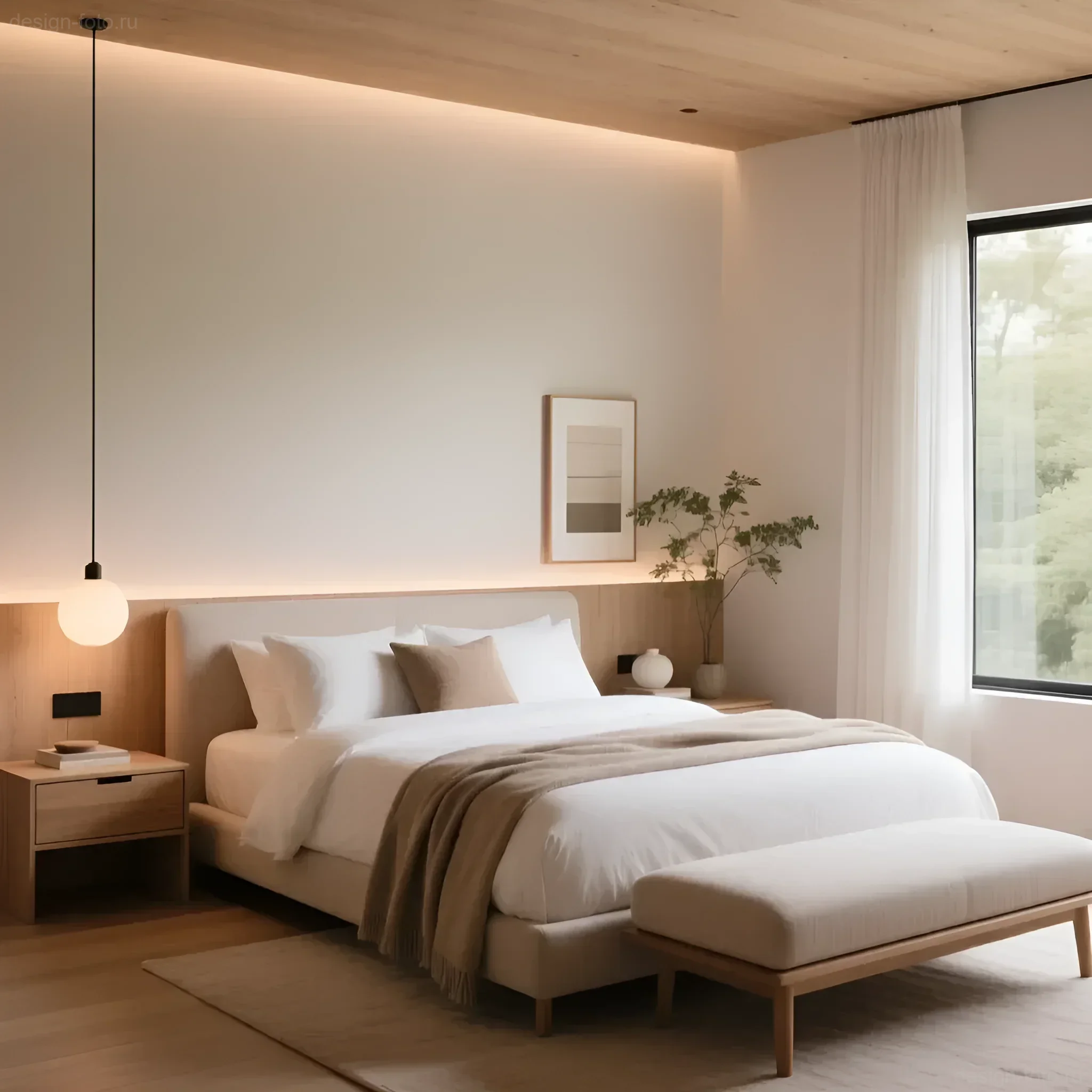
Let’s look at how the principles of balance between style and functionality are implemented in key areas of an apartment.
Minimalism in the Kitchen-Living Room
Goal: To create a unified, uncluttered space where the kitchen doesn’t look like a work zone.
- Cabinet Fronts: Floor-to-ceiling, handleless, in a single color with the walls (e.g., matte graphite). The kitchen blends into the interior.
- Countertop: Use of a monolithic material (quartz composite or stainless steel) without visible seams.
- Appliances: Induction hob flush with the countertop. Integrated hood, built into the ceiling or island.
Minimalism in the Bathroom
Goal: Maximum hygiene and clean lines.
- Sanitary Ware: Wall-hung toilet and bidet (simplifies cleaning). Concealed faucet built into the wall.
- Storage: Mirrored cabinet above the sink with integrated lighting. Hidden niches for storing cleaning supplies.
- Materials: Large-format porcelain stoneware with minimal grout lines.
Minimalism in the Bedroom
Goal: To create a zone of absolute tranquility.
- Bed: Low-profile, with a simple headboard. Can be “floating” (with perimeter lighting at the base).
- Storage: Instead of bedside tables, use built-in niches in the headboard or minimalist consoles. The wardrobe is fully integrated, without visible trim.
- Decor: Only textiles (bedspread, pillows) and a carefully chosen reading sconce.
Minimalism: The Secret to Harmony or a Compromise with Comfort? Conclusion
Minimalism is not a compromise with comfort, but its highest form. When space is freed from the superfluous, it begins to work for you. The fine line between style and emptiness lies in the quality of detail execution and tactile perception.
True minimalism requires courage: the courage to remove the unnecessary and the courage to invest in the quality of what remains. If you can enrich concise forms with rich, natural textures (wood, stone, linen) and provide multi-layered, warm lighting, you will achieve an interior that is not just stylish, but also deeply ergonomic, functional, and, most importantly, cozy. This is the path to conscious design, where every line and every material matters.
Рекомендуем:
 Wall Cladding with Wood Paneling: A Step-by-Step Guide
 How to Maintain Perfect Order in a Minimalist Interior: A Practical Guide
 Bark Beetle Decorative Plaster: Application Technology
 Internal Wall Insulation: Materials and Technology
 DIY Venetian Plaster: Is It Possible?
 How to Make a Brick Wall in an Interior (Imitation)
 Washable wallpaper for the kitchen: why it’s the best idea for your renovation?
 Art Deco Colors: Black, Gold, Emerald, Burgundy – Luxury and Practical Tips for Your Interior
 Which Tile to Choose for a Small Bathroom: Color, Size, Texture, and Space-Expanding Secrets
 PVC Wall Panels: Cheap and Cheerful. Installation Guide
 How to Hang Vinyl Wallpaper on a Paper Backing?
 MDF Panel Wall Finishing: Installation Guide
 Nautical Style in Interior Design: How to Create a Coastal Atmosphere in a City Apartment
 Bathroom: Tile or Paint. What Will Everyone Face?
 What to do if mold or mildew appears on the walls?
 Interior Design and Pets: How to Combine Aesthetics and Pet Comfort
 Sanding Walls After Puttying: A Perfect Surface with Your Own Hands
 Liquid Wallpaper: Pros, Cons, and Application Technology
 Priming Walls Before Wallpapering and Painting: The Ideal Foundation for Renovation
 How to Hang Wallpaper Without Seams: The Technique for Perfect Joints