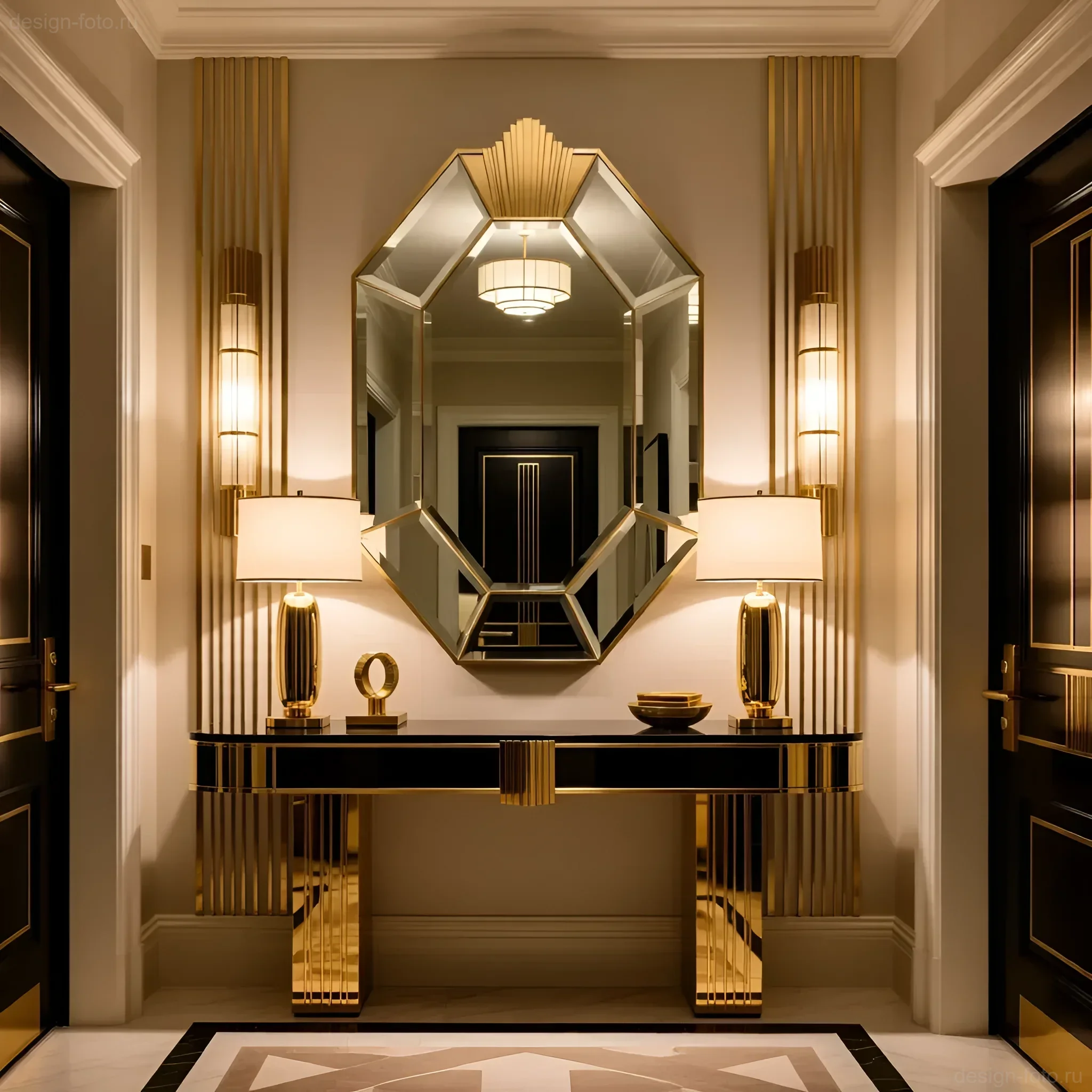
Art Deco mirrors are not just a functional element of the interior, but a powerful architectural tool capable of radically changing the perception of space, adding depth, light, and, undoubtedly, unique luxury. Unlike minimalist solutions, Art Deco demands boldness, precision in geometry, and uncompromising quality of materials. This style, born in the 1920s, remains a synonym for elegance and high status. If you aim to create an interior that is both functional and impressive, you need to understand how these mirror masterpieces work.
Art Deco Mirrors: What They Are and Why They Are Relevant
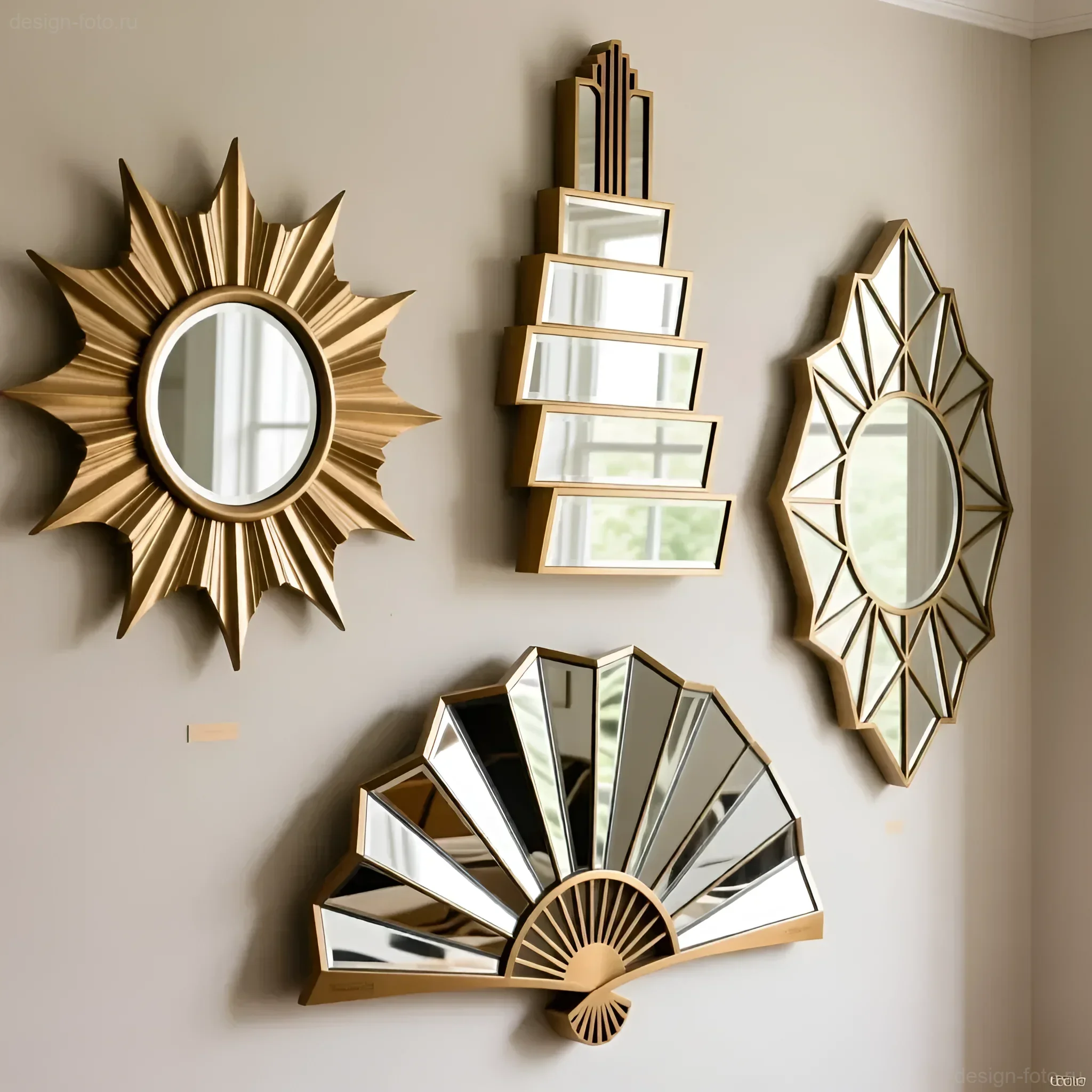
The Art Deco style is a celebration of symmetry, strict geometry, and expensive, often exotic materials. Mirrors made in this style are key accents that carry not only decorative but also deep functional significance. They are relevant today because they perfectly meet the demand for creating unique, personalized spaces where every element speaks of attention to detail.
Functional Relevance of Art Deco Mirrors:
- Visual Expansion: Large, often segmented mirror panels, characteristic of this style, can double the area of a room, which is critically important for urban real estate.
- Enhanced Illumination: Beveled edges and tinted surfaces reflect light from chandeliers and sconces, creating a play of glare and increasing the overall amount of diffused light.
- Zoning: A mirror surface, framed in geometric patterns or composed of individual modules, can clearly define a functional zone (e.g., a dining area or fireplace) without using bulky partitions.
Please note: in Art Deco design, a mirror always acts as an architectural element, not just an accessory. It must be integrated into the overall composition, and its frame or segmentation must echo other decorative elements – the pattern of the parquet, the shape of the light fixtures, or the ornament on the textiles.
Key Features and Types of Art Deco Mirrors
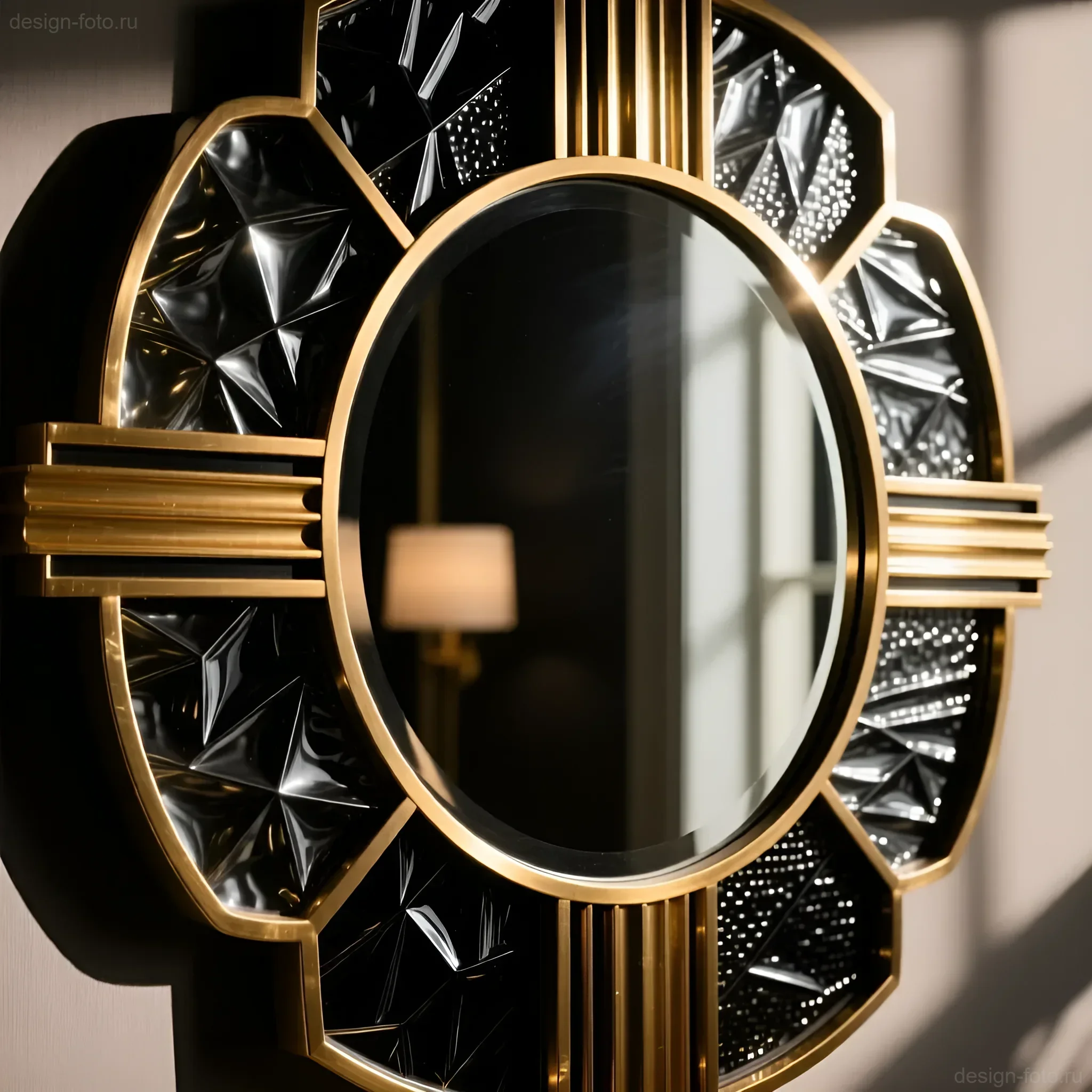
To identify and correctly choose an Art Deco mirror, you need to know its key characteristics. Geometry dominates here, but it is always softened by the luxury of the finish.
Geometry and Shapes
Art Deco rejects the smooth, natural lines of Art Nouveau, preferring strict but dynamic forms:
- Sunburst Mirror: One of the most recognizable forms. It is a round mirror with rays radiating from the center. The rays can be made of metal (brass, bronze) or individual beveled mirror segments. The diameter of such models often exceeds 100 cm.
- Stepped and Trapezoidal Shapes: References to the architecture of ziggurats and skyscrapers. The mirror can have a multi-level frame or a complex shape where corners are cut or beveled at 45 degrees.
- Segmented Panels: A mirror composed of many individual, symmetrically arranged geometric parts (squares, rhombuses, hexagons). This creates the effect of an “infinite” wall and significantly enhances the play of light.
- Octagons and Ovals: Strict but elegant shapes, often framed by a massive frame with a geometric ornament.
Bevel Typology
A bevel is a beveled edge of the mirror surface. It is a mandatory element for creating authentic Art Deco. The bevel not only adds depth but also acts as a prism, refracting light. The standard bevel width used in professional design is 15–25 mm. The wider the bevel, the more pronounced the “diamond” sparkle effect will be.
Materials and Color Schemes for Art Deco Mirrors: Creating a Luxurious Accent
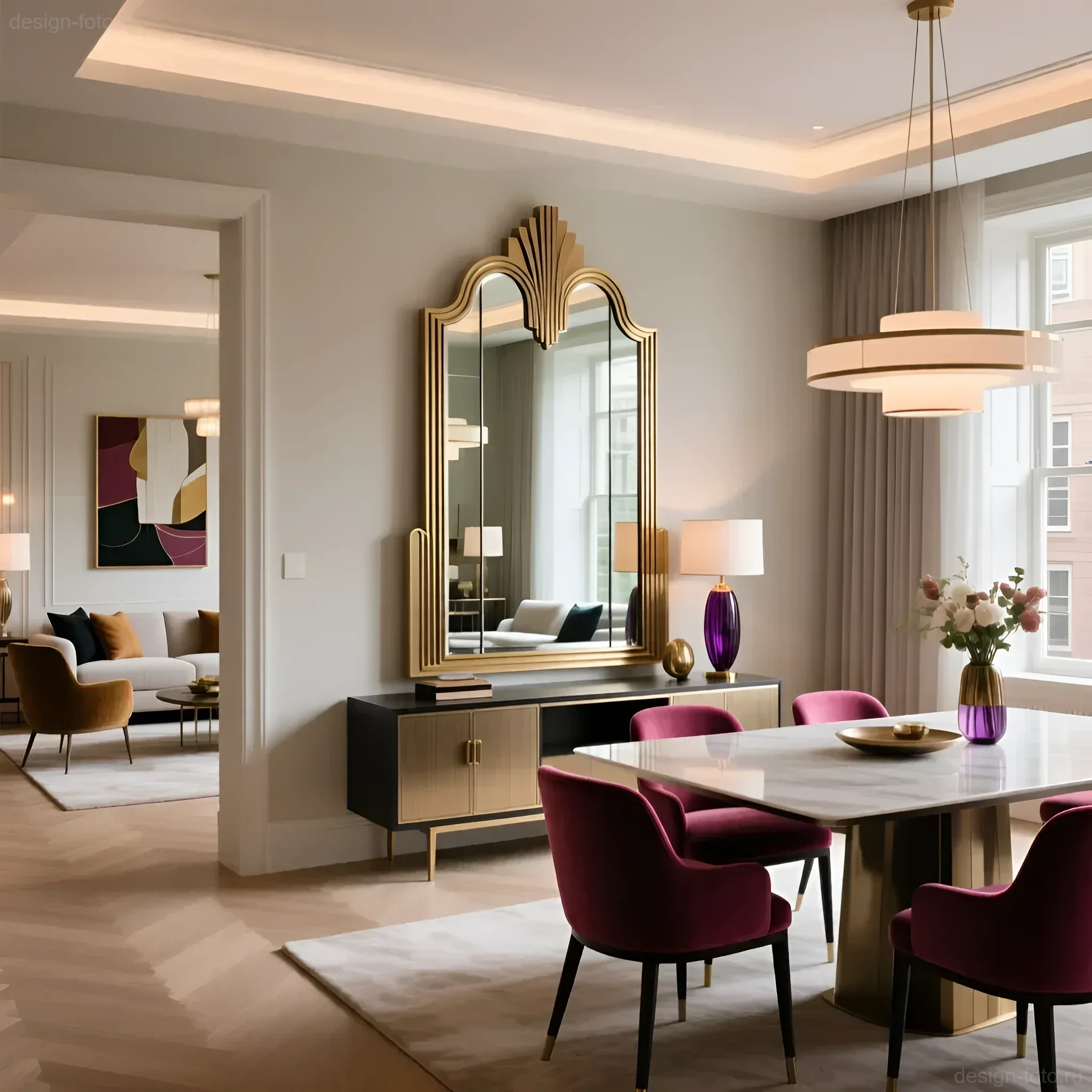
The luxury of Art Deco is determined by the quality and combination of materials. Cheap plastic imitations or thin, unexpressive frames are unacceptable in this style. A mirror should look like an investment.
Frame Materials
The choice of frame material directly affects the final look and cost of the product. As designers, we recommend the following options:
- Polished Brass and Bronze: Art Deco classics. Brass can be polished to a mirror shine (gold) or artificially aged (antique patina). These metals add warmth and solidity.
- Chrome and Nickel: Used to create a stricter and more graphic, “masculine” interior. A chrome frame pairs wonderfully with gray, black, and white marble.
- Exotic Woods: Ebony, zebrano, rosewood. Used either for creating massive, lacquered frames or as inlay. Black lacquered wood combined with gold is a hallmark of the style.
- Mirror Elements: The frame itself can be made of beveled mirror tiles. This solution makes the mirror maximally weightless and radiant, ideal for small or dark rooms.
Mirror Surface Color Schemes
Simple, colorless mirrors are rarely used in Art Deco. Tinting is used to create depth and a glamorous atmosphere:
| Tint Type | Interior Effect | Recommended Combination |
|---|---|---|
| Graphite (Gray) | A cool, deep shade that reduces reflection brightness. Ideal for modern Art Deco interpretations. | Chrome frames, white and black marble. |
| Bronze (Brown) | A warm, vintage shade that adds softness. The best choice for classic, luxurious Art Deco. | Brass, gilding, dark wood. |
| Antique (Aged) | Imitation patina, light clouding. Adds history and uniqueness. | Used as an accent panel in the living room or dining room. |
Art Deco Mirrors: Space Planning and Zoning
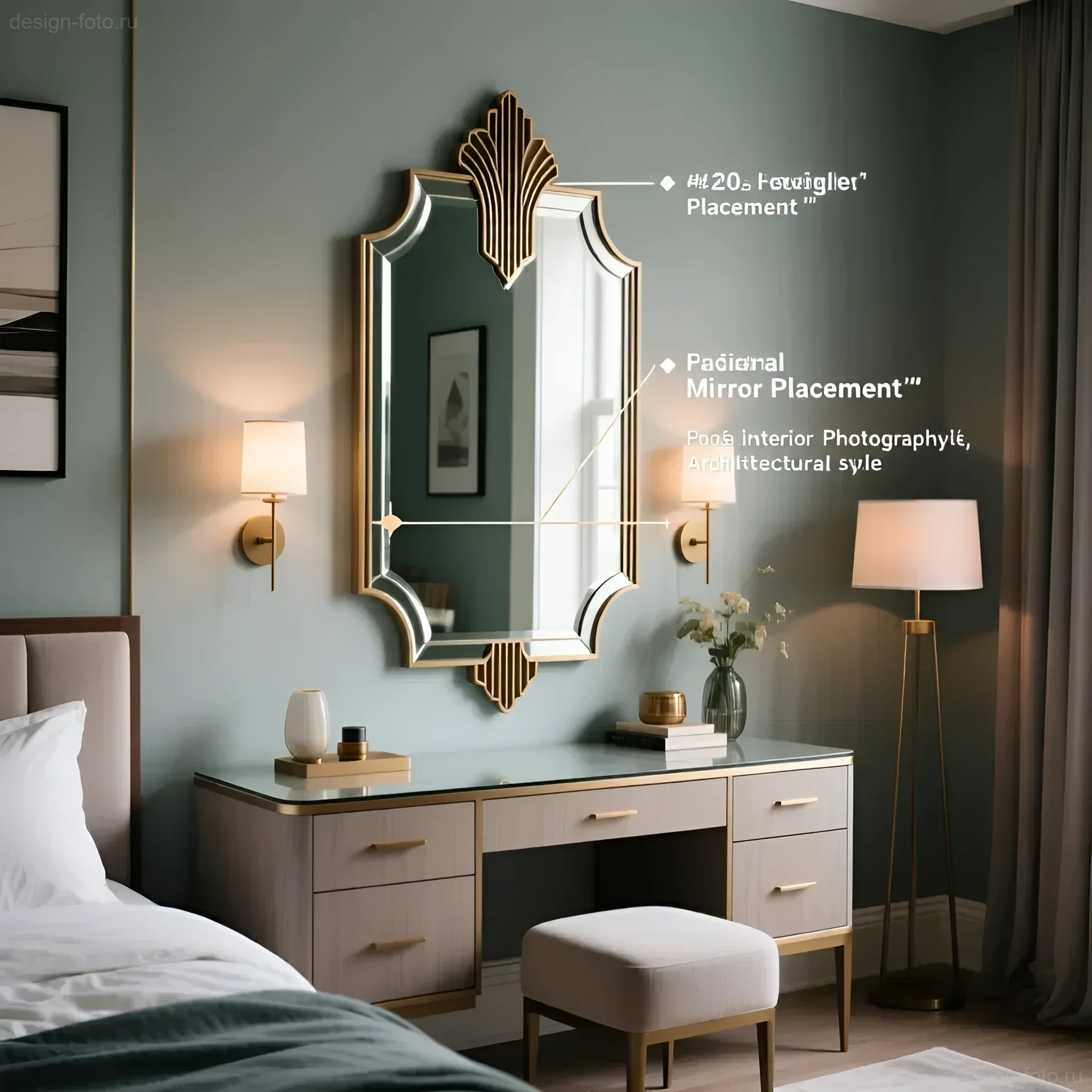
Proper placement of a large Art Deco mirror is half the battle. It should work for the ergonomics and aesthetics of the room, not just hang on the wall.
Mirror as a Zoning Tool
In open-plan layouts (studios, combined kitchen-living rooms), mirror panels can act as visual dividers without disrupting the integrity of the space.
- Dining Area: Placing a large mirror panel on the wall adjacent to the dining group enhances the festive atmosphere. It is important that the mirror reflects a chandelier or a beautiful view from the window, not a passageway or kitchen workspace.
- Fireplace Area: Above the fireplace, a large rectangular or stepped mirror in a brass frame is traditionally placed. It should be proportional to the width of the fireplace. The optimal ratio is that the mirror’s width is 60–80% of the fireplace’s width.
- Hallway/Foyer: Here, an Art Deco mirror (often a round “sunburst” or a full-length vertical one) serves as a welcoming element, immediately setting a tone of luxury. It should be positioned to reflect the entrance door, which, according to Feng Shui and pure design rules, is not always desirable. If reflecting the door is unavoidable, choose a model with a strong bevel or tint to soften the effect.
Placement Ergonomics
When working with large Art Deco mirrors, strict ergonomic rules must be followed:
- Hanging Height: If the mirror hangs above a dresser or console, its lower edge should be 15–20 cm from the tabletop. This ensures a visual connection between the objects and avoids the feeling of a “floating” object.
- Reflection: Always check what will be reflected. In Art Deco, it is unacceptable for a mirror to reflect clutter, tangled wires, or technical corners. The reflection should be clean, beautiful, and enhance the best aspects of the interior.
- Light: Place the mirror opposite a source of natural light (window) or opposite a significant source of artificial light (a chic chandelier). Beveled glass refracts light most effectively when positioned perpendicular to it.
Practical Tips for Choosing and Placing Art Deco Mirrors
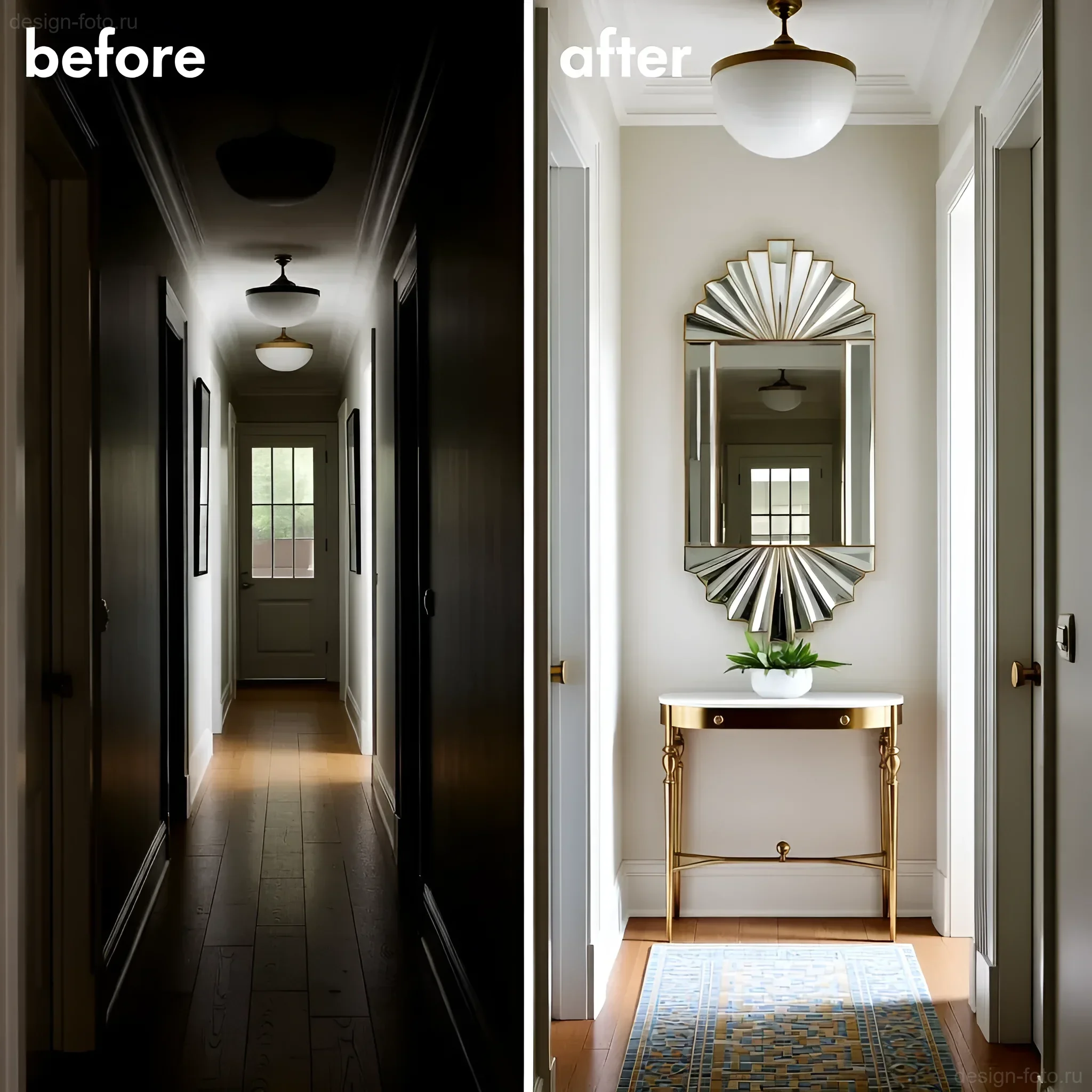
As professionals, we recommend approaching the choice of an Art Deco mirror with engineering precision. It’s not just decor; it’s an element that requires proper installation and consideration of weight loads.
Choosing Scale
In Art Deco, the rule is: the bigger, the better. Small, scattered mirrors destroy the sense of luxury. Choose models that dominate the wall.
- Round Sunburst Mirror: Minimum diameter for a living room is 90 cm. Optimal is 120–150 cm.
- Mirror Panel: If you are creating a panel from tiles, use tiles at least 30×30 cm. Smaller sizes look “pixelated” and cheapen the look.
Technical Installation Aspects
Art Deco mirrors, especially those in metal frames or composite panels, are quite heavy. Do not use standard hooks or thin hangers.
- Fastening: Reinforced anchors or dowels rated for weights of 20 kg or more must be used. This is not a problem for concrete and brick walls, but for drywall partitions, a backing (plywood or metal profile) is required at the mounting point before finishing.
- Panel Installation: Composite mirror panels (e.g., above a headboard) are often mounted with special adhesive or a hidden fastening system. It is important to ensure perfect alignment of the bevels to avoid visible gaps.
Lighting and Backlighting Effect
Light is the best friend of an Art Deco mirror. For maximum effect, use additional lighting:
- Sconces: Place symmetrical sconces on both sides of a large mirror (e.g., in a bathroom or hallway). Light from the sconces falling on the bevel creates a play of shadows and glare.
- Hidden LED Backlighting (Backlighting): Installing an LED strip around the perimeter of the mirror with a recess from the wall (about 3–5 cm) creates a “floating” effect and emphasizes the geometric shape. The backlight color should be warm (2700–3000K) for brass frames and neutral (4000K) for chrome.
Common Mistakes When Using Art Deco Mirrors and How to Avoid Them
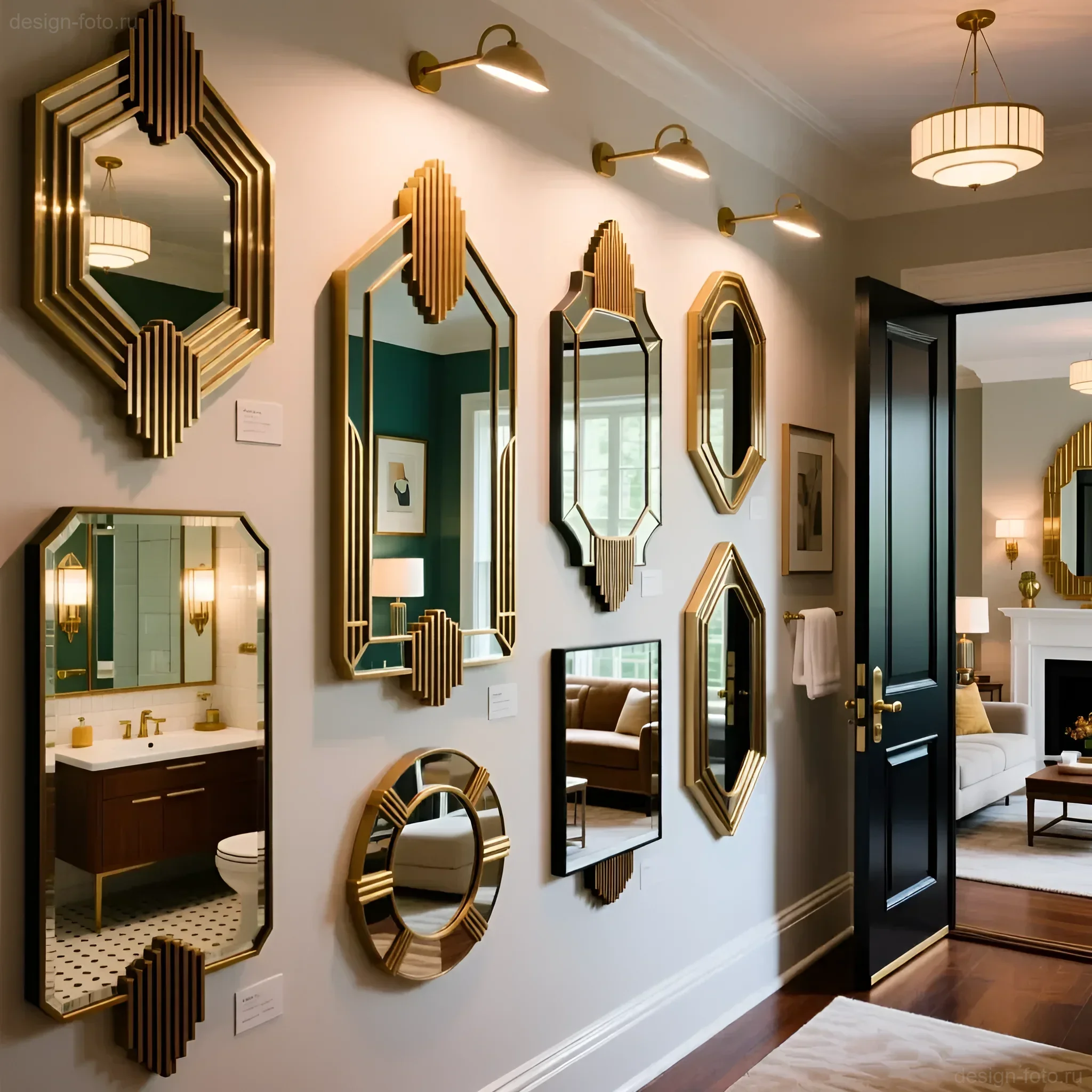
Even in the most expensive projects, mistakes can be found that negate the entire effect of luxury and geometry. By avoiding them, you guarantee a flawless result.
Mistake 1: Underestimating Scale
Problem: Using a small, thin mirror in a massive, high-ceilinged interior. It gets lost and looks awkward.
Solution: Always choose a mirror that is proportional to the wall or piece of furniture it hangs above. If it’s a panel, it should occupy at least 50% of the wall area to become an accent.
Mistake 2: Overloading with Geometry
Problem: Combining a mirror’s overly active geometric pattern (e.g., a complex segmented panel) with other competing patterns (bright wallpaper, a busy rug).
Solution: If an Art Deco mirror has complex geometry and a pronounced bevel, the background should be as neutral as possible – solid paint, smooth panels, or decorative plaster. The mirror’s geometry should be the sole dominant feature on that wall.
Mistake 3: Incorrect Reflection
Problem: The mirror reflects the ceiling, a door corner, or, worse, randomly placed objects.
Solution: Before final installation, hold the mirror in its intended position. Ensure it reflects either a beautiful composition (painting, vase, light fixture), light, or an extension of a clean, architecturally designed space.
Mistake 4: Mixing Metals Without Control
Problem: The mirror frame (e.g., polished chrome) clashes with furniture hardware or light fixtures (e.g., matte bronze).
Solution: Art Deco allows for the combination of two, maximum three metals. If you choose brass for the mirror frame, then the door handles and console legs should be either brass or black. Avoid chaotic mixing of warm and cool shine.
Inspiring Examples of Art Deco Mirrors in Interiors: Photos and Ideas
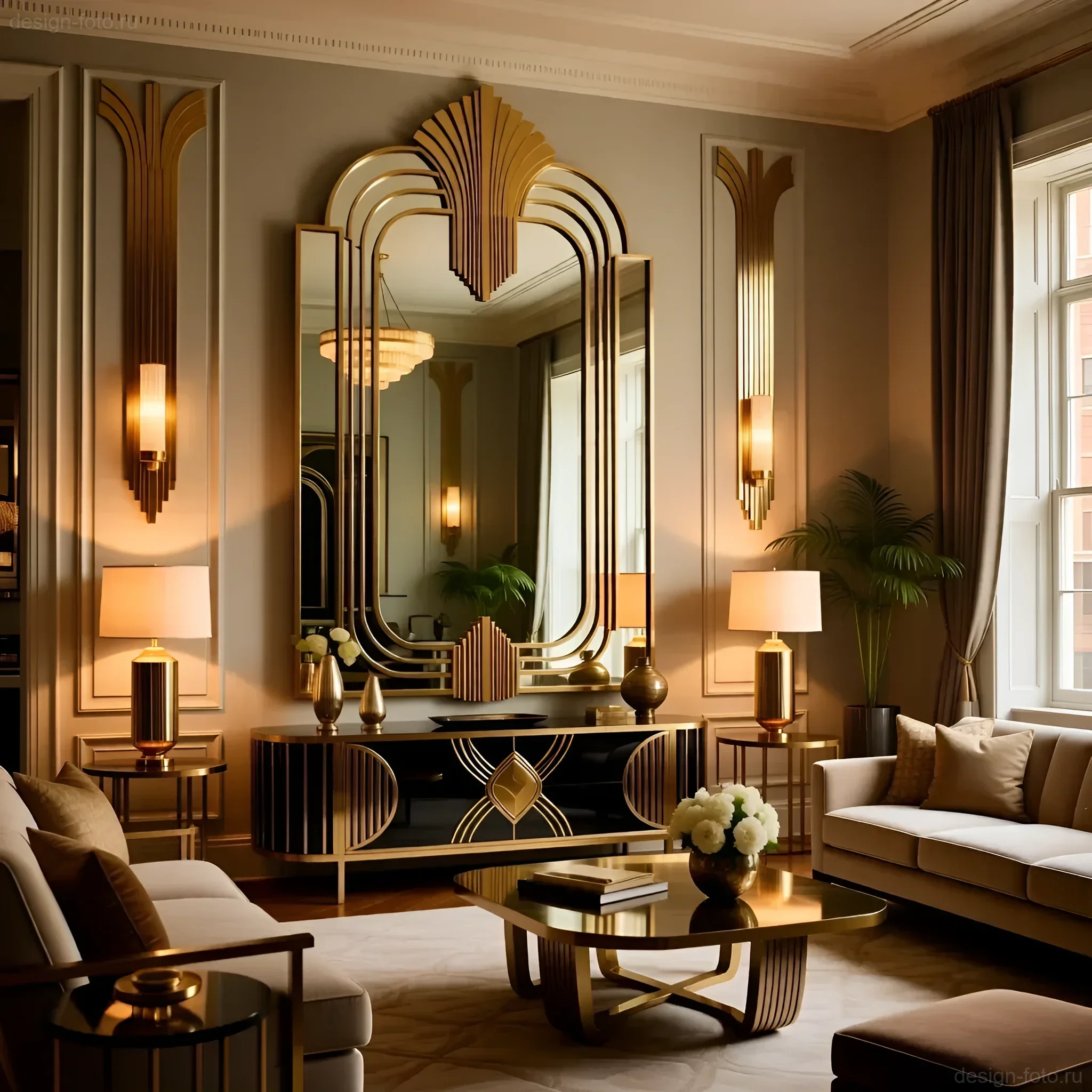
Let’s consider a few working scenarios where Art Deco mirrors are used to solve specific design challenges:
Scenario 1: Accent Wall in the Bedroom
Task: To add glamour to the bedroom and visually raise the ceiling.
Solution: Use a vertical mirror panel behind the headboard. The panel consists of narrow, tall rectangular segments with a 20 mm bevel, framed by a thin black border. The height of the panel should reach almost to the ceiling (leaving a 10–15 cm gap). This creates a strong vertical vector, visually increasing the room’s height, and simultaneously reflects light from the bedside sconces.
Scenario 2: Living Room with Low Natural Light
Task: To maximize light diffusion and create a central focal point.
Solution: A large, round sunburst mirror with a diameter of 130 cm with polished brass rays. Placed above a three-seater sofa. Due to its shape, it not only attracts attention but also, by reflecting the chandelier, multiplies its light, compensating for the lack of natural illumination.
Scenario 3: Narrow Corridor
Task: To visually widen a narrow and long hallway.
Solution: A mirror panel occupying almost the entire length of one of the walls. Tinted (bronze) square tiles with bevels are used, arranged in a checkerboard pattern. Important: the mirror should be at eye level, not full height, to avoid the feeling of a “mirror tunnel.” The bronze tint adds warmth and softens the aggressive reflection.
Art Deco Mirrors: Conclusion – Luxury Accessible to Everyone
Art Deco mirrors are not just a nod to fashion; they are an investment in the quality and atmosphere of your home. As we’ve seen, their functionality goes far beyond simple reflection: they zone, enlarge spaces, work with lighting, and, most importantly, set a high standard of aesthetics.
When working with this style, remember three key rules:
- Geometry is your main tool. Use symmetry and clear lines.
- Bevel is a mandatory element. It gives the mirror depth and a play of light, without which Art Deco loses its sparkle.
- Materials should be natural and substantial. Brass, bronze, ebony – these are what distinguish authentic design from imitation.
By choosing Art Deco mirrors, you are choosing a story that will work for you, transforming your home into a space filled with light, order, and impeccable taste.
Рекомендуем:
 PVC Wall Panels: Cheap and Cheerful. Installation Guide
 MDF Panel Wall Finishing: Installation Guide
 How to Hang Vinyl Wallpaper on a Paper Backing?
 Internal Wall Insulation: Materials and Technology
 How to Make a Brick Wall in an Interior (Imitation)
 Miroirs Art Déco : géométrie et luxe qui transforment l’intérieur
Paneles de PVC para paredes: baratos y efectivos. Guía de instalación
Miroirs Art Déco : géométrie et luxe qui transforment l’intérieur
Paneles de PVC para paredes: baratos y efectivos. Guía de instalación
 DIY Venetian Plaster: Is It Possible?
 Nautical Style in Interior Design: How to Create a Coastal Atmosphere in a City Apartment
Art-Déco-Spiegel: Geometrie und Luxus, die das Interieur verwandeln
Espejos Art Déco: geometría y lujo que transforman el interior
Nautical Style in Interior Design: How to Create a Coastal Atmosphere in a City Apartment
Art-Déco-Spiegel: Geometrie und Luxus, die das Interieur verwandeln
Espejos Art Déco: geometría y lujo que transforman el interior
 Wall Cladding with Wood Paneling: A Step-by-Step Guide
 Bark Beetle Decorative Plaster: Application Technology
 The Ideal Mattress in Ukraine: Choosing with mebeltops for Healthy Sleep
 How to Update Old Tiles Without Removing Them: 99 Ways to Transform Your Bathroom and Kitchen
 Joint filler for tiles: how to choose the color and apply it correctly
Grout for tiles: how to choose the color and apply it correctly
Joint filler for tiles: how to choose the color and apply it correctly
Grout for tiles: how to choose the color and apply it correctly
 Washable wallpaper for the kitchen: why it’s the best idea for your renovation?
 How to Wallpaper Behind a Radiator
 Interior Design and Pets: How to Combine Aesthetics and Pet Comfort