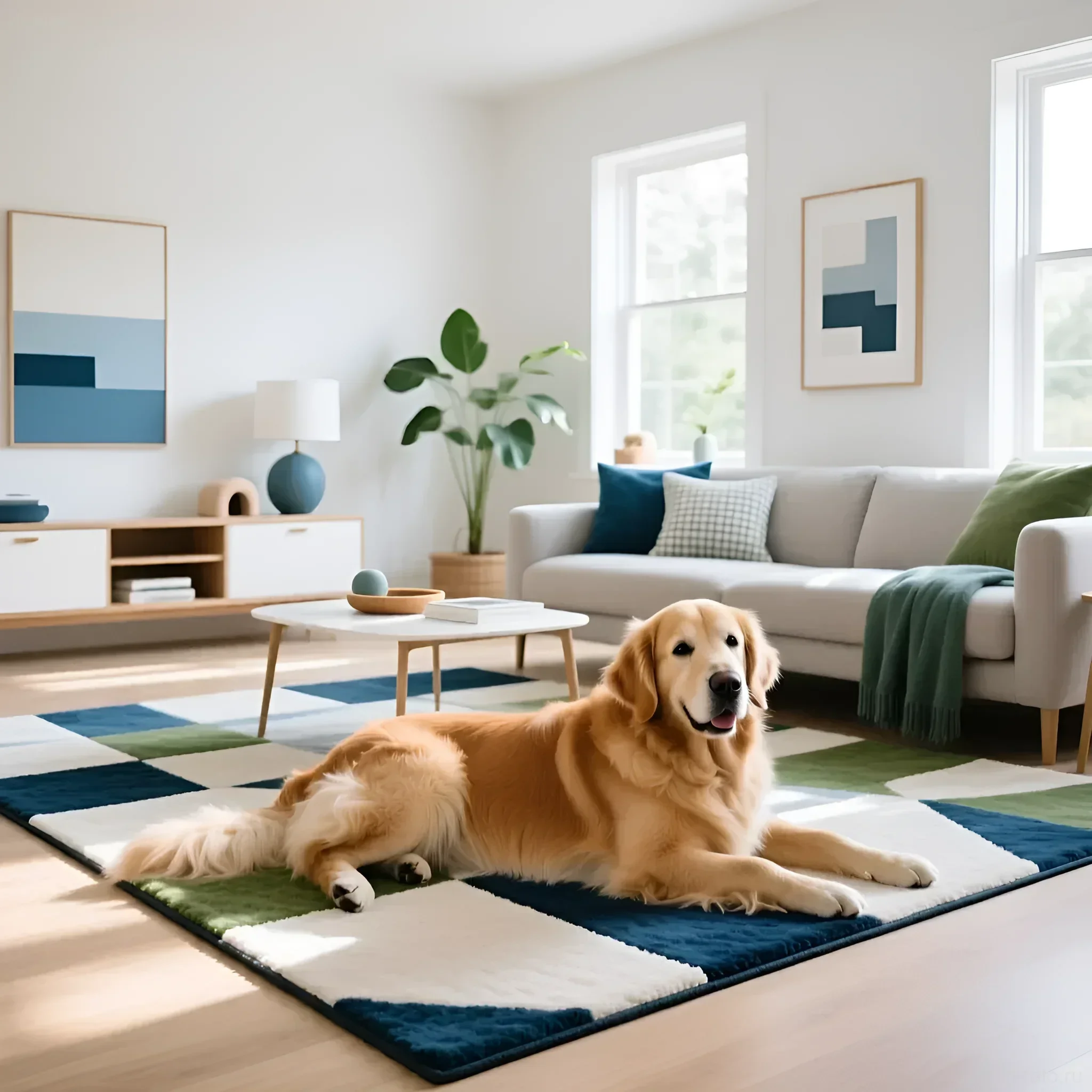
Creating the perfect interior is always a balance between aesthetics, functionality, and personal comfort. When four-legged or feathered family members join the household, this task becomes more complex: the design must be not only beautiful but also durable, safe, and hygienic. As professional designers and architects, we assert that compatibility between high style and the presence of pets is not just possible, it’s essential for harmonious living. It’s not about compromises, but about intelligently integrating pets’ needs into the overall project concept.
Interior Design and Pets: Harmony is Possible
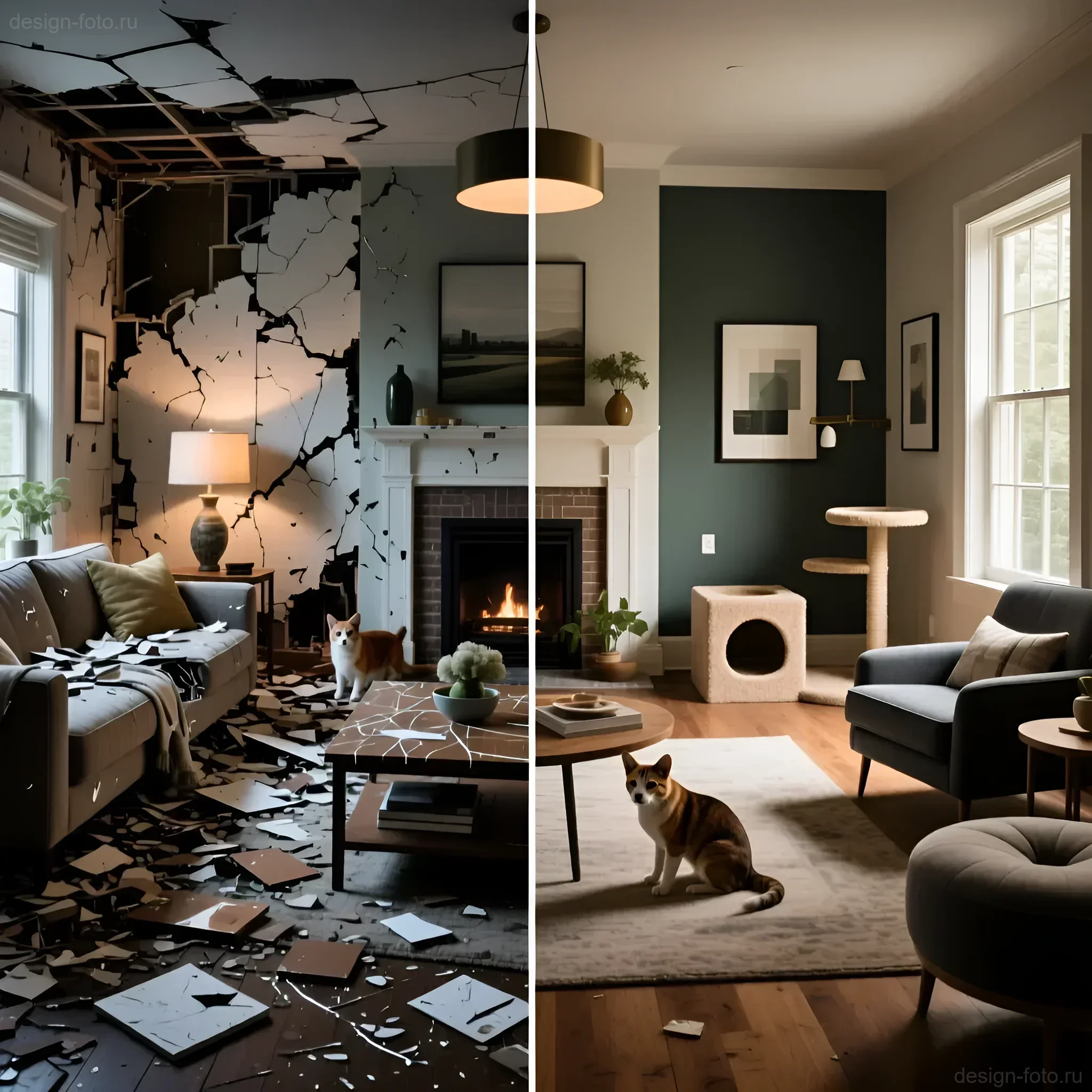
An interior where an animal lives must be designed with three key parameters in mind: durability, ease of maintenance, and safety. These parameters should be incorporated at the concept stage, not added as an afterthought. The interior style you choose—be it minimalism, loft, or neoclassical—dictates specific requirements for materials and spatial geometry that directly impact the living conditions of your pets.
For example, a minimalist interior favors smooth, easy-to-clean surfaces and a lack of extraneous details. This is an ideal base for living with a dog or cat, as it minimizes dust traps and areas where fur can accumulate. At the same time, a classic style, with its abundance of textiles, decorative rugs, and wooden parquet, requires more careful selection of protective solutions and constant cleaning.
Our task: to utilize the principles of the chosen style while employing “smart” materials that can withstand claws, saliva, dirt, and accidental “mishaps.”
Why It’s Important to Consider Pets When Choosing Interior Design
Ignoring animals’ needs during design leads to rapid wear and tear of finishes, constant visual clutter, and, most importantly, stress for both owners and pets. Considering pets is not just about buying a bowl; it’s a comprehensive engineering task.
- Movement Ergonomics: Large dogs need non-slip surfaces (friction coefficient R9 and above) to avoid joint injuries. Cats require vertical space for climbing and observation.
- Hygiene and Odors: Owners must be able to clean quickly and effectively. Materials should be non-porous and resistant to frequent wet cleaning and disinfection.
- Safety: Access to electrical wiring, toxic plants, and fragile items must be eliminated. The interior should include secure fasteners for floor decor.
- Hidden Storage: Food, toys, litter boxes, and accessories should be integrated into the design using built-in storage systems to maintain the overall aesthetic of the style.
Popular Interior Styles and Their Compatibility with Pets
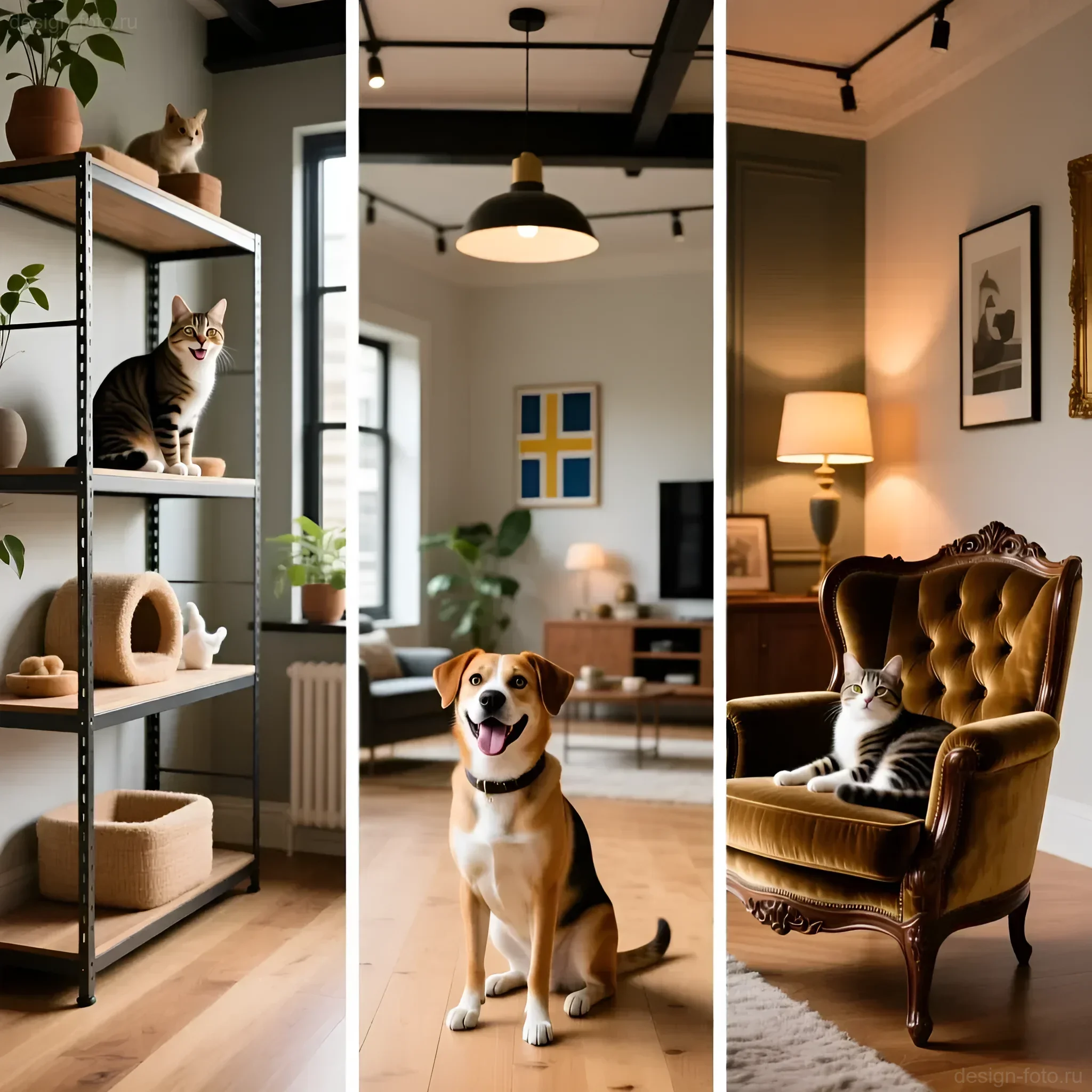
Some styles are inherently more pet-friendly than others. Let’s look at how to adapt the most popular directions.
Minimalism and High-Tech
These are ideal styles for pet owners. They are based on clean lines, smooth surfaces, and a lack of decor. This minimizes places where fur and dirt can settle.
- Pros: Easy cleaning, durable materials (metal, glass, porcelain stoneware). Hidden storage systems easily conceal litter boxes and feeders.
- Cons: Glazed porcelain stoneware can be slippery for dogs. Matte or textured options should be used.
- Solution: Integration of pet beds into modular furniture or platforms. Use of washable matte paint for walls.
Scandinavian Style
Scandi style is appealing for its naturalness and light tones, but requires caution.
- Pros: Emphasis on natural yet durable materials (wood, wool, cotton). Plenty of natural light, which is good for monitoring cleanliness.
- Cons: Light textiles and carpets (especially high-pile) get dirty quickly and collect fur.
- Solution: Replace traditional white sofas with models featuring covers made of dense fleece or anti-vandal flock in gray or beige tones. Use modular wooden structures for cats (vertical climbing frames).
Loft and Industrial
These styles blend wonderfully with the needs of large animals, as they are tolerant of rough textures and highly durable.
- Pros: Concrete, brick, metal – indestructible materials. Open-plan layouts are ideal for free movement.
- Cons: Concrete floors can be too cold. Open shelving can become a target for cats.
- Solution: Implement underfloor heating under concrete or screed floors. Use tall, sturdy scratching posts that mimic raw wood or metal, harmoniously fitting into the industrial decor.
Classic and Neoclassical
The most challenging style due to the requirement for luxurious yet often delicate materials.
- Pros: The possibility of creating luxurious yet hidden niches for pets in the form of stylized cabinets or built-in wardrobes.
- Cons: Silk, velvet, jacquard, carved wood – easily damaged by claws.
- Solution: Switch to high-quality eco-leather or anti-vandal velour with a dense weave. Use protective panels on the lower part of walls (boiserie) made of moisture-resistant MDF or polyurethane, which are easy to clean.
Finishing Materials: Choosing Durable and Safe Solutions
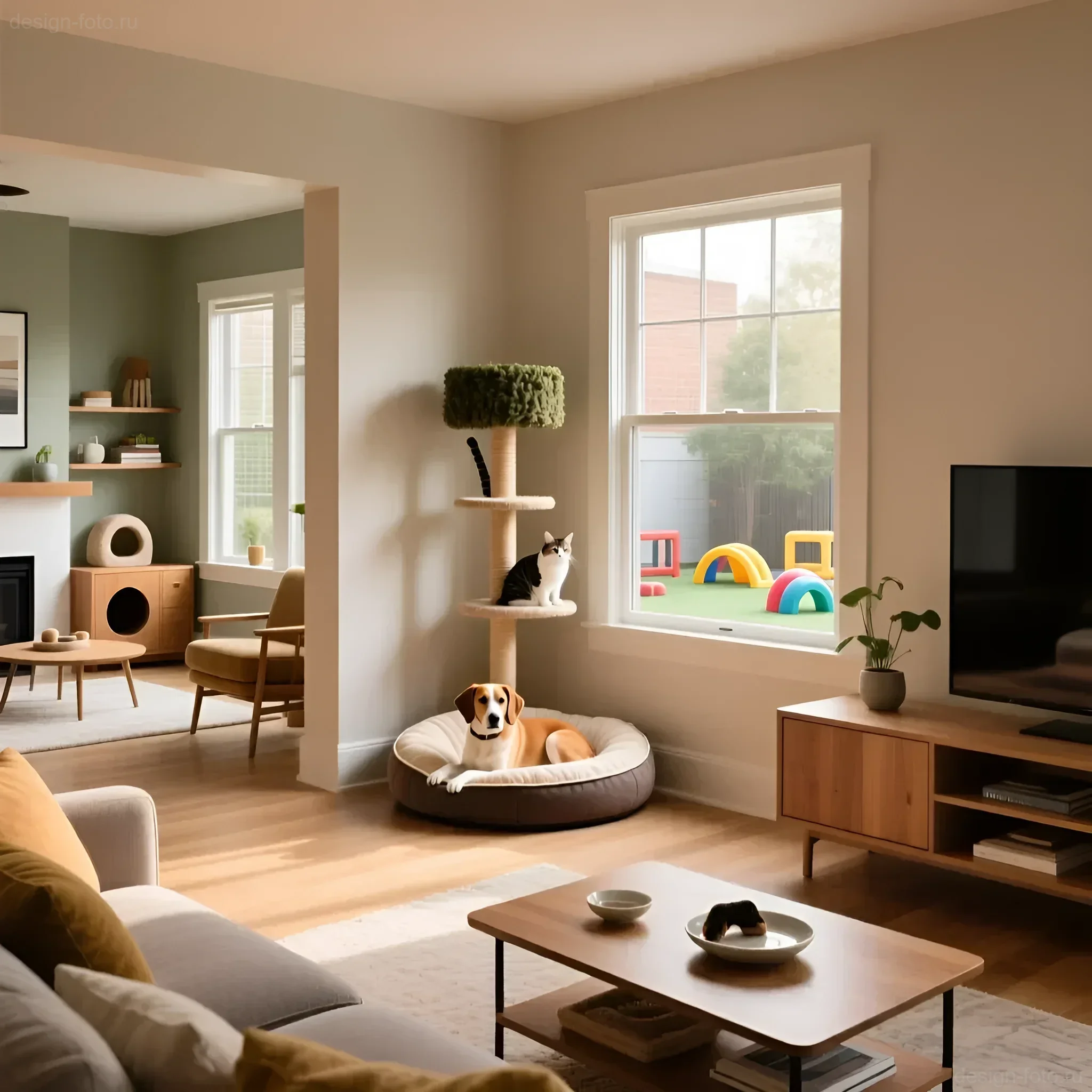
The choice of finishing materials is 80% of a pet-friendly interior’s success. We need to consider hardness, water resistance, and abrasion resistance.
Floor Coverings
The floor is the most vulnerable area. Soft wood species or glossy laminate are unacceptable here.
- Porcelain Stoneware and Ceramic Tiles: The ideal choice. It’s important to choose wear resistance class PEI IV or V. To reduce slipperiness, use matte, textured surfaces with an anti-slip rating of R10 or R11. Joints should be grouted with epoxy grout, which does not absorb odors or moisture.
- Vinyl Tile (LVT/SPC): An excellent alternative to wood. It is 100% waterproof, scratch-resistant, and offers better sound insulation than porcelain stoneware. Choose a protective layer thickness of at least 0.5 mm.
- Parquet and Engineered Wood Flooring: If the style requires wood, opt for hard species (oak, ash) with a high-strength polyurethane lacquer coating (at least 90% gloss) or, preferably, an oil-wax finish with a hard filler. Wooden floors should be regularly maintained.
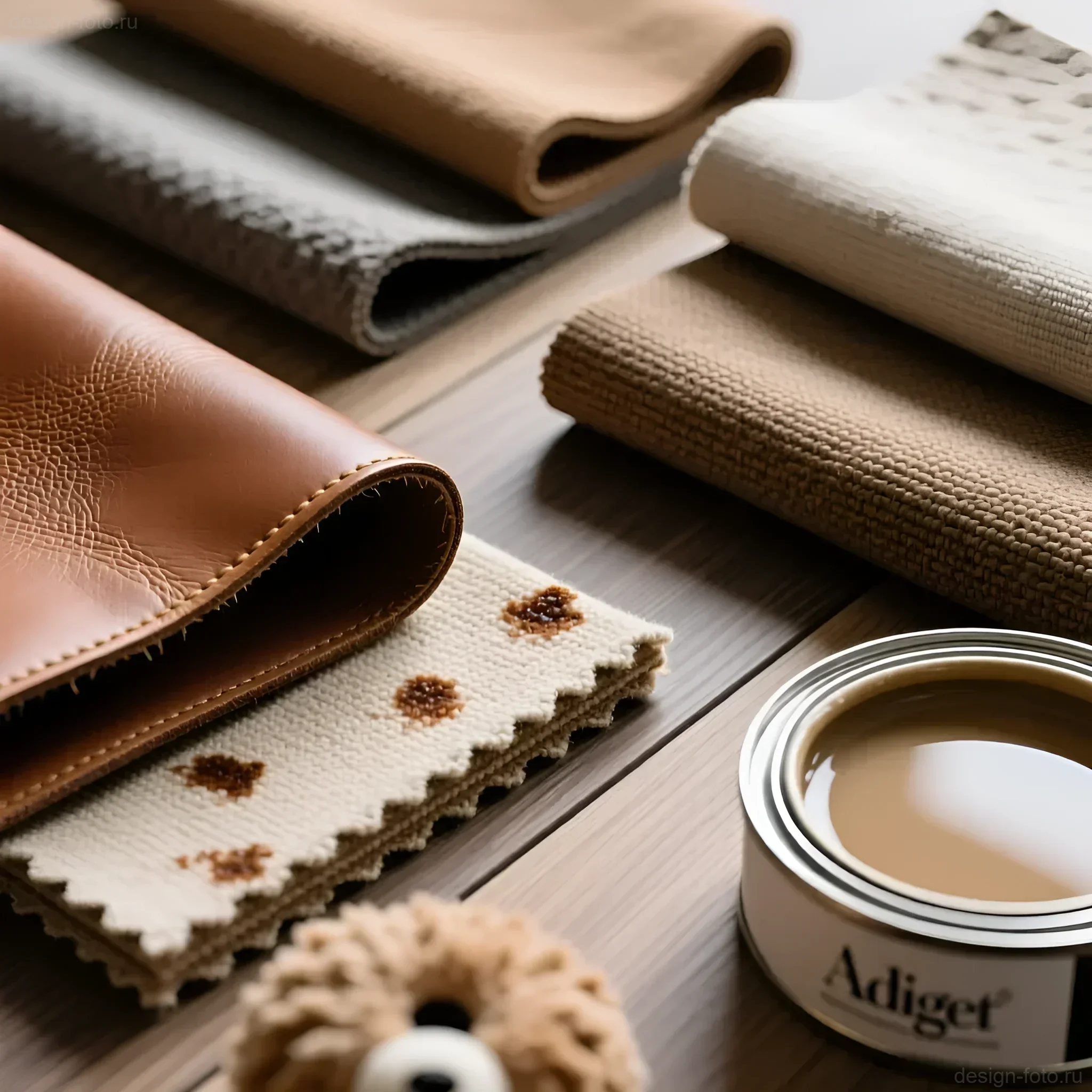
Upholstery Materials
Upholstered furniture should be protected from mechanical damage and easy to clean.
- Flock (Anticlaiming): A specially developed material with a very dense weave that prevents claws from snagging and pulling threads. Easy to clean.
- Microfiber and Microvelour: Dense weave and short pile make them resistant to fur and stains. Many modern microfibers have a water-repellent treatment.
- Eco-leather/Artificial Leather (PU): An excellent option for minimalist or loft interiors. Easy to wipe down, does not absorb odors. It’s important to choose high-quality samples resistant to cracking.
Walls
The lower part of the walls (up to 80–100 cm) is prone to dirt and splashes. In this zone, use materials with a high wet abrasion resistance class.
- Washable Paint: Choose paint with abrasion resistance class 1 or 2 according to EN 13300 standard.
- Decorative Plaster: Venetian plaster or microcement with a finishing varnish create a durable, non-porous surface that cannot be scratched or washed off. Ideal for loft or modern styles.
- Wall Panels: In high-risk areas (hallways, kitchens), use panels made of MDF, HPL plastic, or porcelain stoneware.
Layout and Zoning of Space Considering Pet Needs
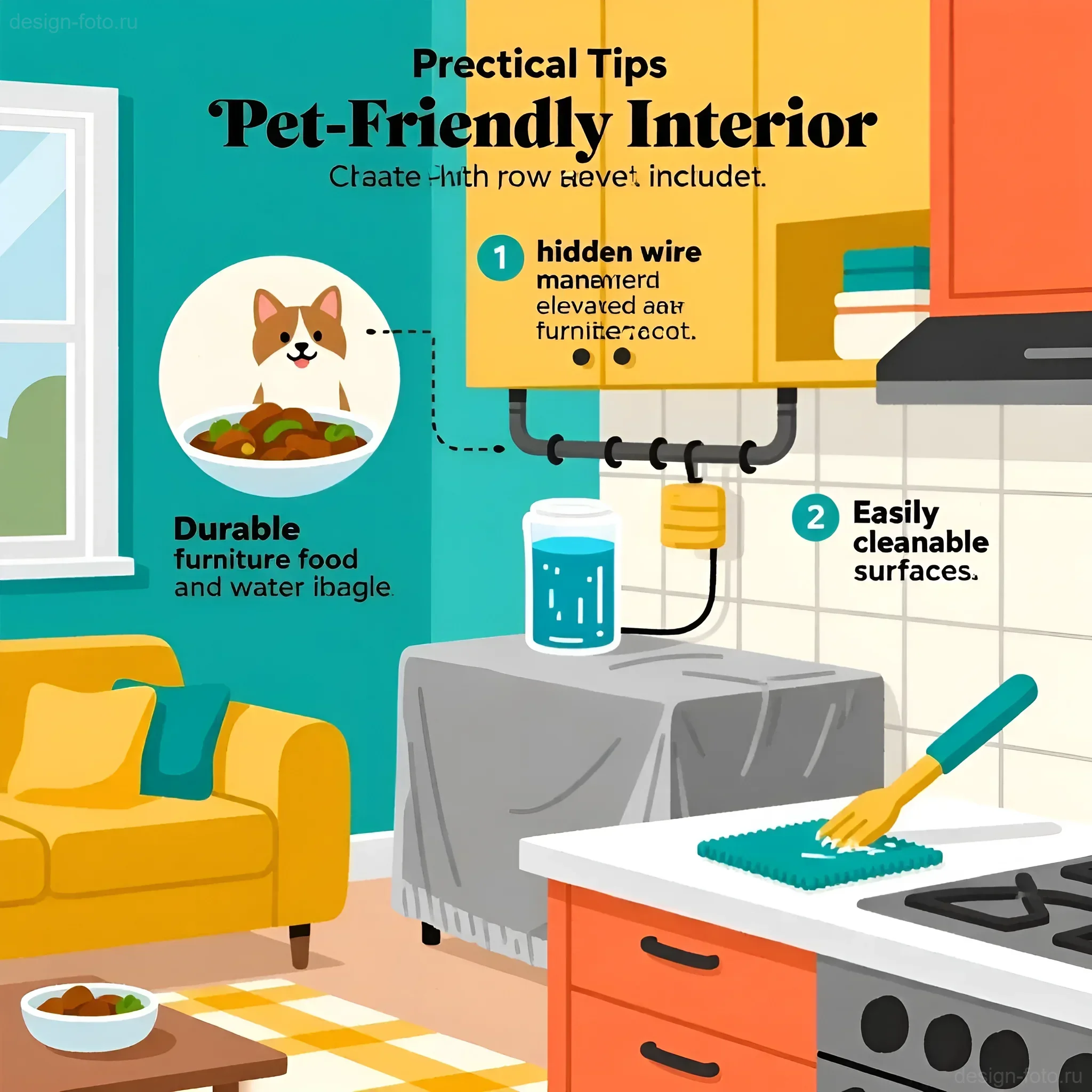
Smart zoning allows for the integration of pets into family life without disrupting the interior’s aesthetics. This is a key aspect of ergonomics.
Feeding Area
Bowls should not be placed in the middle of the kitchen or hallway.
- Integration into Furniture: In minimalist or Scandinavian kitchens, bowls can be built into a pull-out drawer in the base of the kitchen cabinets or into the lower section of an island. For large dogs, use elevated feeders integrated into a specially designed cabinet at a height of 20–40 cm from the floor.
- Floor Protection: The feeding area should be tiled with porcelain stoneware or have a tray to protect the floor from splashes and moisture.
Sleeping and Resting Area
The pet’s resting spot should be quiet but not isolated.
- Built-in Niches: In modern interiors, it’s popular to integrate pet beds into shelving units, bookcases, or under console tables. This helps maintain the clean lines of the style.
- Loft Solution: Use stylized metal or wooden box-houses that serve as nightstands or coffee tables, while also being a sleeping place for the dog.
Hidden Litter Box (for cats)
Litter boxes should be invisible.
- Bathroom/Laundry Room: The best location. Organize a separate entrance within a cabinet or wardrobe. The opening should be neatly cut and framed.
- Living Room/Hallway: If this is the only option, the litter box is integrated into a specially designed cabinet with ventilation, which externally looks like part of the overall furniture set.
Practical Tips for Creating a Pet-Friendly Interior
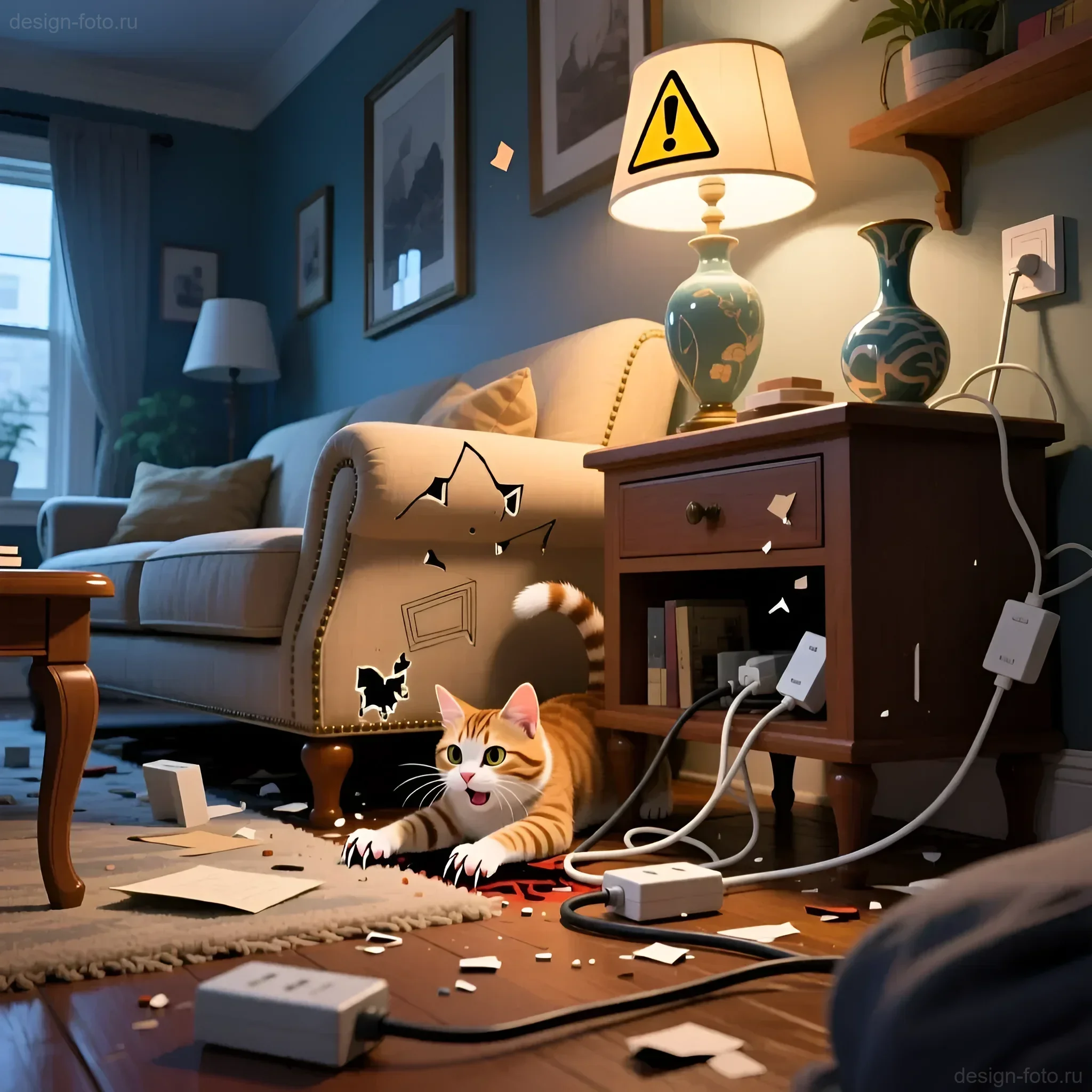
Experience shows that even the most stylish interior will not withstand the test of a pet if small but important details are not thought through.
Managing Fur and Dust
Fur is the main enemy of aesthetics. In styles dominated by dark or, conversely, very light contrasting surfaces, this is particularly noticeable.
- Color Palette: Choose upholstery and carpets whose color is as close as possible to your pet’s fur color. If you have a light-colored cat and a dark dog, opt for neutral gray or beige tones.
- Carpets: Prefer carpet-free, easily washable carpets (e.g., made of sisal, jute, or synthetic fibers with a short pile). They do not accumulate dust and are easily cleaned with a high-suction vacuum cleaner.
Protecting Vertical Surfaces (for cats)
Scratching posts should be more attractive to cats than your sofa.
- Strategic Placement: Place scratching posts not in corners, but near “target” objects (sofa corners, door frames). Cats like to sharpen their claws after sleeping, so one scratching post should be near their sleeping area.
- Vertical Integration: For Loft and Scandi styles, open wall shelves and ladders made from the same material as the main furniture can be used to create a “cat highway.” This satisfies a cat’s need for height and also serves as a decorative element.
Hallway Setup
The hallway is a buffer zone between the street and a clean home.
- Washable Area: The floor in the hallway should be made of porcelain stoneware or tiles. Provide a paw-washing area: either a floor-level sink or a built-in shower tray.
- Leash and Accessory Storage: Hidden hooks and drawers for leashes, collars, and grooming supplies should be easily accessible but invisible to guests.
Common Mistakes in Interior Design for Pet Owners
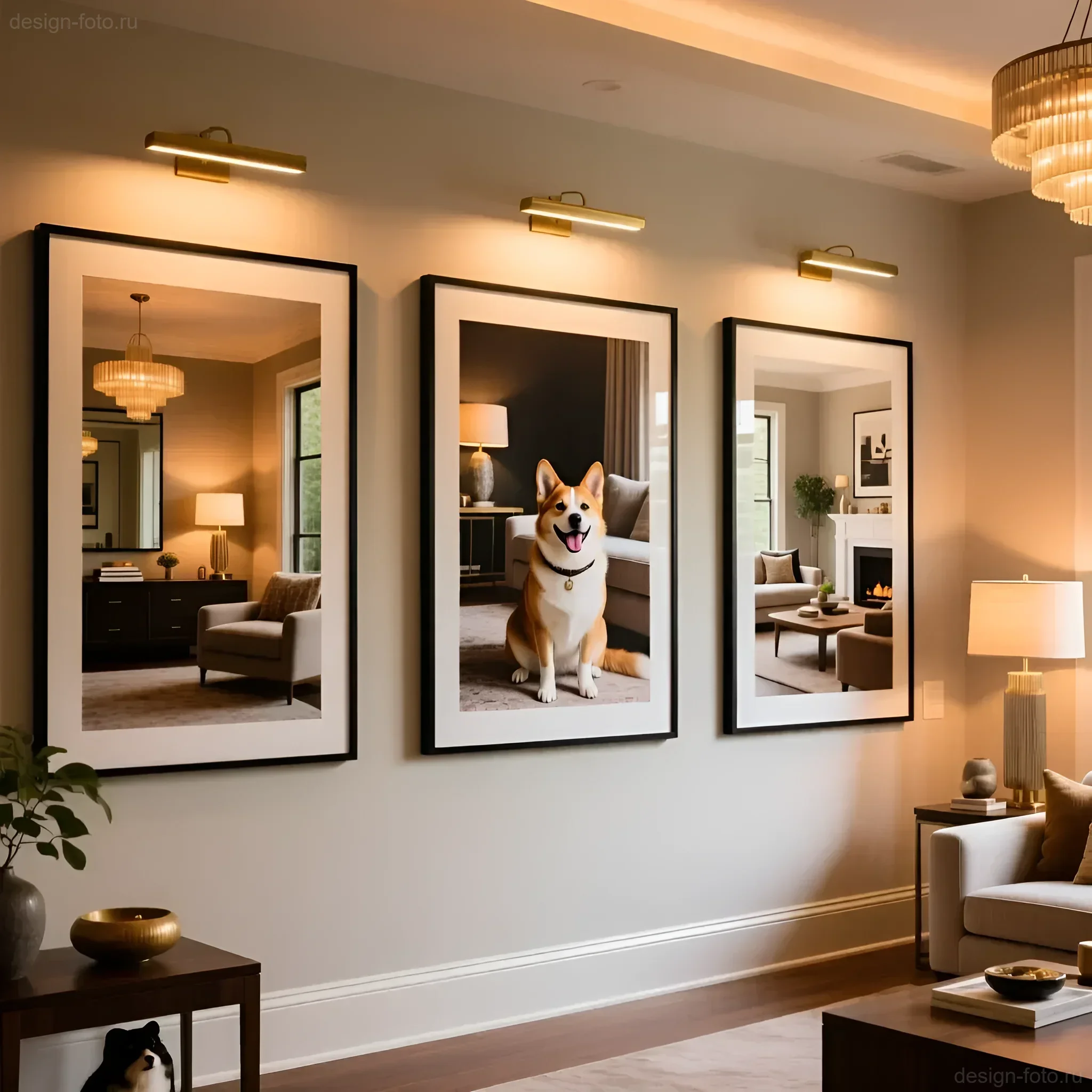
Even when adhering to a style, many owners make mistakes that spoil both the appearance and functionality of the space.
- Mistake 1: Choosing a glossy floor. Gloss is not only slippery but also instantly collects paw prints, fur, and scratches. Visually, a glossy floor with pets always looks dirty. Solution: Matte or semi-matte textures.
- Mistake 2: Open shelving. Regardless of style, open storage (especially at the lower level) is an invitation to play for cats and dogs. This leads to clutter and the falling of fragile items. Solution: Closed storage systems, display cabinets with tempered glass.
- Mistake 3: Delicate curtains and drapes. Long, draped curtains (characteristic of classic or art deco) become an ideal vertical scratching post or toy. Solution: Roller blinds, Roman blinds, or Venetian blinds that do not reach the floor.
- Mistake 4: Using white grout. In areas where pets walk (hallways, kitchens), white cement grout quickly absorbs dirt and cannot be cleaned to its original appearance. Solution: Epoxy grout or grout in a color as close as possible to the pet’s fur color.
- Mistake 5: Incorrect decor height. Anything placed below 1 meter (vases, figurines, floor lamps) is within the impact zone of tails and curious noses. Solution: Place decor on consoles, mount lamps on the wall, use heavy and stable bases.
Inspiring Examples of Interiors Where Animals Feel Comfortable
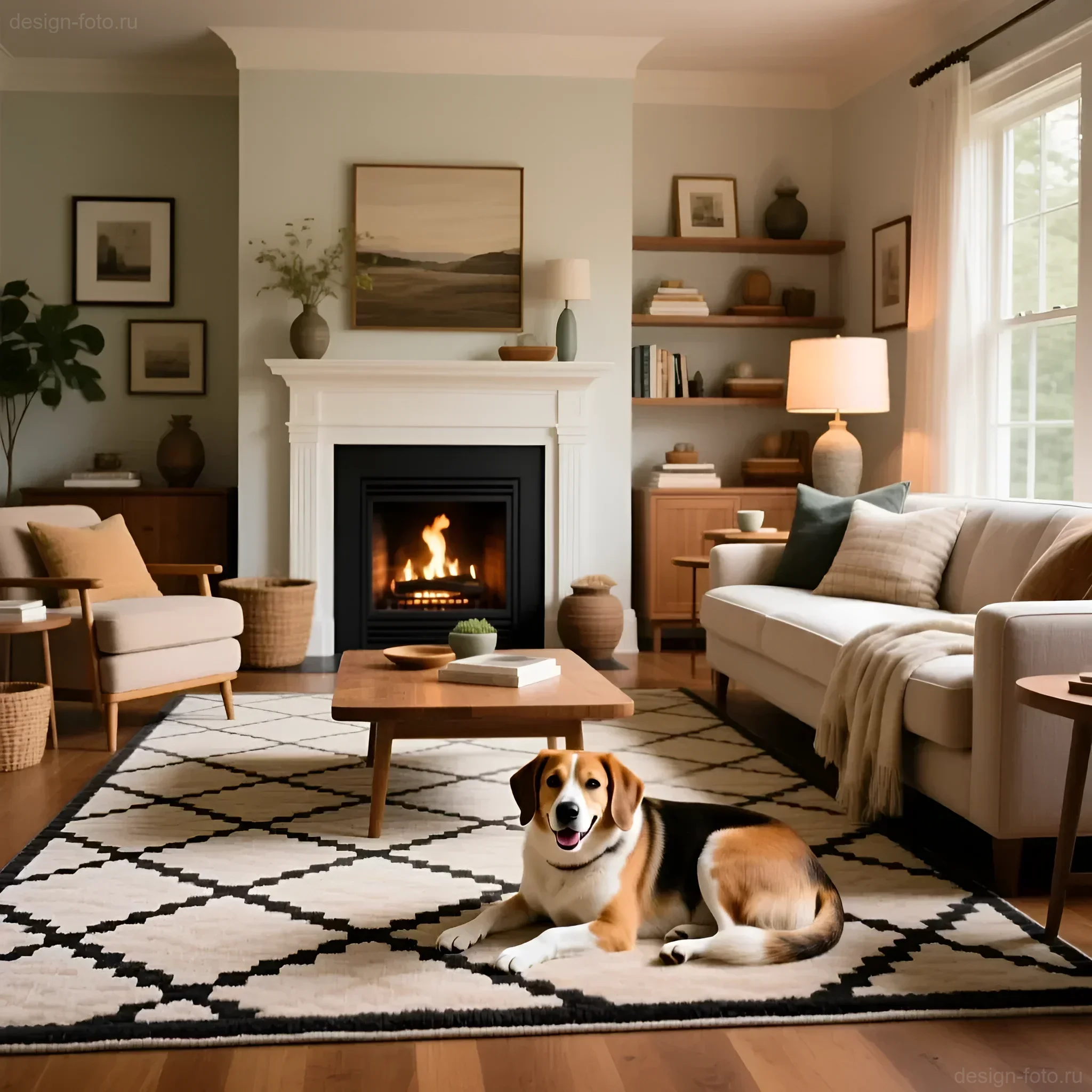
Professional design knows how to integrate pet functionality so that it becomes part of the style’s aesthetics.
Example 1: Minimalism with an Integrated Cat Complex
In a minimalist apartment, dominated by white walls and gray porcelain stoneware, a wall-mounted module was designed in the living room. At first glance, it appears to be a standard geometric shelf for books and decor. However, its side panels have cut-out openings, and inside are soft shelves lined with anti-vandal felt. This is a “cat highway” that allows the animal to observe everything from above without disrupting the clean lines of the interior.
Example 2: Scandinavian Style Kitchen with a Dog Area
The Scandinavian-style kitchen features light matte MDF fronts. The island has an extended plinth (15 cm instead of the standard 10 cm). Within this plinth is a pull-out platform for a large dog’s bowls. The platform is made of stainless steel and is easy to clean. When not in use, it retracts completely, maintaining the island’s clean line and preventing the feeding area from being trampled.
Example 3: Loft with an Emphasis on Durability
In a spacious loft with concrete walls and exposed utilities, home to a large German Shepherd, industrial solutions were used. The sofa is upholstered in a dense, thick canvas (similar to tarpaulin), which is easily cleaned with a steam cleaner. For the dog’s bed, a niche was designed in the wall, finished with heat-treated wood, adding warmth to the cool style while retaining its ruggedness. The floor is an epoxy screed, providing excellent paw grip and scratch resistance.
Conclusion: Creating a Stylish and Cozy Home for Ourselves and Our Beloved Pets
Creating a stylish and functional interior where humans and animals can coexist comfortably requires attention to detail and a professional approach to material selection. We, as designers, must remember that a home is an ecosystem. Using durable, easy-to-clean surfaces, smart zoning, and integrating pets’ needs into the overall style concept helps avoid conflict between aesthetics and practicality.
An interior designed with pets in mind doesn’t look like a kennel. It looks thoughtful, clean, and durable. Choose materials that work for you and integrate pet zones so they support, rather than detract from, your chosen style. Only then will you have a home that will bring joy to you and your beloved pet for years to come.
Frequently Asked Questions (FAQ)
- What type of flooring is best for cats?
The best options are vinyl tile (LVT) or matte porcelain stoneware. They are scratch-resistant, waterproof, and provide good traction, which is important for cat jumps. Avoid carpet, which is very difficult to clean from fur and the consequences of “cat accidents.”
- How to hide litter box odors in a minimalist interior?
Use closed cabinets or wardrobes (e.g., in the laundry room or bathroom). Forced ventilation inside this cabinet, connected to the main exhaust system, is critical to ensure constant airflow. Also, use highly absorbent litter.
- Can I use a light-colored sofa if I have a dark dog?
Yes, but only if the sofa has removable covers made of anti-vandal fabric (flock, microfiber) with a water-repellent treatment. Ideally, use covers in gray or beige tones so that the fur contrast is less noticeable, and provide the dog with a separate, more attractive bed near the sofa.
Рекомендуем:
 Wall Cladding with Wood Paneling: A Step-by-Step Guide
 How to Update Old Tiles Without Removing Them: 99 Ways to Transform Your Bathroom and Kitchen
 Washable wallpaper for the kitchen: why it’s the best idea for your renovation?
 Internal Wall Insulation: Materials and Technology
 Bathroom: Tile or Paint. What Will Everyone Face?
Waschbare Tapeten für die Küche: Warum ist das die beste Idee für Ihre Renovierung?
Wandverkleidung mit Nut-und-Feder-Brettern: Schritt-für-Schritt-Anleitung
Bathroom: Tile or Paint. What Will Everyone Face?
Waschbare Tapeten für die Küche: Warum ist das die beste Idee für Ihre Renovierung?
Wandverkleidung mit Nut-und-Feder-Brettern: Schritt-für-Schritt-Anleitung
 Joint filler for tiles: how to choose the color and apply it correctly
 How to Make a Brick Wall in an Interior (Imitation)
Grout for tiles: how to choose the color and apply it correctly
How to Make a Brick Wall in an Interior (Imitation)
Grout for tiles: how to choose the color and apply it correctly
 Wie tapeziert man Vinyltapeten auf Papierbasis?
 PVC Wall Panels: Cheap and Cheerful. Installation Guide
 Dekorativenen Stein an der Wand selbst verlegen: Ihr Leitfaden zur Umgestaltung Ihres Hauses
Wie man alte Fliesen erneuert, ohne sie zu entfernen: 99 Möglichkeiten, Bad und Küche zu verwandeln
Dekorativenen Stein an der Wand selbst verlegen: Ihr Leitfaden zur Umgestaltung Ihres Hauses
Wie man alte Fliesen erneuert, ohne sie zu entfernen: 99 Möglichkeiten, Bad und Küche zu verwandeln
 Laminate Underlay: Cork, Coniferous, or Polystyrene – Detailed Analysis and Choice
 Bark Beetle Decorative Plaster: Application Technology
Badezimmer: Fliesen oder Farbe. Womit hat jeder zu kämpfen?
How to Hang Vinyl Wallpaper on a Paper Backing?
Innendämmung von Wänden: Materialien und Technologie
Bark Beetle Decorative Plaster: Application Technology
Badezimmer: Fliesen oder Farbe. Womit hat jeder zu kämpfen?
How to Hang Vinyl Wallpaper on a Paper Backing?
Innendämmung von Wänden: Materialien und Technologie
 Wandschleifen nach Spachteln: Eine perfekte Oberfläche selbst gemacht