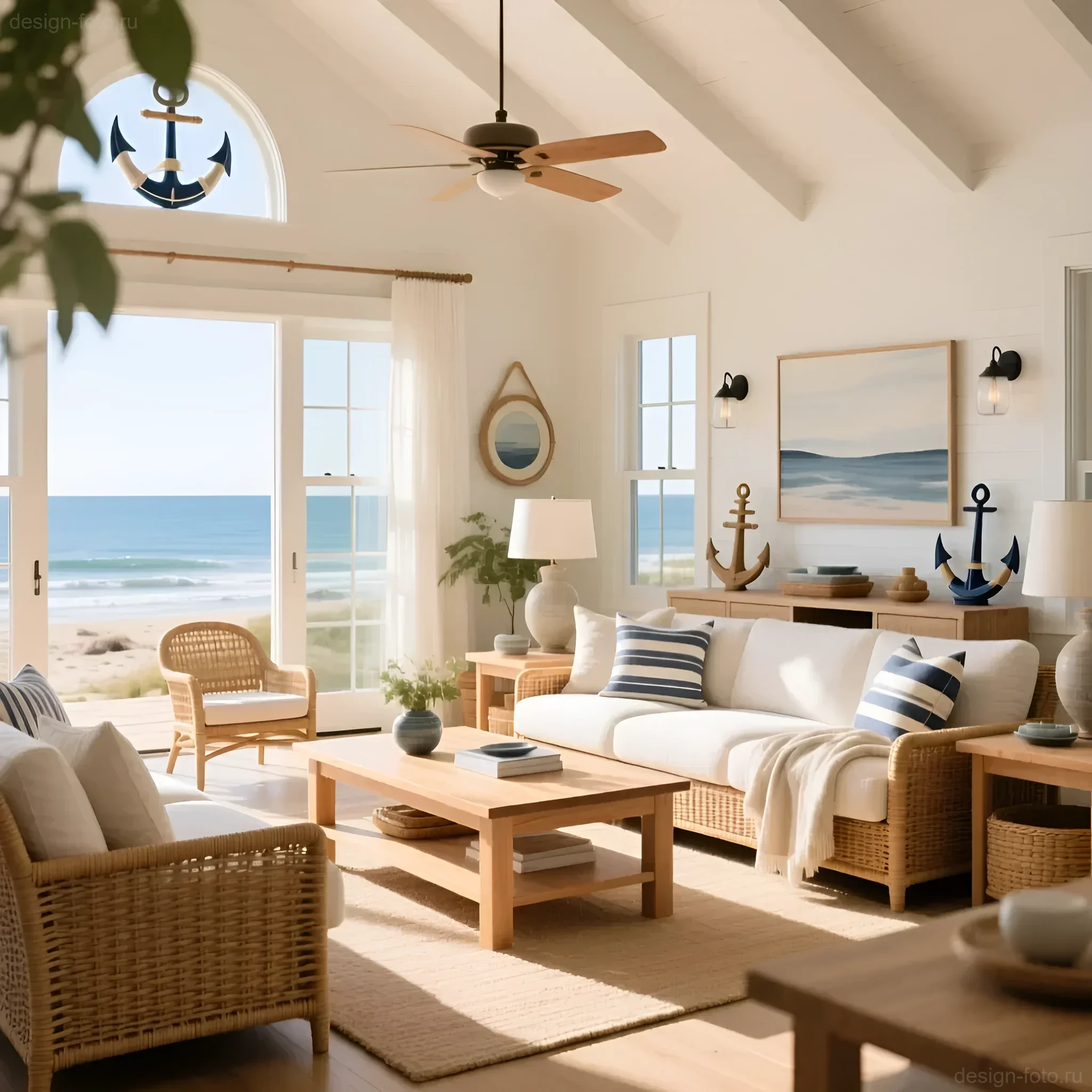
Nautical Style in interior design is not just a collection of clichés from seashells and anchors bought at a souvenir shop. It is a deep philosophy based on the feeling of freedom, purity, and functional aesthetics inherited from ship interiors and coastal villas. Our task as professionals is to transform this romanticism into a practical, ergonomic, and durable living space that will be relevant not only on the ocean shore but also in the heart of a metropolis.
1. Nautical Style in Interior Design: What It Is and Why It’s Popular
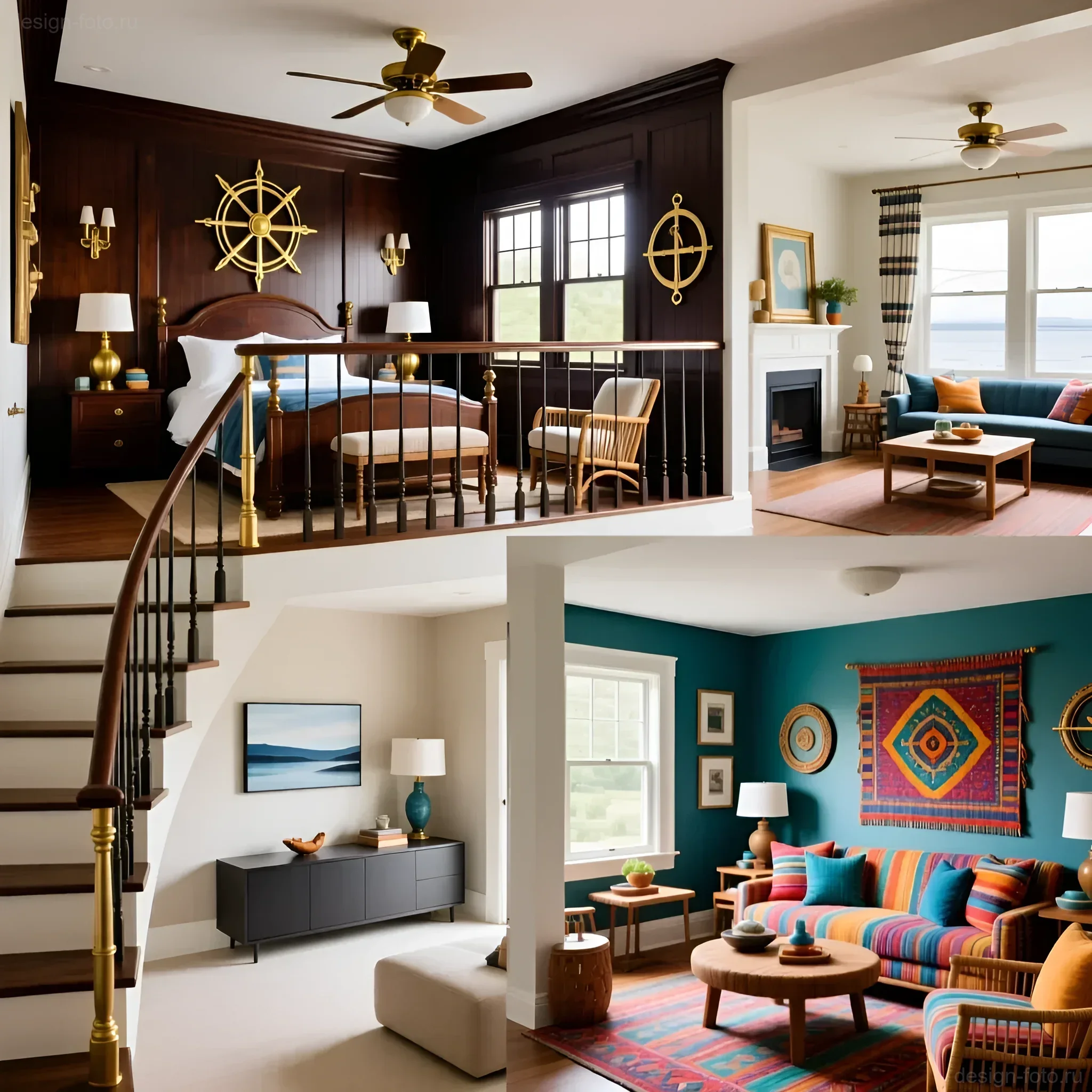
Nautical style is, first and foremost, a play of light, texture, and minimalism. Its popularity is explained by its psychological impact: it is associated with vacation, tranquility, and freshness. Unlike heavy classical styles, nautical design offers lightness, an abundance of air, and a high degree of insolation (sunlight penetration), which is critically important for modern urban living.
Key principles of the style that must be observed:
- Functionality: All elements must have a practical purpose. Inspiration is drawn from ship cabins, where every centimeter of space is used as efficiently as possible.
- Natural Lighting: Use of light, reflective surfaces to maximize light diffusion.
- Eco-friendliness: Prevalence of natural, rough materials (wood, linen, cotton, stone).
- Clean Lines: Absence of excessive fanciness. Emphasis is placed on the geometry inherent in shipbuilding.
2. Styles and Directions of Nautical Design: From Classic to Modern
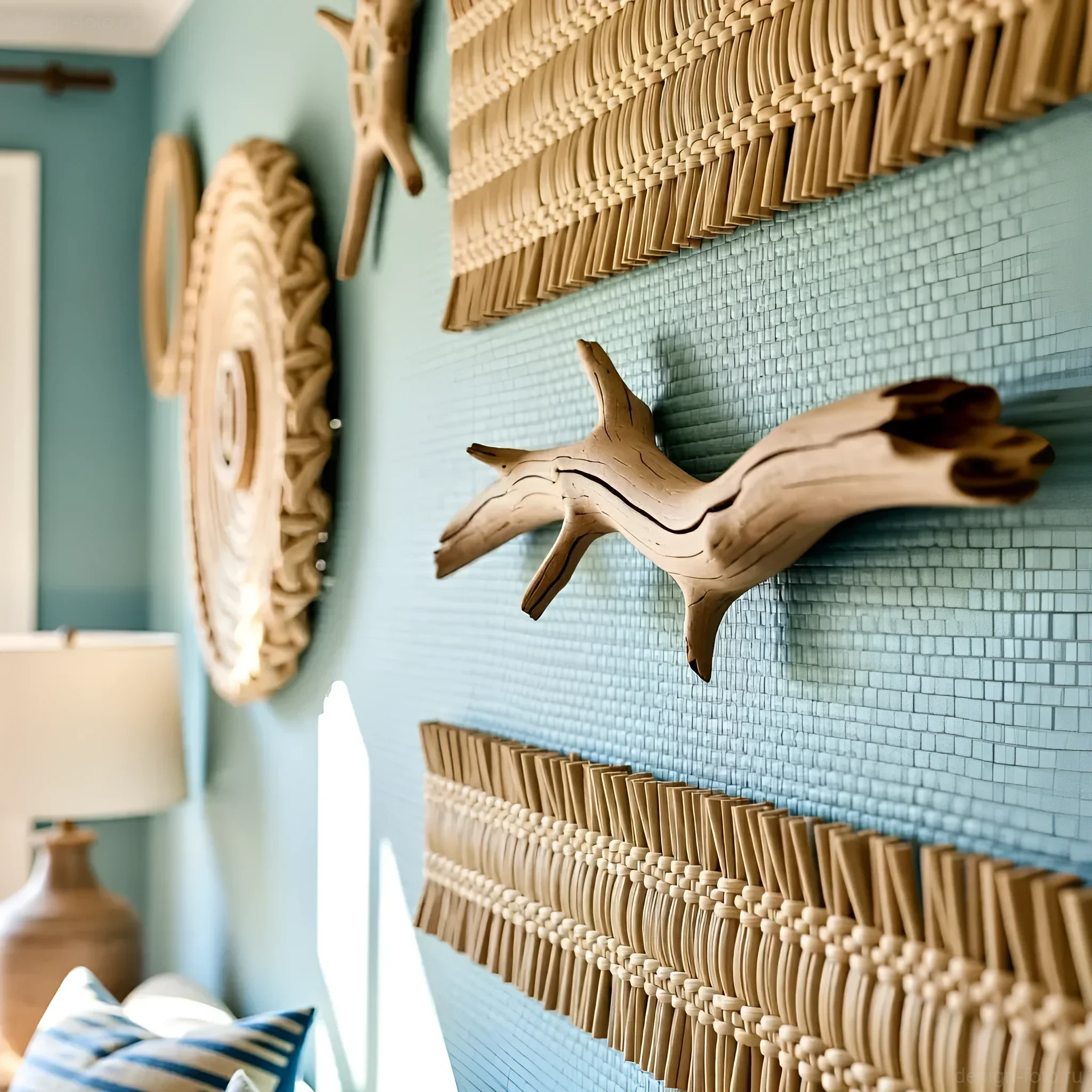
Nautical style is not monolithic. When working on a project, it is important to define a specific direction to avoid visual chaos and kitsch. We distinguish three main currents:
Classic Nautical (Traditional Nautical)
This is the most strict and historically accurate version. It uses pure colors (bright white, rich dark blue – Navy Blue, red accent), lacquered wood (often mahogany or teak), and elements related to navigation and sailing. Brass details, maps, and barometers are appropriate here. Feature: high detail and imitation of ship paneling (tongue-and-groove, boiserie).
Coastal Chic (Coastal Chic / Hamptons Style)
This is a more refined and modern version. The Hamptons style, named after the elite coast, implies a high budget, an abundance of light, and luxurious yet relaxed materials. Soft, neutral shades (ivory, sand, light blue) and natural, unfinished or bleached oak prevail here. Furniture is often large, upholstered in linen or cotton. Key feature: elegance and comfort, minimal straightforward nautical attributes.
Rustic Fisherman (Rustic Fisherman)
This style focuses on rough, aged textures. Aged wood (driftwood), rough stone, and woven elements made of rattan or jute are used. The color palette is more muted, with the inclusion of gray, mint, and olive. Goal: to create a sense of long history, “worn” by time and natural conditions.
3. Color Palette and Materials for a Nautical Interior: Creating a Coastal Vacation Atmosphere
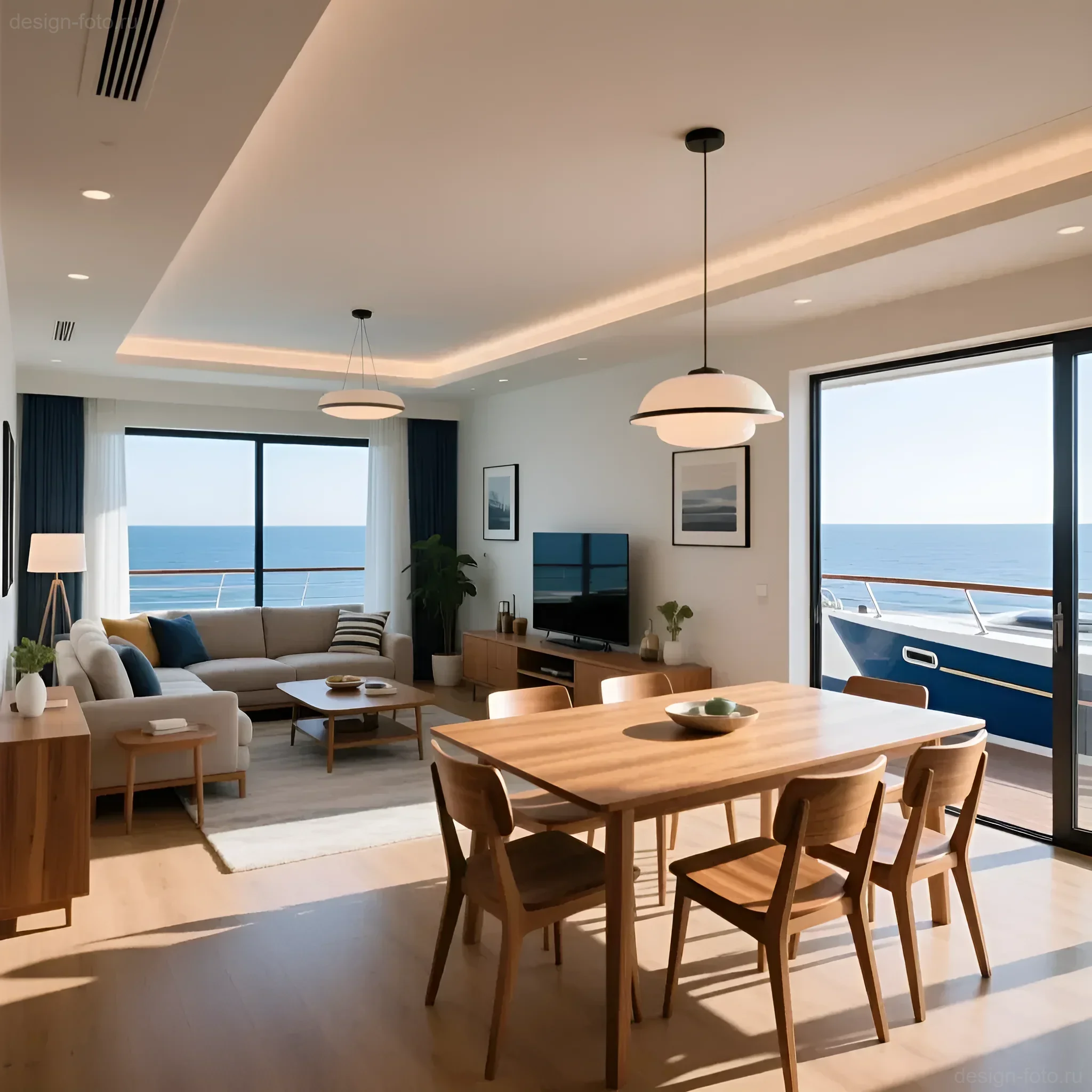
Color Palette: Balance and Contrast
The ergonomics of color in nautical style are built on two principles: a light base for expanding space and contrasting accents for depth.
- Base (80%): Pure white (RAL 9003) or warm white (ivory). Sand, light gray (imitating pebbles). These colors reflect light maximally.
- Primary Accents (15%): Deep blue (Navy Blue, Ultramarine) or turquoise (imitating tropical water).
- Secondary Accents (5%): Red (signal, like on buoys), yellow (sunlight), or natural rope color (ochre).
Material Selection: Functionality and Durability
When selecting materials, we focus on their ability to withstand moisture and maintain aesthetics under active use.
Wood:
- Teak and Iroko: Ideal for bathrooms and terraces due to their high moisture resistance. Used for floors, deck laying, and countertops.
- Bleached Oak/Pine: The main material for furniture and finishes in Coastal Chic style. Excellent for creating a “sun-bleached” wood effect.
- Aged Boards (Driftwood): Used for accent walls, headboards, or decorative beams.
Textiles:
- Natural Linen and Cotton: Used for curtains, throws, and upholstery. It’s important for the fabric to be textured, not smooth.
- Jute, Sisal, Rattan: Materials for rugs, baskets, and wicker furniture. They add roughness and authenticity.
- Striped Fabrics: Classic blue-and-white or red-and-white stripes (5–10 cm wide) for pillows and benches.
Metal and Hardware:
- Brass and Bronze: The ideal choice for lighting fixtures, door handles, and furniture hardware. These metals age well (patinate) and fit the nautical aesthetic.
- Stainless Steel: Acceptable in kitchens and bathrooms, but should be matte to avoid excessive gloss.
4. Layout and Zoning in Nautical Style: How to Organize Space
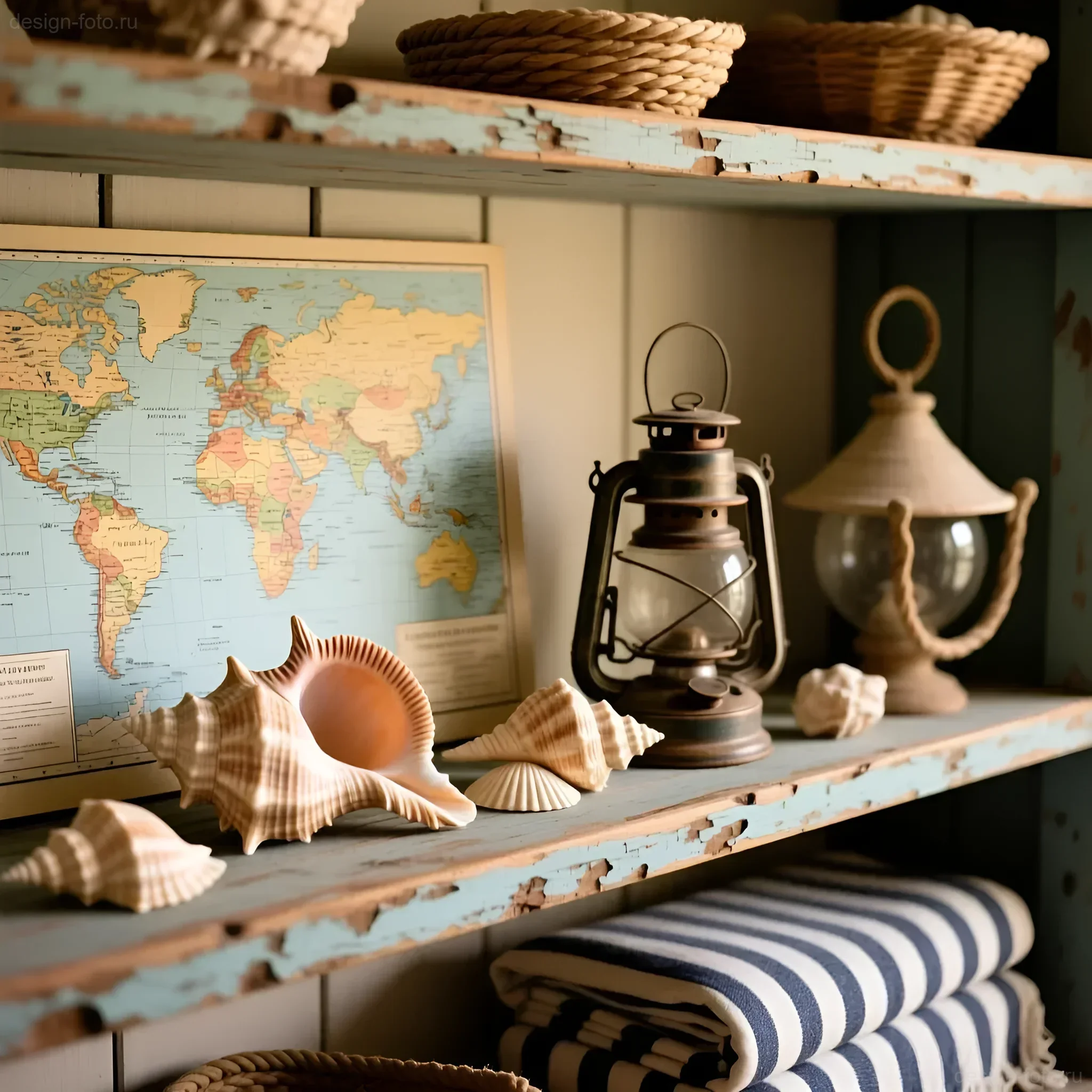
The ergonomics of nautical style are dictated by the need for efficient use of limited space (like on a ship) and the desire for openness (like on a deck).
Open Layout and Light
We recommend opening up common areas – living room, kitchen, and dining room – as much as possible. This creates a sense of spaciousness and allows light to penetrate deep into the room. If panoramic windows are not possible, use mirrors in wooden frames to reflect light and visually expand the “horizon.”
Built-in Solutions and Storage
A key element of ship design is built-in storage. In a city apartment, this translates to:
- Chest Benches: Functional seating along walls with lift-up lids for storage. Seat depth 45–50 cm, height 45 cm.
- Niches and Shelves: Built into walls, wood-paneled niches for displaying thematic decor (books, ship models).
- Drawer Stairs: If the house has two floors, the steps can be used as pull-out drawers for storing shoes or seasonal items.
- Sliding Doors: Instead of hinged doors, use sliding systems (pocket doors). They save up to 1 sq. meter of space, which is critical for imitating the compactness of a cabin.
Zoning with Textures
Instead of solid partitions, use a change in flooring: for example, in the kitchen area, use pebble-like or terrazzo tiles, and in the living room, wide planks of bleached oak. Decorative partitions made of rope or wooden slats are also effective, allowing light to pass through while visually separating zones.
5. Decor and Accessories in a Nautical Interior: Adding Authenticity
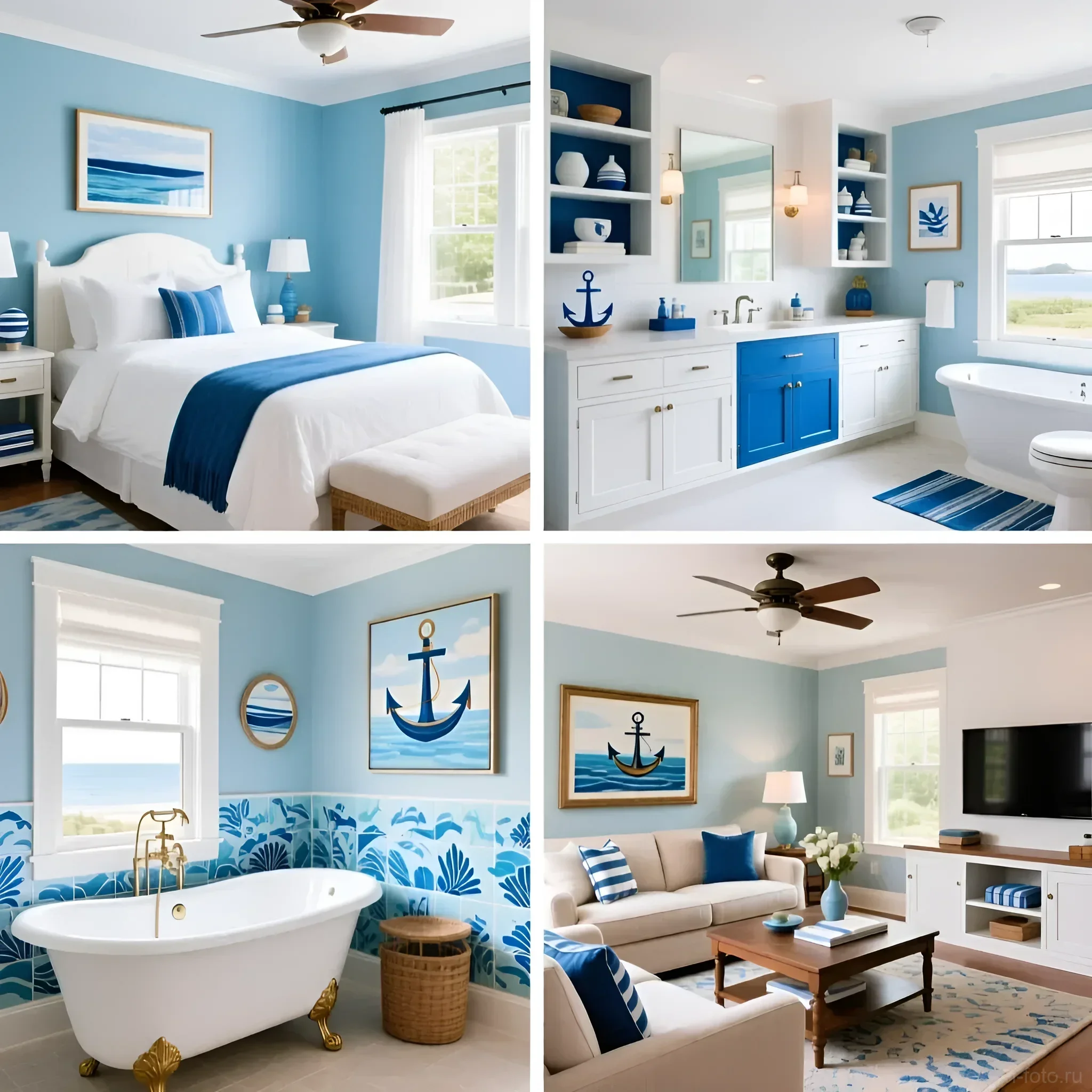
Decor should be meaningful and high-quality. Avoid cheap plastic items. Focus on items that could be functional on a ship or in an old port.
Lighting
Lighting plays the role of beacons and lanterns. Choose fixtures made of brass or copper that imitate ship spotlights or navigator’s lamps:
- Pendant Lights: Imitation of oil lamps or lanterns. Often used in the kitchen over an island.
- Sconces: Wall sconces with protective grilles, characteristic of deck lighting.
- Natural Lampshades: Lampshades woven from rattan or jute, which provide soft, diffused light.
Textural Decor
Use ropes, cords, and knots not only as accessories but also as finishing elements:
- Railings: Stair railings wrapped with thick jute rope. Rope diameter at least 30 mm for tactile sensation.
- Mirrors: Mirrors in massive frames wrapped with marine rope.
- Ship’s Wheels and Maps: Choose antique or high-quality replicas of navigation instruments. A large, detailed world map or antique engravings with sailing ships are the perfect accent above a sofa.
6. Nautical Style in Different Rooms: Living Room, Bedroom, Kitchen, and Bathroom
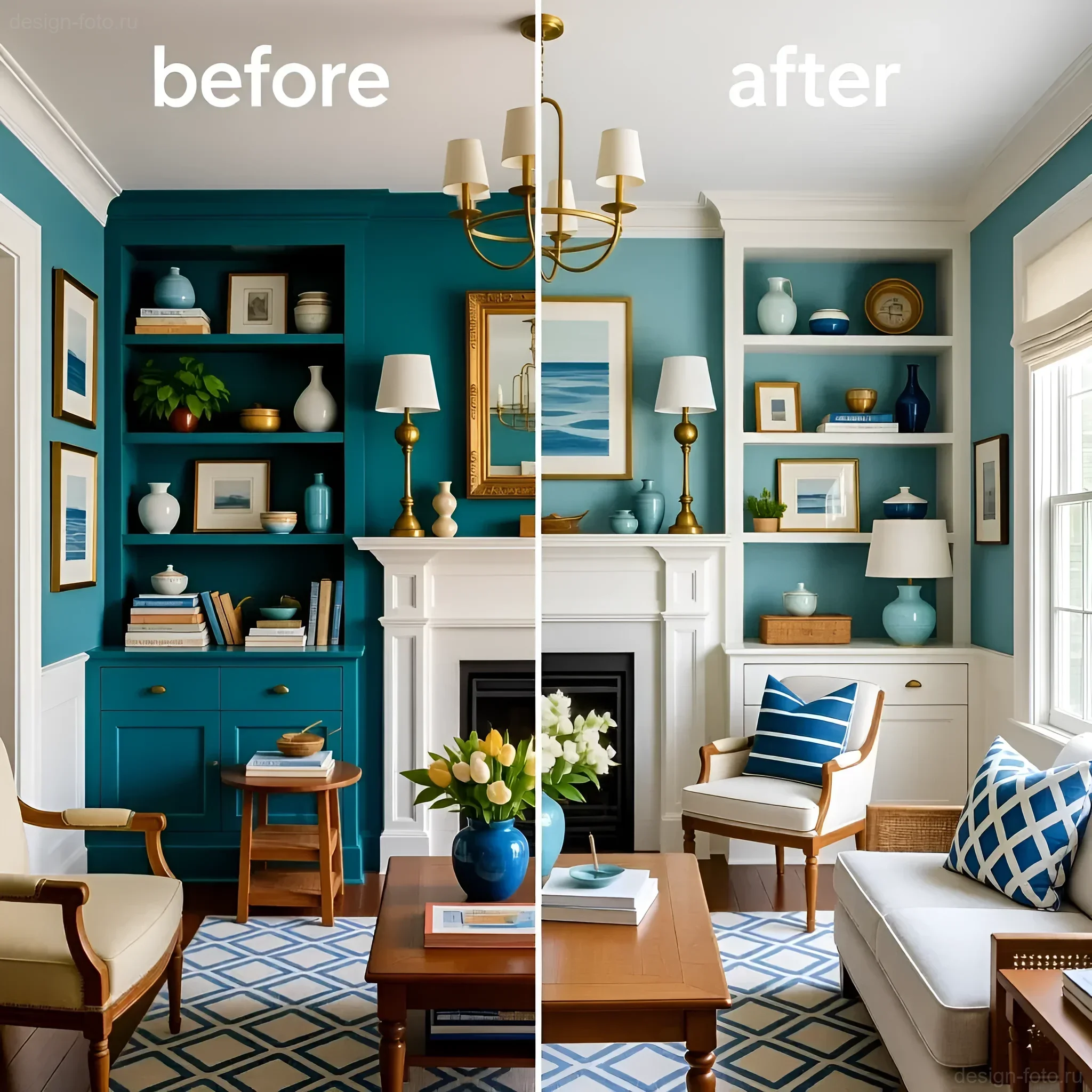
Living Room: A Deck for Relaxation
The living room should be as bright and relaxing as possible. Use soft, deep furniture (Chesterfield sofas upholstered in linen or cotton). Flooring: wide planks. An accent wall can be paneled with white tongue-and-groove (imitating cabin paneling). The central element is a coffee table made of raw wood or an antique chest.
Kitchen: A Functional Galley
A nautical-style kitchen is a functional “galley.” Cabinet fronts: shaker style, painted white or pale blue. Hardware: brass or bronze shell handles. Countertop: light quartz or moisture-resistant artificial stone.
- Backsplash: Use white subway tiles or, as a bolder option, fish scale tiles (imitating waves).
- Open Shelves: Wooden shelves on metal or rope hangers for storing dishes, reminiscent of open ship shelving.
Bedroom: A Cozy Cabin
The bedroom requires maximum coziness. The headboard can be made of soft quilted panels upholstered in linen, or imitate a wooden partition. Color scheme: neutral base (beige, sand) with the addition of blue only in textiles (throws, decorative pillows). Lighting should be warm and multi-layered.
Bathroom: An Oasis of Freshness
The bathroom allows for the use of the most moisture-resistant and “nautical” materials.
- Finishes: Pebble-like tiles on the shower floor. Walls: white glossy tiles or blue-and-white mosaic.
- Plumbing: Polished brass faucets. Porthole-shaped mirror (round, 60–80 cm diameter).
- Furniture: Vanity unit made of moisture-resistant teak or iroko. Open storage for towels, folded in stacks, like in a ship’s linen closet.
7. Common Mistakes in Creating a Nautical Interior and How to Avoid Them
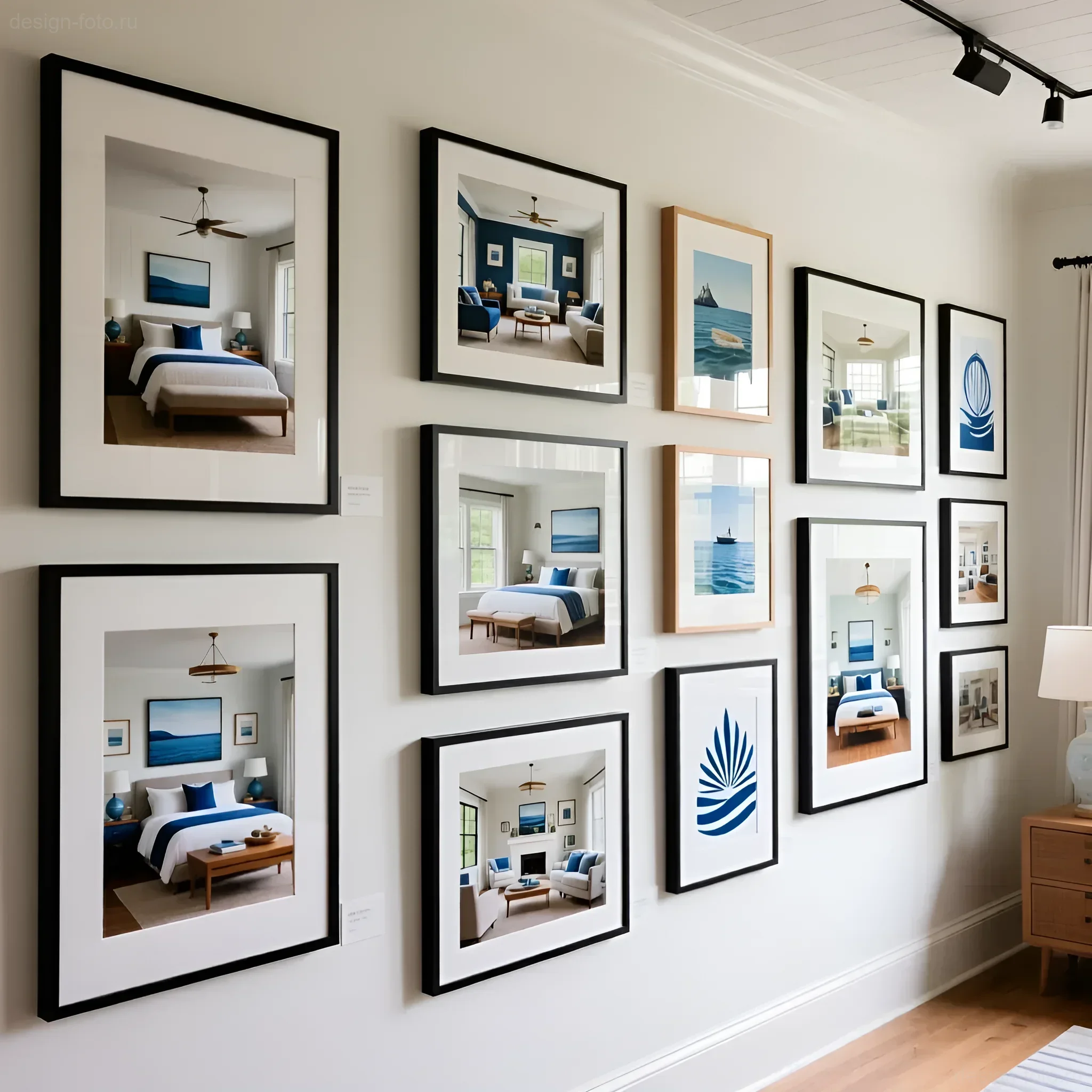
It is easy to turn nautical style into a themed restaurant or a child’s room if the measure and quality of materials are not observed. Here are critical mistakes we observe:
Mistake 1: Excess of Thematic Decor (Kitsch).
- Problem: Using too many anchors, ship’s wheels, seashells, nets, and fish in one room. This overloads the space and makes it seem unserious.
- Solution: Choose one or two large, quality accents (e.g., an antique barometer or a large ship model) and avoid small souvenirs. Decor should be integrated into functional elements.
Mistake 2: Using the Wrong Shade of Blue.
- Problem: Choosing a bright, “childish” light blue or cornflower blue that does not match the noble aesthetic of the style.
- Solution: Use deep, complex shades of blue – Navy Blue, indigo, or muted dusty blue for Coastal Chic. Blue should be an accent, not dominant.
Mistake 3: Glossy and Synthetic Materials.
- Problem: Using shiny chrome surfaces, plastic wood imitation, or glossy stretch ceilings. This contradicts the natural, rough texture of the style.
- Solution: Opt for matte surfaces, natural wood with visible texture, cotton, and linen. Metal should only be patinated brass or matte stainless steel.
Mistake 4: Ignoring Ergonomics.
- Problem: Forgetting the principle of functionality while trying only to decorate the space.
- Solution: Always incorporate built-in storage. Use multifunctional furniture. Remember that nautical design is, first and foremost, highly efficient design.
8. Inspiring Examples of Nautical Interior Design: Photos and Ideas
To successfully implement a nautical-style project, it is necessary to draw inspiration not only from glossy magazines but also from real technical solutions. We offer several ideas for creating unique elements:
Idea 1: Slat Partition (Ship’s Railing)
Instead of a standard railing on a balcony or stairs, install vertical wooden slats (40×40 mm cross-section, 5–8 cm spacing) or horizontal stainless steel cables stretched between posts. This creates the effect of a ship’s handrail and provides visual lightness.
Idea 2: Imitation of Decking
Instead of regular laminate or parquet flooring, use narrow planks (7–10 cm wide) with contrasting inserts or grout between them (dark gray or black sealant), imitating the seams of deck boards. For bathrooms and balconies, use ceramic tiles with a similar effect.
Idea 3: Accent Wall with Boiserie
In a study or bedroom, create an accent wall using wooden panels (boiserie) 100–120 cm high, painted white or light gray. Above the panels, use wallpaper with thin vertical stripes or a solid color paint. This gives the room historical depth and clean lines.
Nautical style, professionally implemented, goes beyond seasonal trends. It creates an eternal atmosphere of tranquility and functional beauty, making your home a true, reliable harbor, no matter how far you are from the shore.
Рекомендуем:
 Wall Cladding with Wood Paneling: A Step-by-Step Guide
 Bark Beetle Decorative Plaster: Application Technology
 Interior Design and Pets: How to Combine Aesthetics and Pet Comfort
 How to Hang Vinyl Wallpaper on a Paper Backing?
 Internal Wall Insulation: Materials and Technology
 PVC Wall Panels: Cheap and Cheerful. Installation Guide
 Laminate Underlay: Cork, Coniferous, or Polystyrene – Detailed Analysis and Choice
 MDF Panel Wall Finishing: Installation Guide
 How to Make a Brick Wall in an Interior (Imitation)
 10 современных тенденций в дизайне интерьера: создаем стиль и комфорт
 Bathroom: Tile or Paint. What Will Everyone Face?
 Washable wallpaper for the kitchen: why it’s the best idea for your renovation?
 Grout for tiles: how to choose the color and apply it correctly
 DIY Decorative Stone Wall Installation: Your Guide to Home Transformation
Joint filler for tiles: how to choose the color and apply it correctly
DIY Decorative Stone Wall Installation: Your Guide to Home Transformation
Joint filler for tiles: how to choose the color and apply it correctly
 DIY Venetian Plaster: Is It Possible?
 How to Update Old Tiles Without Removing Them: 99 Ways to Transform Your Bathroom and Kitchen
 What to do if mold or mildew appears on the walls?
 Liquid Wallpaper: Pros, Cons, and Application Technology
 How to Get Rid of Unpleasant Odors in Your Apartment: An Expert Guide to Elimination and Prevention