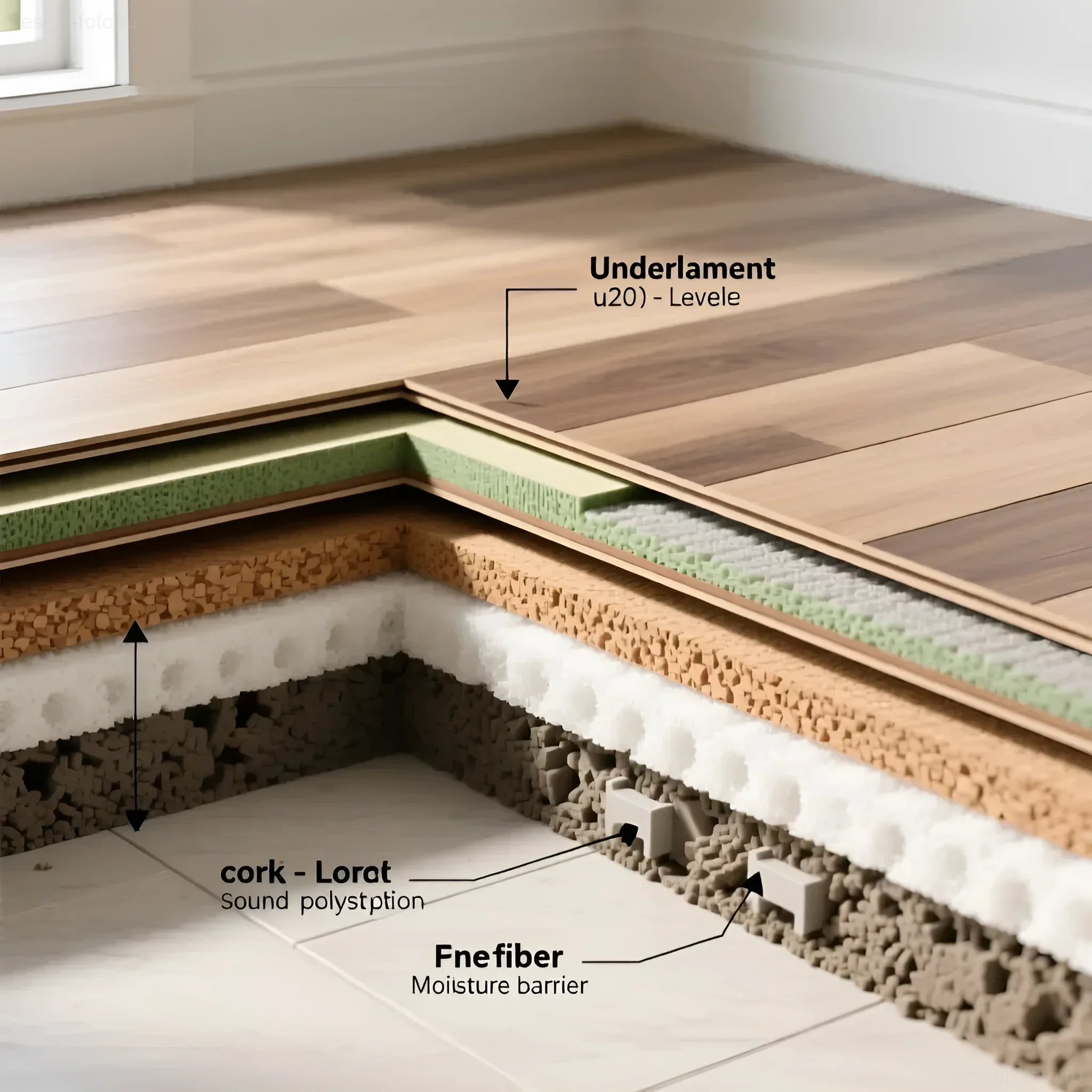
Choosing flooring is only half the battle. The true quality and durability of laminate, as well as acoustic comfort in the room, depend 80% on what is hidden beneath it. As designers and architects, we always insist: an underlay is not an option, but a critically important engineering element of the floor system. And if you are faced with a choice between natural solutions like cork and coniferous boards, and modern synthetic materials like polystyrene, you need a detailed technical analysis.
In this article, we will thoroughly examine the three most popular types of underlays, compare their key characteristics, define their areas of application, and provide specific recommendations based on the ergonomic and durability requirements of your interior.
Laminate Underlay: Why You Need It and How to Choose the Optimal Option
The function of an underlay goes far beyond simple leveling. It performs several critically important tasks that directly affect the lifespan of the laminate and the comfort of using the room:
- Cushioning and Leveling Unevenness: Laminate is a “floating” floor. The underlay compensates for minor height differences in the base (up to 2–3 mm), reducing point loads on the locking joints. This prevents squeaking and premature wear of the planks.
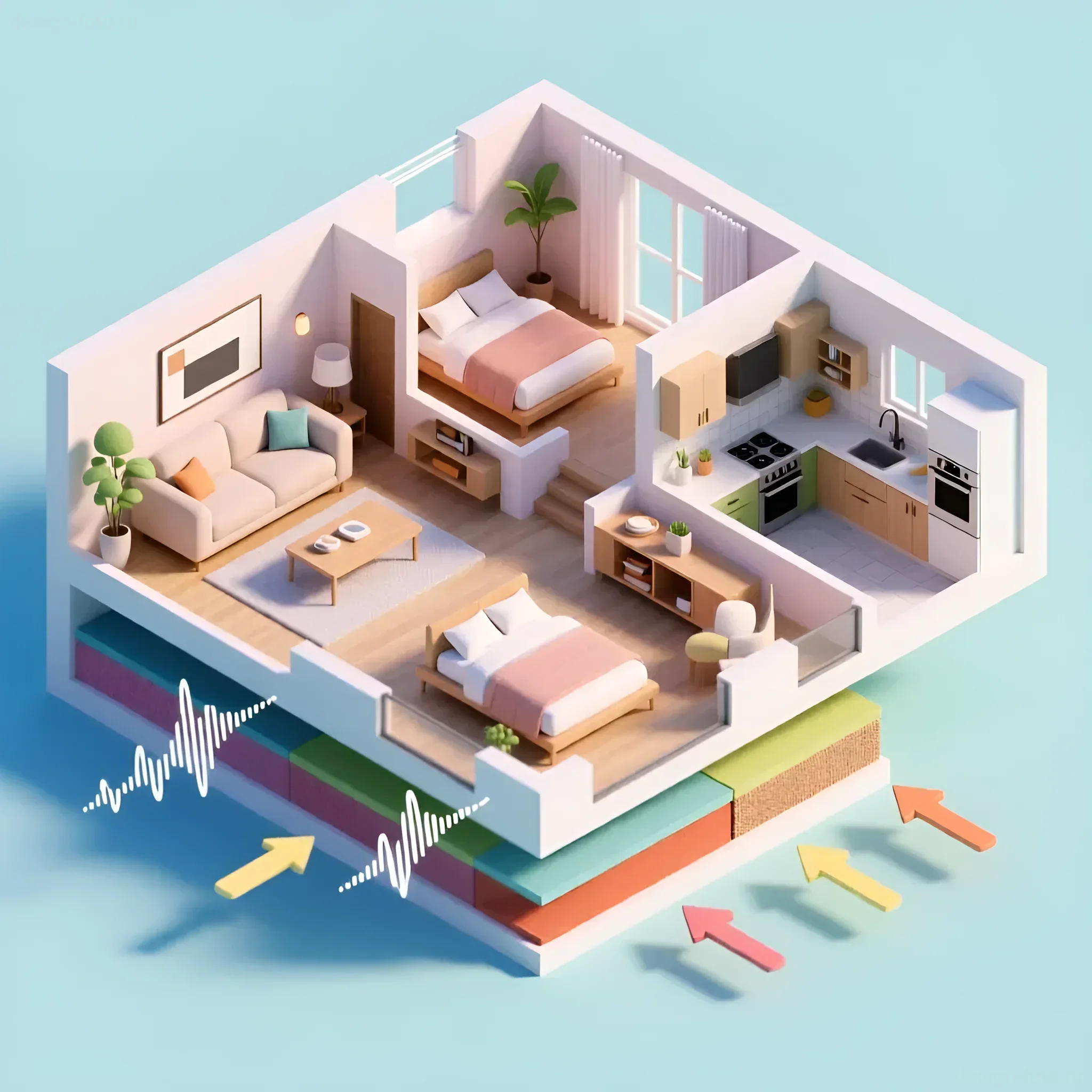
- Sound Insulation: The underlay works in two directions. Firstly, it reduces impact noise transmitted to neighbors below. Secondly, it dampens the sound of footsteps (resonance) that you hear yourself.
- Thermal Insulation: Especially relevant for ground floors and rooms above cold basements. Materials with a low thermal conductivity coefficient (λ) help retain heat.
- Moisture Protection: Some types of underlays (especially polystyrene or combined options) serve as an additional barrier against residual moisture in the screed.
Key Selection Parameters:
- Thickness (2–5 mm): The thinner the laminate and the smoother the base, the thinner the underlay can be (usually 2–3 mm). For bases with minor defects or laminate 8–10 mm thick, 4–5 mm is preferable. Important: an excessively thick and soft underlay (over 5 mm) can cause a “trampoline effect” and damage the locks.
- Density (kg/m³): Density directly affects the material’s ability to withstand static and dynamic loads. For commercial premises or high-traffic areas, materials with a density of at least 200 kg/m³ are required.
- Impact Sound Reduction Coefficient (IS): Measured in dB. Good values start from 18–20 dB.
Types of Laminate Underlays: Comparing Cork, Coniferous, and Polystyrene
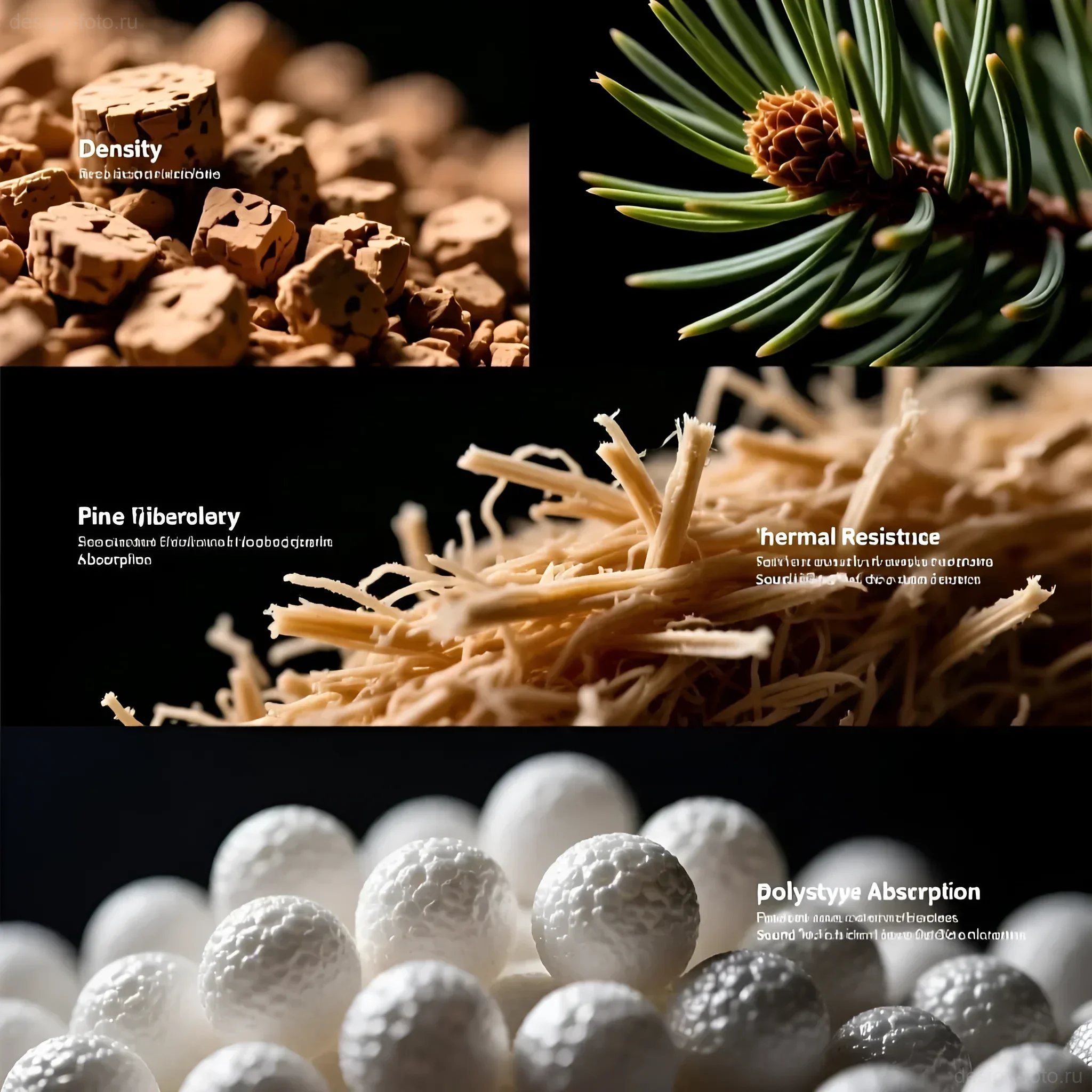
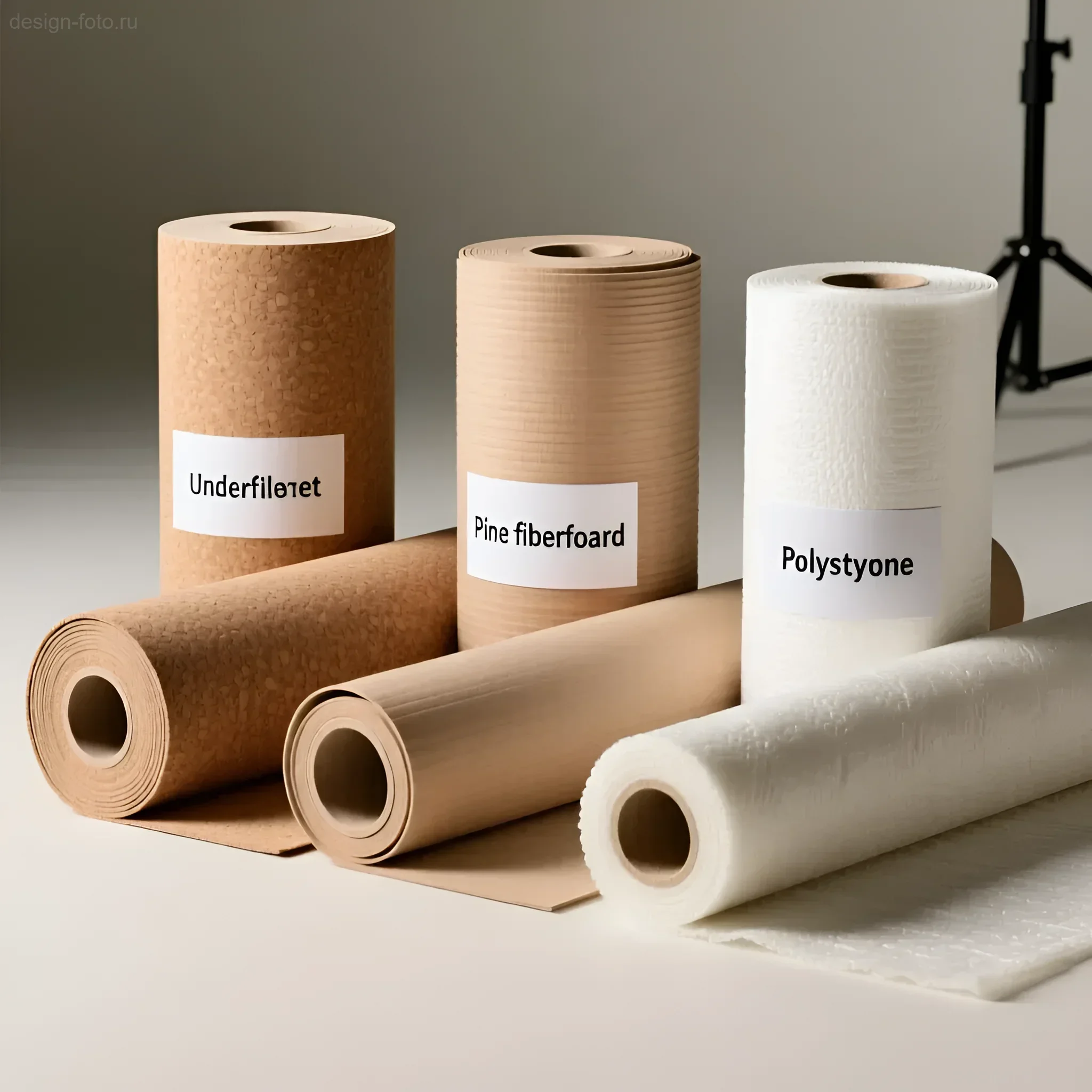
When it comes to professional renovation, we operate with three main categories of materials that provide the best combination of characteristics:
Comparative Table of Key Characteristics
| Characteristic | Cork (Agglomerated) | Coniferous Boards (Wood Fiber) | Expanded Polystyrene (XPS/EPS) |
|---|---|---|---|
| Density (kg/m³) | 200–280 | 220–300 | 30–50 (EPS), 40–150 (XPS) |
| Thickness (mm) | 2, 3, 4 | 4, 5, 7 | 2, 3, 5 |
| Impact Sound Reduction (dB) | 16–20 | 18–23 | 10–14 (EPS), 15–18 (XPS) |
| Thermal Insulation (λ, W/m·K) | ~0.040 | ~0.045 | ~0.035 |
| Load Resistance | High, does not deform | Very high (rigid material) | Medium (depends on type) |
| Moisture Resistance | Medium (requires PE film) | Low (afraid of water) | Very high |
Materials and Characteristics: Cork, Coniferous Boards, and Expanded Polystyrene – Detailed Breakdown
1. Cork Underlay
Cork is a natural, eco-friendly material derived from the bark of the cork oak tree. Agglomerated cork (crushed bark pressed with natural binding resins) is used as an underlay. Its main advantages are unique elasticity and durability.
- Elasticity and Durability: Cork has a phenomenal ability to regain its shape after load removal (low residual deformation). This means it will not sag under heavy furniture even after decades, preserving the integrity of the laminate locks.
- Thermal Insulation: Thanks to its cellular structure, cork is an excellent thermal insulator.
- Sound Absorption: It effectively dampens vibrations and impact noise, ensuring “quiet” footsteps.
- Disadvantages: Cork does not tolerate direct contact with moisture. When laying on a concrete screed, a vapor barrier polyethylene film of at least 200 microns is mandatory. Cork is also one of the most expensive options.
2. Coniferous Boards (Softwood Fiberboard)
Coniferous underlays (often sold under brands like Isoplaat, Steico) are rigid boards made from natural wood fiber pressed without chemical adhesives. They are an ideal choice for rooms requiring maximum base rigidity and high sound insulation.
- Rigidity and Leveling: Coniferous boards 5–7 mm thick can effectively compensate for unevenness up to 3–4 mm per meter. Due to their rigidity, they create a perfectly flat base, which is critical for laminate of class 32–33.
- Acoustic Comfort: Due to their density and thickness, coniferous boards are leaders in impact noise reduction among the presented options (up to 23 dB).
- Eco-friendliness: An absolutely natural and “breathable” material.
- Disadvantages: Like cork, they require quality vapor barrier. The main drawback is their extreme sensitivity to water. If flooded, they can swell and deform, leading to damage of the flooring.
3. Expanded Polystyrene (Polystyrene Underlay)
In this category, we usually consider two types: extruded (XPS) or expanded polyethylene (EPE), which is often confused with polystyrene. We will focus on XPS (e.g., “Tikhiy Khod” or similar boards) as it provides the necessary density.
- XPS (Extruded Polystyrene): Has a closed-cell structure, making it virtually waterproof. It is excellent for damp rooms or for bases with a high risk of capillary moisture rise.
- Thermal Insulation: The best thermal insulator of the trio, due to its low thermal conductivity (λ ≈ 0.035 W/m·K).
- Price and Ease of Installation: The most budget-friendly and easiest option to install.
- Disadvantages: Despite its high density, XPS has a higher residual deformation rate compared to cork or coniferous boards. Over time, indentations can form under heavy cabinets. It dampens impact noise worse than natural counterparts.
Layout Features and Zoning: How Underlay Affects Comfort and Sound Insulation

The choice of underlay should be integrated into the overall design project, especially when dealing with multifunctional spaces or apartments where acoustic privacy is important. Different materials perform differently in zones with varying loads and requirements.
Zoning by Acoustic Requirements
Bedrooms and Children’s Rooms: The priority here is maximum reduction of impact noise and vibration. The “drum effect” from footsteps should be minimized.
- Recommendation: Coniferous boards (5–7 mm) or Cork (3–4 mm). These materials provide the most effective damping, creating a “soft” floor feel. Coniferous boards also add thermal insulation, which is pleasant for bare feet.
Kitchens and Hallways (High-Traffic Areas): Require high compression resistance and moisture resistance.
- Recommendation: Cork (2–3 mm) or XPS Polystyrene (3 mm). Cork withstands static loads without sagging. XPS is preferable if there is a risk of moisture ingress (e.g., frequent wet cleaning or proximity to the entrance door).
Rooms with “Underfloor Heating” Systems: For such systems, a minimal thermal resistance coefficient (R-value) of the underlay is crucial to avoid blocking heat flow.
- Recommendation: All thick thermal insulators (coniferous 5–7 mm, thick cork) are excluded. Use specialized perforated polystyrene or thin (up to 2 mm) cork. The total thermal resistance of the underlay and laminate should not exceed 0.15 m²·K/W.
Practical Tips for Choosing and Installing Laminate Underlay
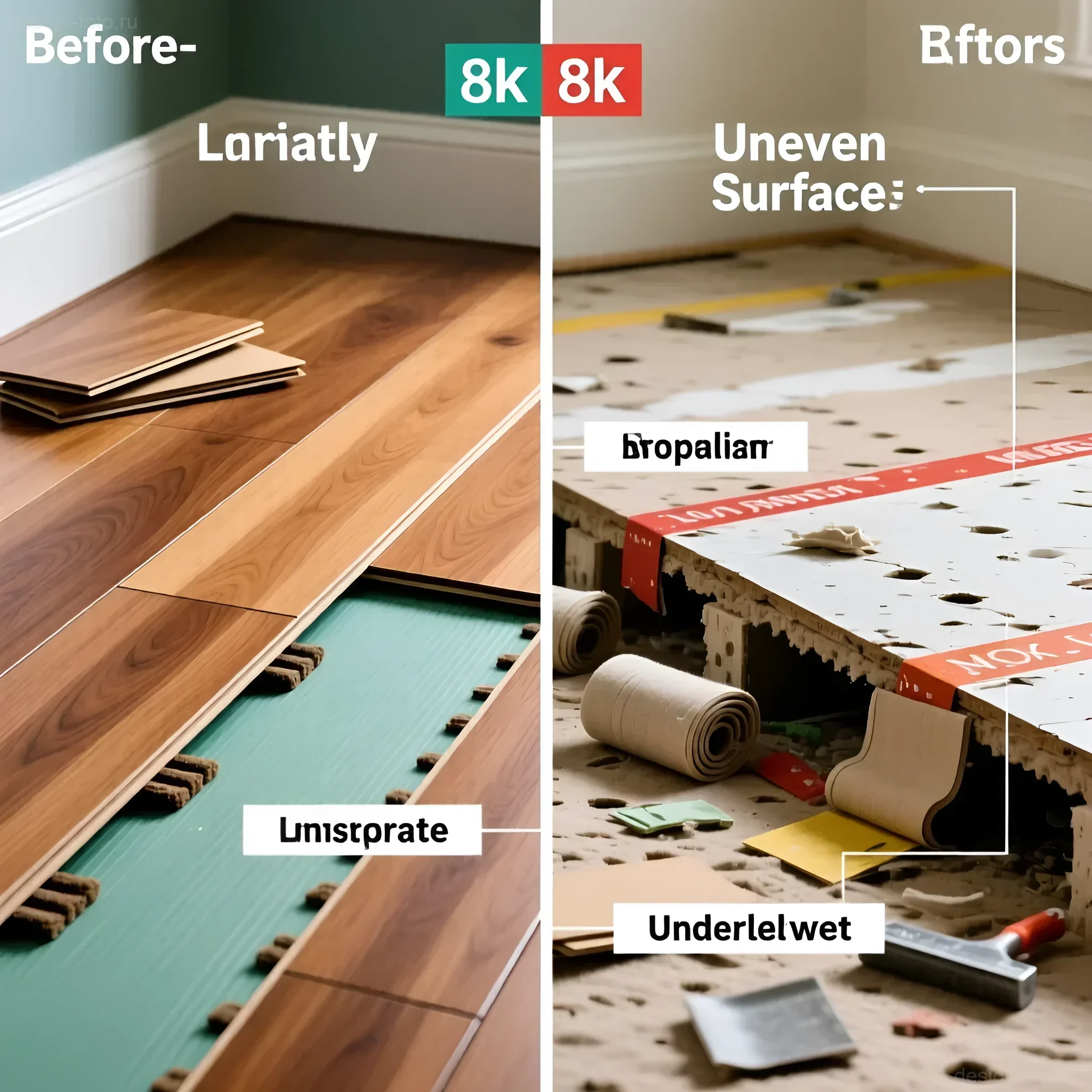
Professional installation requires adherence to technical protocols, especially when working with natural materials.
Base Preparation and Vapor Barrier
Regardless of the underlay type you choose (cork or coniferous), if the base is concrete, a vapor barrier is mandatory. Moisture from the screed can damage natural materials and lead to laminate deformation. The exception is if you use polystyrene with an integrated vapor barrier film (often combined roll materials).
- Film Rule: Use polyethylene film 200 microns thick. Lay it with an overlap of 15–20 cm, and seal the seams with reinforced tape. The film should extend up the walls by 3–5 cm.
Installation Specifics for Different Underlay Types
- Cork: Available in rolls or sheets. Laid butt-jointed, without overlap. If using roll cork, let it “rest” in the room for 24 hours to avoid curling during installation. Seams can be taped with painter’s tape for fixation.
- Coniferous Boards: Laid like “brickwork” (with staggered joints) to ensure maximum rigidity and prevent shifting. They do not require gluing to each other but must fit snugly against the base and walls.
- Polystyrene (XPS): Boards are easily cut. Laid butt-jointed, seams are also taped. If the base is uneven, avoid using thin expanded polyethylene (EPE) as it does not provide sufficient rigidity and can lead to the sinking of the locks.
Underlay Thickness and Laminate Class
Remember the rule: the higher the wear resistance class of the laminate (33/34) and the thinner the plank itself (6–8 mm), the denser and less elastic the underlay should be. Using soft polystyrene under thin laminate is a direct path to breaking the locks. In such cases, cork or coniferous boards are the only correct choice, as they provide the necessary structural support.
Common Mistakes in Choosing Laminate Underlay and How to Avoid Them
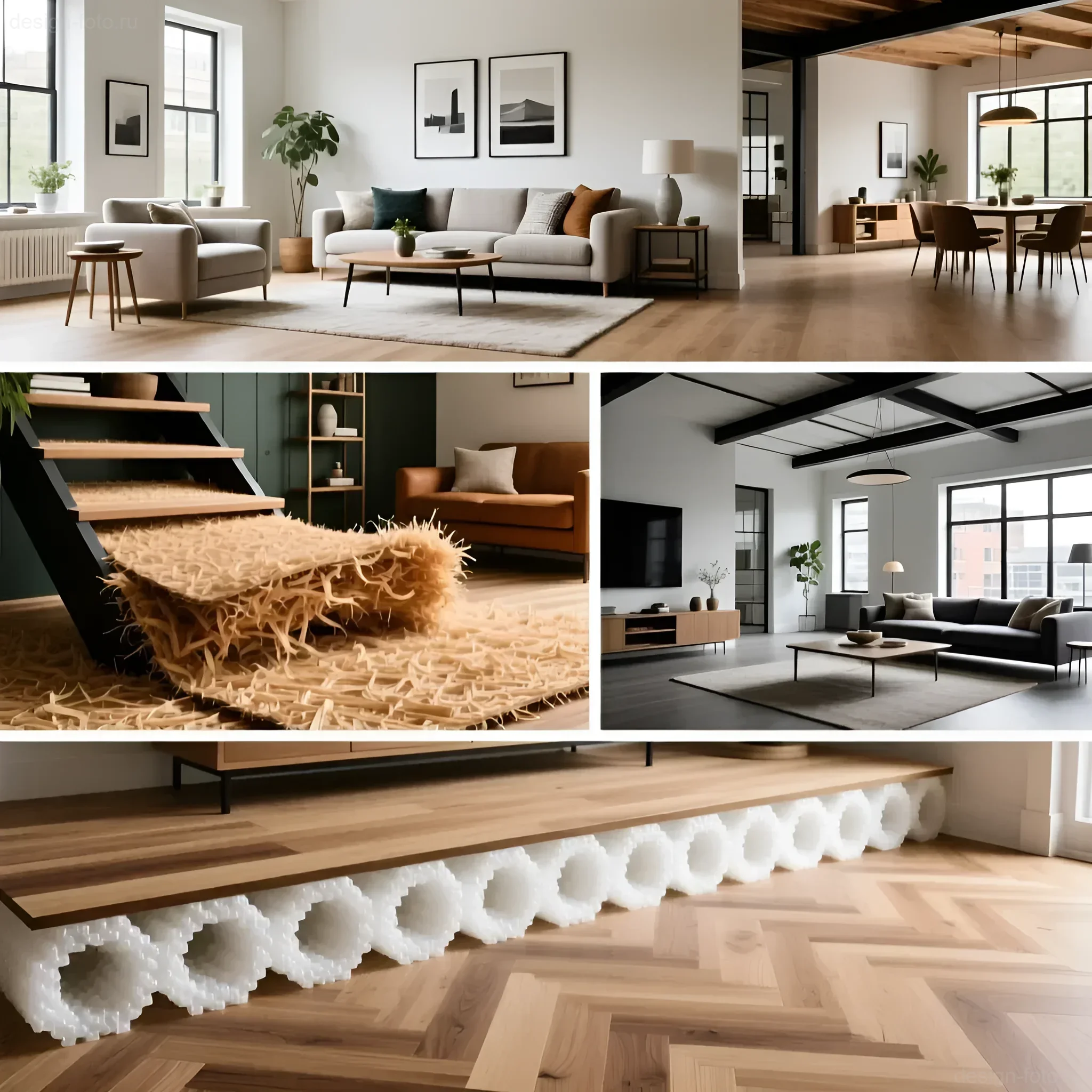
In practice, we regularly encounter situations where even with the choice of high-quality laminate, the entire project is ruined by the incorrect selection of the “invisible” layer.
- Mistake 1: Using an excessively thick underlay.
Example: Laying a 5 mm coniferous board on a perfectly flat screed where 3 mm of cork would suffice. Result: the floor becomes too springy, creating excessive stress on the laminate lock with every step. This can lead to gaps. Solution: Select the underlay thickness based on the degree of base unevenness, not for maximum softness. - Mistake 2: Ignoring vapor barrier with natural materials.
Example: Laying cork underlay directly on a new concrete screed that has not fully dried. Result: the cork absorbs moisture, molds, swells, and transfers moisture to the laminate. Solution: Always check the base moisture level (up to 2% for concrete is acceptable) and use a PE film. - Mistake 3: Choosing soft polystyrene (EPS) for heavy furniture.
Example: Using cheap expanded polystyrene (EPS) under a heavy kitchen unit or a massive wardrobe. Result: after a year, dents form in the areas where the furniture is placed. Solution: In areas of high static load, prioritize rigid materials: cork or coniferous boards, which have a low compression rate. - Mistake 4: Laying the underlay with overlap.
Example: Overlapping roll material. Result: a hump forms, creating point stress on the laminate and leading to squeaking. Solution: All underlays must be laid strictly butt-jointed.
Examples of Using Different Underlays in Interiors: Photos and Recommendations
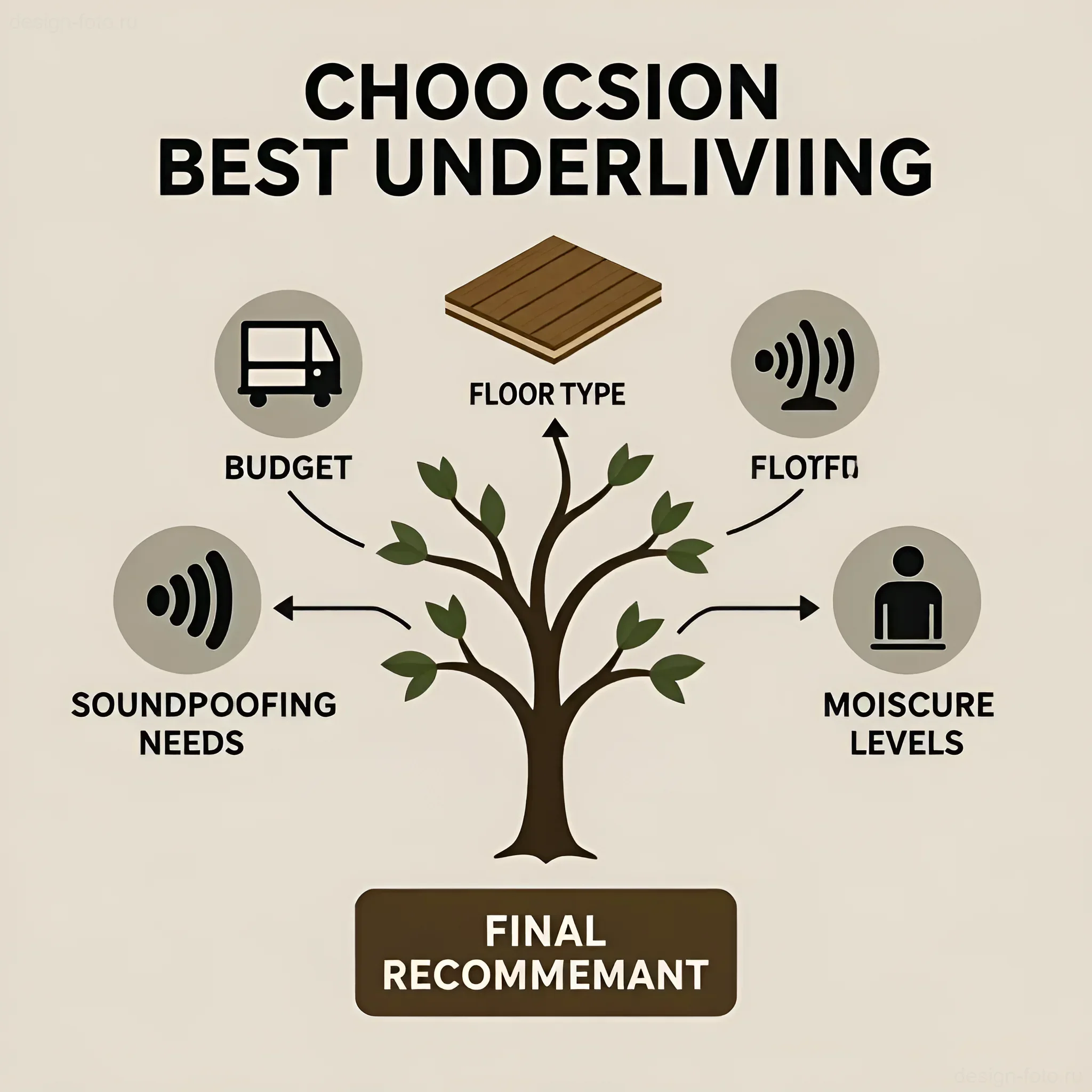
Scenario 1: Eco-friendly Interior and Maximum Comfort
Object: Country house, second-floor bedroom (requirement for impact noise insulation).
- Choice: Coniferous boards, 7 mm thick.
- Justification: Coniferous boards provide maximum impact noise reduction (up to 23 dB), which is critical for upper floors. Additionally, they create a warm floor feel even without heating, aligning with the concept of natural and eco-friendly design.
- Technical Nuance: Considering the thickness, ensure that the height of the doorways allows for such a floor structure.
Scenario 2: Minimum Budget and High Moisture Resistance
Object: Rental apartment, studio kitchen (requirement for quick installation and moisture resistance).
- Choice: Extruded polystyrene (XPS), 3 mm.
- Justification: XPS has closed pores, making it virtually impervious to moisture and condensation. It is quick to install and is the most economical solution. It provides sufficient rigidity for 32-class laminate in medium-load areas.
Scenario 3: Premium Class and Durability Guarantee
Object: Office space or living room with expensive, heavy furniture.
- Choice: Natural cork, 3 mm (high density).
- Justification: Cork is the only material that is guaranteed not to sag under static load (cabinets, shelves, safes). Its elasticity protects expensive locks of 33–34 class laminate from damage, ensuring the coating’s lifespan as declared by the manufacturer (up to 25 years).
Conclusion: Which Laminate Underlay is Right for You?
As professionals, we always recommend basing your decision on your project’s priorities, not just the price. Each of the materials discussed has its ideal niche:
1. Choose Coniferous Boards if:
- Your main priority is maximum impact noise insulation.
- You need to compensate for relatively large base unevenness (up to 3–4 mm).
- You want a maximally natural and “warm” floor.
2. Choose Cork if:
- You are using expensive, high-class laminate and want to ensure maximum protection for the locking joints for decades.
- The room contains very heavy furniture, and you cannot tolerate floor sagging.
- You are willing to invest in a premium, durable solution.
3. Choose Polystyrene (XPS) if:
- You require maximum moisture protection and thermal insulation (e.g., ground floor).
- You have a limited budget but do not want to use the cheapest expanded polyethylene.
- You are installing an “underfloor heating” system (using a special thin version).
Ultimately, cork and coniferous boards lead in terms of overall performance characteristics, providing the best support, sound insulation, and eco-friendliness. Polystyrene is optimal when moisture resistance and price are the main factors. Always remember the technical necessity of a vapor barrier and the installation rule: the underlay should be dense, not soft.
Рекомендуем:
 Internal Wall Insulation: Materials and Technology
 Wall Cladding with Wood Paneling: A Step-by-Step Guide
 Sous-couche pour stratifié : liège, aiguilles ou polystyrène — analyse détaillée et choix
 Washable wallpaper for the kitchen: why it’s the best idea for your renovation?
 How to Update Old Tiles Without Removing Them: 99 Ways to Transform Your Bathroom and Kitchen
 Bathroom: Tile or Paint. What Will Everyone Face?
 Joint filler for tiles: how to choose the color and apply it correctly
Grout for tiles: how to choose the color and apply it correctly
Isolation des murs par l’intérieur : matériaux et technologie
Joint filler for tiles: how to choose the color and apply it correctly
Grout for tiles: how to choose the color and apply it correctly
Isolation des murs par l’intérieur : matériaux et technologie
 Liquid Wallpaper: Pros, Cons, and Application Technology
 DIY Decorative Stone Wall Installation: Your Guide to Home Transformation
 What to do if mold or mildew appears on the walls?
 The Ideal Mattress in Ukraine: Choosing with mebeltops for Healthy Sleep
 How to Tile Walls in a Bathroom: A Detailed Guide
 How to Make a Brick Wall in an Interior (Imitation)
 How to Hang Vinyl Wallpaper on a Paper Backing?
Subsuelo para laminado: corcho, coníferas o poliestireno — análisis detallado y elección
How to Hang Vinyl Wallpaper on a Paper Backing?
Subsuelo para laminado: corcho, coníferas o poliestireno — análisis detallado y elección
 How to Wallpaper Behind a Radiator
 Priming Walls Before Wallpapering and Painting: The Ideal Foundation for Renovation
 Bark Beetle Decorative Plaster: Application Technology